As a supplier that has worked closely with HELUKABEL cables for over seven years, I get asked this question at least a dozen times a week: “Are HELUKABEL cables available in different gauges?” It’s such a common query because gauge directly impacts everything from power efficiency and signal integrity to installation ease—critical details for industrial projects, automation setups, or even commercial wiring jobs. Let’s break this down clearly, from product lines to how gauge is specified, so you can make the right choice for your application. HELUKABEL Cables

First, let’s make sure we’re on the same page about what cable gauge means. Gauge refers to the cross-sectional diameter of a cable’s conductor, measured in American Wire Gauge (AWG) for most North American markets, or sometimes square millimeters (mm²) for international orders. Lower AWG numbers mean a thicker conductor, which can carry more current with less voltage drop. For example, 10 AWG is thicker than 14 AWG, so it’s ideal for high-power motors, while 24 AWG works for low-voltage signal cables in control systems. HELUKABEL has designed its entire product range to cover nearly every gauge required across industries, and that’s one of the reasons they’re a go-to brand for professionals.
Let’s start with their most popular product lines, because gauge availability varies a bit between them. HELUKABEL’s industrial control cables, like their Classic Control line, are available in gauges from 12 AWG (2.5 mm²) all the way down to 28 AWG (0.08 mm²). This range makes sense: 12 AWG is robust enough for 24V control circuits that run longer distances without losing power, while 28 AWG is perfect for small signal cables that send data to sensors in tight spaces—think conveyor belt automation or packaging machinery, where space is limited but signal accuracy is key. I’ve helped dozens of clients source 16 AWG for heavy-duty lighting systems and 22 AWG for low-voltage PLC connections, and that’s exactly where the Classic Control line shines for gauge flexibility.
Next, their power cables, which are used for everything from factory machinery to renewable energy setups. HELUKABEL’s Rubber Power Cables, often used in outdoor or harsh environments, range from 6 AWG (16 mm²) for high-power equipment up to 2/0 AWG (67 mm²) for large motors, and even go smaller to 14 AWG (2.5 mm²) for general-purpose power runs. For solar installations, which we’ve seen a huge uptick in demand for over the past three years, HELUKABEL’s Solar DC Cables are available in 10 AWG, 12 AWG, and 14 AWG—sizing that’s perfectly aligned with National Electrical Code (NEC) requirements for solar arrays. We had a client last year installing a 50 kW solar system for a warehouse, and they needed 10 AWG for the main panel connections and 12 AWG for the string inverters; HELUKABEL had both in stock, which saved them weeks of lead time they would have waited for a lesser-known brand.
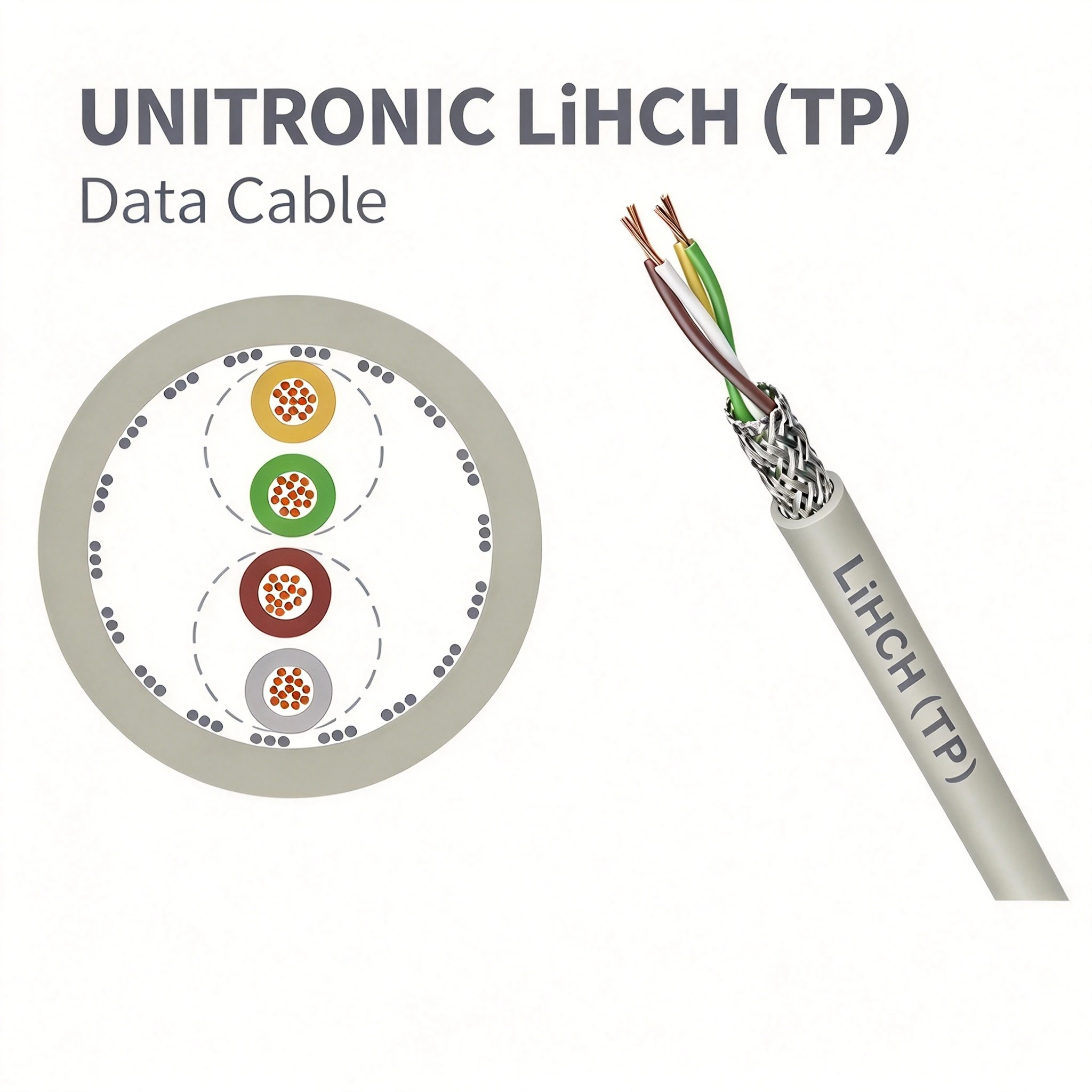
Then there’s their data and communication cables, which are often overlooked when talking about gauges, but are just as critical. HELUKABEL’s Ethernet Cables, Profibus Cables, and CAN Bus Cables come in gauges that balance signal strength and flexibility. For example, their Profibus DP cables (used in industrial fieldbus systems) are available in 22 AWG for standard runs, and 24 AWG for shorter, tighter installations in control cabinets. Their Ethernet cables (Cat 5e, Cat 6, Cat 6a) use 23 AWG conductors, which is the industry standard for ensuring low signal loss over 100-meter runs, but for custom shorter runs or specialty applications, they also offer 26 AWG options for slim, space-saving setups. I once worked with a tech company building compact IoT sensors that needed super thin communication cables; HELUKABEL’s 26 AWG Cat 5e cables were the only ones that fit their enclosure without sacrificing data speed.
Wait, you might be wondering—are there any gauges HELUKABEL doesn’t cover? Let’s be honest: No brand has every single gauge in every product, because some are very niche. For example, extremely large gauges like 4/0 AWG (107 mm²) for heavy industrial arc welding cables, or very small gauges like 32 AWG for tiny wearable electronics, aren’t standard in their core lines. But HELUKABEL does offer custom gauge options for bulk orders, which is a big advantage if you have a unique project. A few months ago, a shipyard client needed a special 8 AWG cable for their navigation system that wasn’t in their standard marine line; we worked with HELUKABEL’s custom team to produce a run of 500 meters, and delivery was only two weeks late, which was way better than the four to six weeks other manufacturers quoted. That’s the kind of flexibility that makes HELUKABEL stand out, especially for businesses with non-standard needs.
Now, a quick note on why gauge consistency matters, and how HELUKABEL ensures theirs is accurate. It’s not just about label numbers—too often, cheaper brands undersize their conductors to cut costs, which leads to overheating or voltage drop. HELUKABEL adheres strictly to IEC (International Electrotechnical Commission) and NEC standards for conductor sizing. We test every batch we receive to confirm gauge: for example, a 14 AWG cable should have a conductor diameter of approximately 1.628 mm, and HELUKABEL’s cables almost always come within 1% of that measurement, compared to some competitors that are off by 3% or more. That accuracy isn’t just a technical detail—it keeps your projects safe. Last year, a client of ours used a lesser brand’s 10 AWG cable for a 30-amp motor, and the undersized conductor overheated, causing a shutdown that cost them $15,000 in production time. Switching to HELUKABEL’s properly sized 10 AWG cable solved the problem, and they’ve been a repeat customer ever since.
Another common question is how to choose the right gauge for your specific application, even when HELUKABEL has options. Let’s simplify that: First, calculate the current your circuit needs to carry. For power cables, use the NEC’s ampacity charts—for example, 12 AWG copper can handle 20 amps, 10 AWG can handle 30 amps. For control or signal cables, smaller gauges (higher numbers) are fine if the run is short, but for runs longer than 50 feet, go with a larger gauge to reduce signal loss. If you’re working in a harsh environment (extreme temperatures, oil, moisture), HELUKABEL’s rubber or halogen-free lines have the same gauge options as their standard lines, so you don’t have to sacrifice sizing for durability. For solar, always follow NEC 690, which specifies 14 AWG for runs up to 10 feet, 12 AWG for 10 to 20 feet, and 10 AWG for runs over 20 feet—all gauges we keep in regular stock.
I also want to mention that HELUKABEL’s gauge availability is consistent across their regional lines, which is helpful for businesses that operate internationally. Whether you’re ordering metric gauge (mm²) for a project in Germany or AWG for a job in the US, their product descriptions clearly list both, so there’s no confusion. We’ve had clients who import equipment from Europe and need metric gauges, and domestic clients who prefer AWG, and HELUKABEL caters to both without any mix-ups.
Now, let’s talk about what this means for you as a buyer. If you’re working on a standard industrial project, commercial build, or renewable energy installation, HELUKABEL almost certainly has the gauge you need in stock—no waiting 8 weeks for a custom run. If you have a niche application, their custom gauge program is accessible and reliable. As a supplier, we’ve built our reputation on knowing exactly what HELUKABEL offers, so we can guide you to the right gauge instead of leaving you guessing. We’ve seen too many projects go wrong because someone picked the wrong gauge, and it’s our goal to make sure that doesn’t happen to you.
Whether you’re a contractor needing 16 AWG for a lighting circuit, an engineer needing 22 AWG for a control panel, or a solar installer needing 10 AWG for a main array run, HELUKABEL’s range of gauges has you covered. The key is to make sure you’re specifying the right gauge for your load and environment, and with HELUKABEL’s strict standards, you can trust that the gauge listed on the label is exactly what you get.
If you’re planning a project and want to confirm which gauge HELUKABEL offers for your specific needs, or need help sourcing the right cables for your application, reach out to our team to discuss your requirements. We can share product datasheets, gauge specifications, and stock availability to make your process as smooth as possible.
ETHERLINE Ethernet Cables References
- HELUKABEL GmbH. (2023). Product Catalog: Industrial Control Cables, Power Cables, and Communication Cables.
- International Electrotechnical Commission (IEC). (2022). Standard 60227: Insulated Cables for Rated Voltages Up to 450/750 V.
- National Electrical Code (NEC). (2023). Article 310: Conductors for General Wiring, Article 690: Solar Photovoltaic Systems.
Xiamen Kabasi Electric Co., Ltd.
Xiamen Kabasi Electric Co., Ltd. is one of the most professional helukabel cables manufacturers and suppliers in China. With abundant experience, we are committed to providing high quality customized cables with competitive price. Please feel free to buy the newest helukabel cables in stock here and get quotation from our factory.
Address: Third Floor, Building 6, Baochen Science and Technology Park, No.15 Dongfu West Road 2, Xinyang Street, Haicang District, Xiamen, China
E-mail: sale3@kabasi.cn
WebSite: https://www.kabasicable.com/
