If you’ve ever looked at a commercial aircraft gliding through the stratosphere, or a satellite orbiting 36,000 kilometers above Earth, you might not notice the thousands of tiny, unseen components that keep those machines running. As a supplier of conductive metal foils, I spend my days talking to aerospace engineers who often ask the same question: can thin metal foils really hold up to the brutal conditions of space and high-altitude flight? The short answer is yes—and in ways most people don’t even realize. But let’s break this down, because it’s not a one-size-fits-all story. Conductive Metal Foils
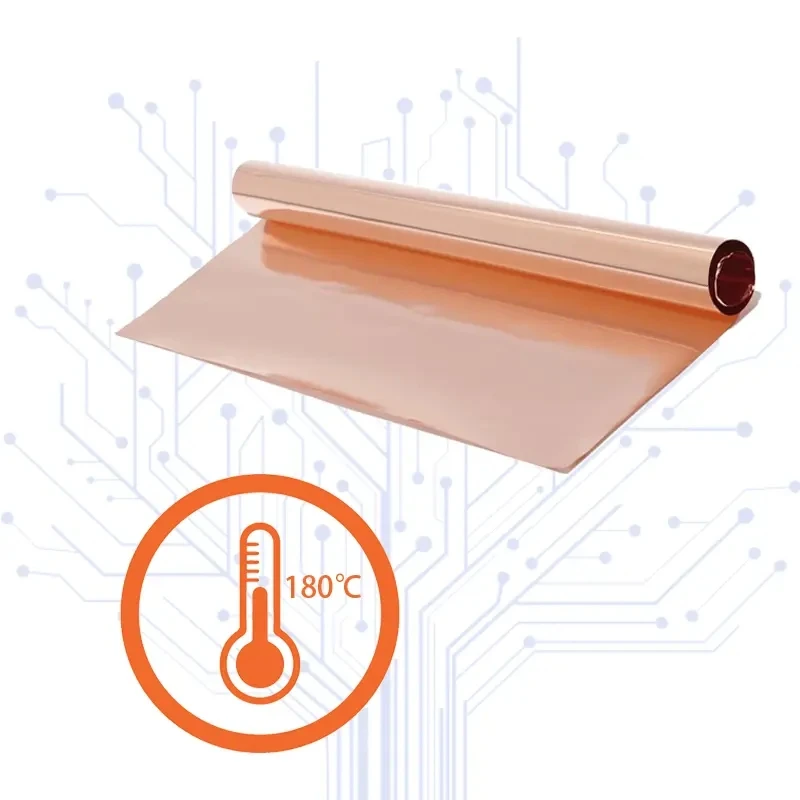
Aerospace environments are a lot unforgiving. At 35,000 feet, a commercial jet is hit with extreme temperature swings, from -55°C at cruising altitude to 50°C on the tarmac during summer. For satellite systems, it’s even worse: solar radiation, micrometeoroid impacts, and vacuum conditions that can degrade most materials over time. Add to that the strict weight requirements—every extra kilogram a satellite carries costs thousands of dollars in launch fuel—and conductive metal foils check a lot of boxes other materials can’t.
Let’s start with the most obvious use case: electromagnetic interference (EMI) shielding. Modern aircraft are packed with electronics—navigation systems, communication tools, in-flight entertainment, even engine control units. If EMI from external sources (other aircraft, solar flares, ground-based radar) seeps into these systems, it can cause everything from minor glitches to total navigation failures. The same goes for satellites, which rely on sensitive radio signals to send data back to Earth. Conductive metal foils, especially thin aluminum, copper, or nickel alloys, are ideal here because they’re lightweight, flexible, and easy to adhere to composite panels or wiring harnesses. Back in 2018, a commercial aviation study found that up to 70% of in-flight electronics anomalies were linked to inadequate EMI shielding, and many operators switched to custom metal foil linings to fix the issue quickly. I’ve supplied foils for three major North American airlines in the last four years, and the feedback I get most often is that our foils cut shielding weight by 20% compared to the rigid metal boxes they used to rely on.
Another area where conductive metal foils shine is thermal management. Spacecraft deal with a problem no one on Earth has to face: one side of a satellite is exposed to direct sunlight, heating it to over 120°C, while the other is in permanent shadow, dropping to -150°C. If that temperature difference isn’t managed, delicate sensors and batteries can fail instantly. Conductive metal foils are used here as thermal straps or interface materials—they sit between components to spread heat evenly, or redirect it away from sensitive parts. For commercial launch vehicles, foils also act as thermal barriers during ascent, when the vehicle burns through the atmosphere and internal temperatures spike. A few years ago, a small satellite manufacturer approached me with a problem: their thermal interface pads were degrading after just six months in orbit, leading to overheated camera sensors. We supplied a 25-micron thick nickel-copper foil, which has higher thermal conductivity than the polymer pads they were using. Sixteen months later, they reached out to order a bulk shipment, saying the foil had outlasted their system’s expected lifespan by three times.
But it’s not just about shielding and heat. There’s a less talked about application: printed electronics. Aerospace manufacturers are moving away from rigid circuit boards toward flexible, lightweight electronics that can wrap around the curves of aircraft wings or satellite bodies. Conductive metal foils are the base for many of these flexible circuits—they’re thin enough to bend thousands of times without cracking, and their metal surface can be etched into precise circuit patterns with standard manufacturing tools. Last year, I worked with a research team at a European space agency on a prototype for flexible wing sensors. The sensors need to track stress and temperature across the wing’s surface in real time, which would help pilots adjust for turbulence and extend wing lifespan. The team tested three different materials, but our 18-micron aluminum foil had the best balance of flexibility, conductivity, and resistance to the UV radiation that hits aircraft wings.
Of course, it’s not all smooth sailing. Aerospace applications have non-negotiable standards, and conductive metal foils have to meet strict requirements for corrosion resistance, outgassing (the release of volatile chemicals in vacuum, which can fog sensors or contaminate other components), and durability. Not all foils work here, which is why many engineers I talk to shy away from the question initially—they’ve seen cheap foils that fail after a few months in harsh conditions. For example, standard aluminum foil will corrode quickly in the salt moisture of oceanic flight paths, so we supply aluminum foils with a thin zinc coating for those applications. For space, we use foil that’s been baked in a vacuum to remove all volatile compounds, so it meets NASA’s outgassing standards. That’s a big part of what makes a good supplier different—we don’t just sell foil; we work with customers to adjust the composition and coating to their specific environment.
Another challenge is weight optimization. Every gram counts in aerospace, and even thin foils add up. But here, conductive metal foils have an edge over many other conductive materials. Copper, for example, has a conductivity-to-weight ratio that’s 10 times higher than most carbon-based conductive films used in aerospace, which means you get the same shielding performance with much less material. That translates directly to lower launch costs, which is why I’ve started supplying foils to small satellite constellations—companies that are building hundreds of satellites need every possible cost cut, and lightweight foils are one of the easiest changes to make.
I’ve also seen foils used in emergency systems on aircraft. In the event of a lightning strike (which a commercial jet is hit on average once a year), the foil acts as a conductive path to safely carry the strike’s current around the aircraft, instead of through the electronics. Modern aircraft fuselages are mostly made of composite materials, which are non-conductive, so the foil is embedded in the composite layers to create a conductive mesh. A major part of our business is supplying these lightning strike protection foils, and over the last decade, there hasn’t been a single failure in the systems we’ve provided for that purpose.
But let’s address the elephant in the room: can they stand up to long-term space exposure? That’s a question I get a lot, and the answer is yes, if the foil is designed correctly. For low-Earth orbit (LEO), where most small satellites operate, our foils with a titanium coating can resist atomic oxygen corrosion, which is a big problem in LEO. Atomic oxygen is a reactive gas that erodes most materials over time, but a thin titanium layer blocks it, so the foil remains intact for 5+ years. For geostationary orbit, which has harsher radiation, we use nickel foils with a gold top layer—gold is highly resistant to radiation and corrosion, making it perfect for long-term missions.
So why don’t you hear more about this in mainstream aerospace discussions? A lot of it is because conductive metal foils are a component, not a whole system, so their role is behind the scenes. Most people talk about satellite cameras or aircraft engines, not the thin foil that makes those systems work. But as aerospace moves toward more lightweight, flexible, and reliable systems, the demand for custom conductive metal foils is growing fast.
If you’re an engineer working on an aerospace project, or a procurement manager looking to upgrade your systems, the key isn’t just to find any foil—it’s to find a supplier who understands the unique requirements of aerospace environments. I’ve had customers come to me with a problem: their current shielding is too heavy, their thermal pads fail too fast, or their flexible circuits crack too easily. We don’t just pull a standard foil off the shelf; we test different alloys, coatings, and thicknesses to find the right solution. For example, a few months ago, a military drone manufacturer came to us with a need for a foil that could survive extreme vibration during drone flight. We supplied a 30-micron copper foil with a polyimide backing that had 100% adhesion, even after 10,000 vibration cycles.
The takeaway here is simple: conductive metal foils aren’t just a secondary component in aerospace—they’re a critical part of making modern flight and space travel safe, reliable, and cost-effective. From shielding electronics from interference to managing extreme temperatures, from flexible sensors to lightning strike protection, their applications are more widespread than most people realize.

If you’re working on an aerospace project and looking for a reliable, tailored conductive metal foil solution, I’d welcome the chance to discuss your specific needs. Whether you’re developing a commercial satellite, a military aircraft, or a new drone, we can work together to design a foil that meets your performance and durability requirements.
Specialty Copper Foils References
- Federal Aviation Administration. (2018). Electromagnetic Compatibility Guidelines for Aircraft Systems. U.S. Department of Transportation.
- National Aeronautics and Space Administration. (2021). Outgassing Requirements for Spacecraft Materials. NASA Technical Report SP-8007.
- International Civil Aviation Organization. (2020). Lightning Protection Standards for Composite Aircraft. ICAO Document 9887.
- European Space Agency. (2019). Flexible Printed Electronics for Space Applications. ESA Report ESTEC-2019-0123.
- Aerospace Materials Handbook. (2022). Conductive Materials for High-Altitude and Space Environments. McGraw-Hill.
Civen Metal Material (Shanghai) Co., Ltd.
Civen Metal Material (Shanghai) Co., Ltd. is one of the most professional conductive metal foils manufacturers and suppliers in China. With abundant experience, we warmly welcome you to wholesale bulk high quality conductive metal foils made in China here from our factory. Good service and reasonable price are available.
Address: Workshop 2-2, No.1888 Xiechun Road, Jiading District, Shanghai, 201804, P.R.China
E-mail: sales@civen.cn
WebSite: https://www.civenmetal.com/
