If you’ve ever ordered PS wall panels for a project—whether it’s a residential renovation, a café refresh, or a retail store fit-out—you’ve probably run into the same problem: the panels you get don’t fit the exact dimensions of your space. A wall that’s an inch wider than the pre-cut panel, a corner that’s off by half a foot, or a window or door opening that throws off your planned layout. For a long time, I’ve heard homeowners, contractors, and even other suppliers ask the same question: Can PS wall panels be cut to size? As a PS wall panel supplier with 12 years in the trade, I’ve worked through thousands of these projects, and the short answer is yes—but there’s a right way and a very wrong way to do it. Let me break this down, not just as a supplier trying to make a sale, but as someone who’s seen what happens when cutting PS panels goes sideways (spoiler: it’s not pretty, and it’s almost always avoidable). PS Wall Panel

First, let’s start with a quick reminder of what PS wall panels are, because that’s key to understanding how they cut. PS stands for polystyrene, a lightweight, rigid thermoplastic that’s perfect for wall panels: it’s moisture-resistant (great for bathrooms, basements, and commercial spaces with high humidity), easy to clean, and has that sleek, smooth finish that mimics more expensive materials like tile or stone without the heavy weight. Most PS wall panels come in large, standardized sheets—usually 4×8 feet, 2×8 feet, or custom milled patterns—and pre-sized for general uses, but almost never for the exact custom fit you need for your space. That’s where cutting comes in.
But why is cutting PS panels trickier than, say, cutting wood or drywall? Because polystyrene has unique properties. Unlike plywood, which has a hard outer veneer and a fibrous core, PS is uniform from surface to center. That means it can’t be sanded or filed to clean up a cut like wood can—if you mess up the edge, it’s gone forever. Also, PS melts at a relatively low temperature (around 210°F, for reference, boiling water is 212°F), so certain power tools will actually warp or melt the edge instead of cutting it clean. I’ve seen contractors bring a circular saw to a job and end up with panels that have charred, bubbled edges that look nothing like the product I supplied. It’s a mistake that costs them time and money, and it’s completely preventable if you know the right tools and techniques.
Now, the big question: is cutting PS wall panels structurally safe? A lot of my customers worry that cutting their panels will weaken them, or that the cut edges won’t hold up over time. Let’s put that to rest. The core of PS wall panels is a dense, high-impact polystyrene foam, not the thin, flimsy styrofoam you get from a takeout container. The panels I supply are engineered for durability—they can handle minor impacts, moisture exposure, and even light cleaning. When you cut them correctly, you’re not altering the structural integrity at all. The edges are just as solid as the factory edges, as long as you don’t damage the panel during cutting. I’ve had a commercial client cut over 50 custom panels for a 10,000 sq ft grocery store renovation three years ago, and they’ve had zero issues with edge integrity, even in the back storage area where they bump into carts regularly. The key here is cutting along the score line, not forcing the blade through, and finishing the edge properly to seal it.
Wait, but what about the finish? That’s another common concern. Pre-cut PS panels come with a smooth, maybe even coated finish that’s resistant to scuffs and stains. If you cut the panel, will the new edge look unfinished, or will it absorb moisture? Absolutely not—if you do it right. The mistake most people make is skipping the edge finishing step. After cutting, the raw PS edge is exposed, and while it’s not porous enough to soak up water like a sponge, it can get scuffed or discolored if not sealed. The fix is simple: after cutting, lightly sand the edge with a fine-grit sandpaper (220 grit works best) to smooth out any tiny burrs, then apply a clear acrylic sealer that’s made for polystyrene. It dries in 10 minutes, and the edge will match the factory finish perfectly. I always keep a bottle of this sealer on hand for contractors picking up custom panels, because it’s the final step that makes a DIY cut look professional.
Now, let’s talk about the right way to cut PS wall panels, because this is where I’ve seen most people go wrong. First, choose the right tool. Ditch the circular saw, jigsaw, or any tool with a high-toothed blade. Those tools vibrate too much and create too much friction, which melts the PS edge. Instead, use a utility knife for straight cuts, or a fine-tooth hacksaw or a rotary tool with a sanding disc for more precision cuts (like around door frames or outlets). Wait, a utility knife? Really? For straight cuts, yes. That’s the method I teach all my regular contractors, and it’s the one that gives the cleanest edges with zero melting. Here’s how it works: first, measure your cut line with a tape measure and a straight edge—anything from a metal ruler to a level works. Mark the line lightly with a pencil, making sure it’s straight. Then, score the line firmly with your utility knife, going over it 5-10 times, applying steady, even pressure each time. Don’t try to cut through in one pass. Once you’ve scored deep enough (you’ll see a distinct groove in the PS), bend the panel along the scored line—polystyrene is rigid enough that it will snap cleanly along the groove. That gives you a perfectly straight, clean edge, no melting, no mess. For curved cuts or tricky angles (like around an outlet), use a fine-tooth hacksaw with 18-24 teeth per inch. Cut slowly, keeping the blade moving at a consistent speed, and don’t force it—let the blade do the work. And for that final edge smooth-down, always use a fine-grit sandpaper, not a coarse one, which will scratch the surface.
I should also mention the alternative to cutting panels yourself: custom-cut panels. A lot of my customers ask if I can cut the panels to their exact dimensions before shipping, and for many projects, that’s the better option. Especially if you’re working with a very small space, like a bathroom with a custom vanity, or a commercial space with hundreds of unique cutouts. When you order custom-cut panels from a supplier like me, we use precision CNC tools that cut the panels with millimeters of accuracy, so the edges are perfect every time, no sanding or sealing needed. It’s a little more expensive than buying large sheets and cutting them yourself, but it saves time on the job, avoids mistakes, and gives you a uniform finish. I always tell customers to weigh the pros and cons: if you’re only cutting 2-3 panels, and you’re comfortable with basic tools, cutting them yourself is totally fine. If you’re doing a full office fit-out or a large retail space, custom-cut panels are worth the extra cost to avoid delays.
Now, let’s get into the mistakes I see all the time, because they’re preventable, and I’d rather customers not waste time or money. First, using the wrong blade. I mentioned circular saws earlier—last year, a contractor brought in a panel he’d cut with a circular saw, and the edge was so charred and warped, he had to replace half the panel. That’s a $40 mistake, multiplied by how many panels he ruined. Second, rushing the scoring step with a utility knife. If you only score once, you’ll end up with a jagged edge when you bend the panel. Take the time to go over the line multiple times, and you’ll get a clean break. Third, skipping the edge sealer. I had a customer a few years ago who cut a bunch of panels for his basement, skipped sealing the edges, and within six months, the edges had scuffed and turned yellow. It’s a 10-minute step that makes all the difference. And fourth, forcing the panel when you bend it. If your scored line isn’t deep enough, don’t yank or bend it hard—you’ll crack the entire panel. Just go back and score a few more times until the groove is deep, then bend it gently.
Wait, another question I get asked: can I cut PS wall panels to fit around fixtures, like outlets, switches, or vents? Absolutely. Just use the right tool. For outlets, measure the exact size of the fixture’s cutout, mark it on the panel, then use a rotary tool with a small cutting disc to carve out the shape. Or, if you’re comfortable with a utility knife, you can make small straight cuts for rectangular cutouts too. Just take your time, measure twice, mark once—like any woodworking project. I always recommend laying the panel face-down on a work surface when cutting, so any minor mistakes don’t show on the finished side.
Let’s also talk about when you should not cut PS wall panels. This is important, because I don’t want customers to try something that will damage the product they paid for. First, if the panels have a glossy or coated finish that’s factory-applied with a delicate sealant? Wait, no—all the panels I supply have a durable UV-resistant coating that holds up to cutting and sealing. The only time I’d advise against cutting is if you’re working with a very thin, decorative PS panel that’s meant for temporary use, like a pop-up event display. Those are thinner, more fragile, and can crack too easily when cut. But for standard wall panels designed for interior or semi-exterior use (like patios that are covered), cutting is totally safe and recommended.
As a supplier, I’ve seen firsthand how custom cuts make or break a project. Last year, a customer called me in a panic—they’d ordered 20 PS wall panels for a café renovation, and the lead time for custom cuts was three weeks. Their contractor had started cutting the panels himself, but messed up the edge on half of them. He’d used a circular saw, and the edges were so bad, they couldn’t be mounted. I rushed him a set of pre-scored custom panels that fit exactly, and we worked with him to fix the damaged panels on site. That’s the kind of issue that comes from not knowing how to cut PS panels correctly, and it’s why I always take the time to explain the right methods to every customer, even if they’re buying from me.
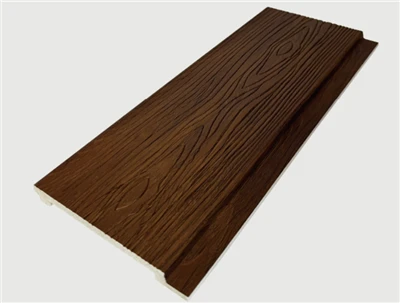
At the end of the day, the answer to “Can PS wall panels be cut to size?” is a resounding yes—when done correctly. It’s not a hack that only professional contractors can do; it’s a simple process that anyone with basic tools can master, as long as you take the time to do it right. Whether you’re tackling a small DIY project in your living room or a large commercial build, cutting PS wall panels to fit your space is totally possible, and it’s often the best way to get the exact look you want without waiting for custom orders.
PS Wall Panel If you’re planning a project and have questions about cutting PS wall panels, need help deciding between custom-cut panels or on-site cutting, or want more tips to avoid common mistakes, I’m here to help. I’ve spent years refining the process, and I can walk you through every step, from measuring to sealing, to make sure your wall panels turn out perfect. Connect with me to discuss your project needs and get tailored advice that works for your space.
References
- American Society for Testing and Materials. Standard Specification for Rigid Polystyrene Wall Panels. ASTM International, 2021.
- National Association of Home Builders. Guide to Installing and Finishing Polystyrene Wall Panels. NAHB Research Center, 2022.
- International Code Council. Residential Code Requirements for Plastic Building Materials. ICC, 2023.
- Polystyrene Packaging and Plastics Association. Technical Guidelines for Cutting and Finishing Polystyrene Thermoplastics. PPPA, 2021.
Linyi Xinchenda Import and Export Trading Co., Ltd.
We’re known as one of the most professional ps wall panel manufacturers in China, also support customized service. With abundant experience, we warmly welcome you to buy premium ps wall panel for sale here from our factory. Quality products and low price are available.
Address: NO.20, ROOM 815, BUILDING 2, CENTURY PLAZA, BEIJING ROAD, LANSHAN DISTRICT, LINYI CITY, SHANDONG, CHINA
E-mail: lily311913@gmail.com
WebSite: https://www.xcdpswallpanel.com/
