Hey there,
If you’ve ever tinkered with old radios, messed around with guitar pedals, or stared at the back of some random tech gadget wondering “how’d they tweak that signal just right?”, odds are a variable condenser played a big part in that. As someone who’s been supplying condensers for years—working with hobbyists, small electronics shops, and even a few big-name audio gear makers—I get that most folks hear “variable condenser” and tune out, thinking it’s some super technical part only engineers care about. Spoiler: it’s way simpler than it sounds, and it’s one of those tiny, workhorse components that makes so much of the tech we use daily tick. Let’s break it down like we’re chatting over a workbench, no stuffy jargon required. Condenser

First off, let’s start with the basics: what’s a condenser anyway? If you’ve had high school physics, you might remember “capacitor” is the more common name these days—old habits die hard, right? So a variable condenser is just a capacitor whose capacitance (that’s its ability to store electrical charge) isn’t fixed. You can adjust it on the fly, depending on what your circuit needs. That’s the big difference from the tiny, flat capacitors you see stuck to circuit boards, which are glued in place and have a set number stamped on ’em. Variable condensers are the adjusters, the dials, the knobs of the component world.
Now, how do they actually work? Most off-the-shelf ones look like two plastic plates (usually nylon or bakelite, back in the old days) stacked together, with a bunch of thin metal plates alternating between them. One set of plates is connected to a shaft you can turn—usually with a little dial or knob sticking out of whatever gadget you’re building—and that’s called the “rotor.” The other set is fixed to the body of the condenser, so that’s the “stator.” When you spin the shaft, the rotor plates slide in and out between the stator plates. The more overlap there is between the rotor and stator, the more capacitance you get. Less overlap? Lower capacitance. It’s that straightforward.
Wait, why would you need to adjust capacitance in the first place? Let’s take the classic radio example, because that’s where variable condensers got their start, and where they’re still used most today. Old AM/FM radios work by tuning into specific radio frequencies, right? Each radio station broadcasts on its own unique frequency—like 91.5 FM or 790 AM. To pick up that station, your radio’s circuit needs to resonate at exactly that frequency. Resonance for radio circuits depends on two main parts: a variable condenser and an inductor (usually a coil of wire, sometimes called an antenna coil). The formula is super simple: the resonant frequency is tied to the square root of (1 over the product of capacitance and inductance). So if you twist the variable condenser’s shaft, you change its capacitance, which changes the resonant frequency, and suddenly you’re tuned straight to that local station. No fancy digital buttons back in the day—just a big knob on the radio, and inside? A variable condenser doing all the heavy lifting.
But variable condensers aren’t just for old radios, y’know. I’ve shipped ’em to guitar pedal makers who build vintage-style fuzzes and modded delay pedals. A lot of those pedals use variable condensers to tweak the tone—adjusting how much high-end or low-end comes through, making a fuzz sound brighter or warmer. I’ve even sent small batches to model train enthusiasts who use ’em to tune their track’s signal, making sure their locomotives don’t short out when they hit a curve. And yeah, they still show up in ham radio gear, lab equipment, and even some modern audio gear that’s designed to feel hand-built and analog.
Now, let’s talk about the different types, because not all variable condensers are the same, and that’s where a lot of hobbyists run into trouble when picking the wrong one for their project. The biggest split is between air variable condensers and trimmer variable condensers. Air variables are the big, clunky ones you used to see on old tube radios—they have separate metal plates (brass, usually) and no plastic or dielectric between the plates, so they’re super reliable, can handle high power, and don’t drift much with temperature changes. The downside? They’re bulkier, a bit more expensive, and you can’t adjust ’em after you mount them permanently—you have to tune ’em once when you build the circuit and leave them be, or open it up and twist the little screw later.
Trimmer variables are the small, tiny ones—like the size of a pencil eraser, basically. They use a thin piece of plastic, ceramic, or even paper as a dielectric (the insulating material between the plates) instead of air, and you adjust them with a tiny screwdriver, not a big knob. These are for small circuits where you just need a one-time tweak, like calibrating a sensor or tuning a small signal. They’re cheaper, easier to mount on a circuit board, but they’re not great for high power, and they can drift over time if they get bumped or the temperature changes a lot. That’s why you never see a trimmer as the main tuning knob on a big radio—you’d be re-tuning it every time it got warm.
There are also specialty types, like vacuum variable condensers, which we make for clients who need really high capacitance and super low loss (like for high-power transmitters). Those are the ones with a glass or metal vacuum envelope instead of air, so they can handle way more power than standard air variables, and they don’t have issues with arcing (that little spark you sometimes see in old radios when you crank the tuning knob too far). But that’s way more niche—90% of the variable condensers we ship are either air variables for hobbyist projects or trimmers for small electronics.
Now, let’s get real about common mistakes people make when working with variable condensers. First, mixing up capacitance ranges. A radio that needs a 50-500 pF (picofarad, that’s the tiny unit we use for small capacitance) condenser won’t work right if you stick a 10-100 pF one in there. The range is key—if it can’t adjust enough, you’ll never hit the frequency you need. Second, ignoring leakage. Old variable condensers can have dirt or grease on the plates that makes the capacitance drift when you move them around, or even cause a short. That’s why a lot of hobbyists come to us for replacements—they fixed their radio once, bought a cheap no-name condenser off Amazon, and it died after a month because the plates had cheap coating that flaked off. Third, not matching the voltage rating. If you’re working with a high-voltage circuit (like a tube amp or ham radio), a small trimmer condenser rated for 12V is going to arc and break, and maybe even damage your whole circuit. I always tell clients to check their circuit’s max voltage before ordering—we’re happy to help if they’re not sure, no hoops to jump through.
Wait, a lot of folks ask me: do variable condensers still matter in the age of digital everything? Like, why not just use a digital potentiometer or a microchip to tune frequency? Yeah, those are great for modern gear, but analog circuits still have their place, and variable condensers have a couple big advantages. First, they’re way simpler. If your whole circuit is just a tuning circuit for a small FM transmitter, a variable condenser is cheaper, smaller, and more reliable than hooking up a microcontroller to do the same job. Second, they’re analog—guitar players and audio engineers swear by the tone from an air variable condenser vs. a digital alternative; there’s something about the smooth, natural adjustment that digital parts just can’t replicate. Third, they’re repairable. If you blow a variable condenser in your old tube radio, you can yank it out, buy a replacement for $10, and be back up and running in 5 minutes. A digital component? You might have to desolder a whole chip, order a replacement that takes 2 weeks, and hope you solder it right.
That’s why, as a condenser supplier, I don’t just ship parts— I work with people to pick the right part for their project. Last month, a kid in Canada hit me up, building a 1950s-style crystal radio for a school project. He bought a cheap air variable off a big box site, and it was so loose the tuning wiggled when he touched the knob. We sent him a precision brass-plated air variable with tight tolerances for not much more, and he shot me a pic a week later, holding his radio tuned to three local stations straight, no static. Another client was a small-batch guitar pedal maker who’d been having issues with his fuzz pedals sounding too muddy. We suggested a high-quality ceramic trimmer instead of the cheap plastic ones he’d been using, and he emailed back a month later saying sales went up because players loved the tighter, brighter tone.
So if you’re working on a project—whether it’s a retro radio, a custom pedal, a model train controller, whatever—think twice before grabbing the cheapest part you can find. Variable condensers aren’t just a hunk of metal and plastic; they’re a precision part that makes the difference between a project that works great and one that’s a headache.
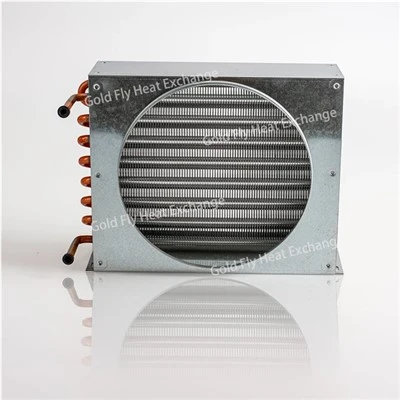
If you’re in the market for a variable condenser—whether you need a small trimmer for a circuit board, an air variable for a retro project, or a specialty vacuum model for a high-power application—we’ve got you covered. We work with hobbyists, small businesses, and big companies, so shoot us a message to talk through your needs, no sales pitches, no hidden fees. Let’s make sure your project gets the right condenser, the first time.
Heat Exchanger References:
- National High Magnetic Field Laboratory. (2022). Capacitors and Capacitance. Retrieved from educational physics resources on condenser function and design.
- Radio Society of Great Britain. (2021). Practical Amateur Radio Component Guide: Variable Capacitors. RSGB, covering variable condenser types and use cases in radio circuits.
- The PedalPCB. (2023). Tone Shaping Components for Guitar Effects. Discussion of variable condensers in audio effect circuits and tonal characteristics.
- IEEE Standards Association. (2020). Standard for Variable Capacitor Ratings for Industrial and Consumer Electronics. Covering voltage, tolerance, and performance specifications for variable condenser products.
Shandong Gold Fly Heat Exchange Equipment Co., Ltd.
Shandong Gold Fly Heat Exchange Equipment Co., Ltd. is one of the most professional condenser manufacturers and suppliers in China, specialized in providing high quality customized service. We warmly welcome you to wholesale bulk condenser in stock here from our factory.
Address: No.166, Wanshida Road, East Industrial Park, Xingfu Town, Boxing County,Binzhou City, Shandong Province
E-mail: Chloe@goldfly.com.cn
WebSite: https://www.gold-fly.com/
