If you’ve been working in power electronics for even a few years, you know how often engineers run into the same frustrating tradeoffs: shrinking system sizes, demanding efficiency targets, and tighter noise limits—all while keeping costs from spiraling out of control. For a long time, discrete transformers and inductors were the go-to solutions, but they came with their own set of headaches: loose coupling between magnetic components, bulky footprints, inconsistent performance across production runs, and time-consuming manual assembly. That’s why our team has spent years refining integrated transformers, and today I want to walk you through the real-world applications where these components don’t just solve problems—they redefine what’s possible for power systems. Integrated Transformer
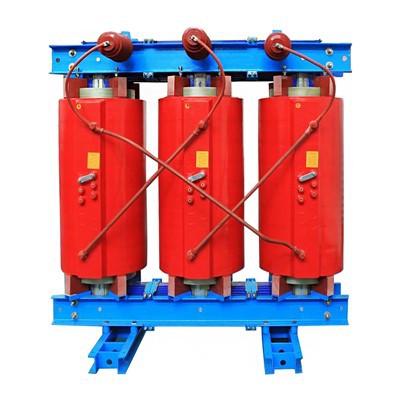
Let me start with a quick primer on what makes an integrated transformer different from its discrete counterpart, just to set the stage. Unlike assembling two or more separate magnetic cores, windings, and shielding components by hand, an integrated transformer is a single, monolithic component that packages all the required magnetics into one compact, precision-engineered unit. That means tighter magnetic coupling (we’re talking 98% or higher, compared to 85-90% for well-built discrete pairs), lower parasitic losses, and a much smaller footprint. For anyone who’s ever stood on a production floor where a team has to hand-wrap and align two separate inductors just to hit a design spec, you already know how much time and money that wastes. Integrated transformers eliminate that step, and their consistent design means every unit rolls off the line with identical performance, no surprises.
Now, let’s dive into the applications where we’ve seen the biggest impact, based on the projects our customers have brought us over the last five years.
First, and probably the most widespread, is data center power systems. If you’ve ever looked inside a server rack, you’ll notice just how dense everything is—CPUs, GPUs, storage arrays, and power supplies all packed into spaces that are barely larger than a shoebox per server. Traditional AC-DC and DC-DC power converters for these systems use discrete transformers and inductors, and the combined magnetic components take up 30-40% of the power supply’s total footprint. Multiply that across a data center with tens of thousands of servers, and you’re talking about thousands of square feet of wasted space that could be used for more computing capacity. Our integrated transformers cut that magnetic footprint by up to 50%, which means our customers can either fit more servers in the same data hall or build smaller data centers that use less cooling and electricity. Even more importantly, the tight coupling of our integrated transformers boosts power conversion efficiency by 1-2 percentage points—hardly a big number on its own, but when you scale that across a 10 MW data center, that’s millions of dollars saved on utility bills every year. Last year, we worked with a mid-sized cloud provider that was upgrading its West Coast data center; switching to our integrated transformers let them add 1,200 new server nodes without expanding their facility, which saved them an estimated $2.1 million in construction costs in just the first year.
Next, consumer electronics—specifically fast-charging systems for smartphones, laptops, and electric toothbrushes. Anyone who’s bought a fast charger in the last three years knows the trend: chargers are getting smaller, but they deliver more power. A 65 W fast charger that once took up the size of a paperback book now fits in your pocket thanks to gallium nitride (GaN) semiconductors, but the magnetic components were still a bottleneck. Discrete transformers for these chargers are bulky, and their poor coupling leads to more heat, which means the charger has to include larger heat sinks to keep from overheating. Our integrated transformers are optimized for high-frequency switching (up to 2 MHz, which is way higher than the 50/60 Hz of grid power), so they work seamlessly with GaN controllers to deliver 65 W or more in a component that’s half the size of a discrete pair. We also offer integrated transformers with built-in common-mode filtering, which eliminates the need for separate filter components—another win for size and cost. A major global laptop manufacturer switched to our integrated transformers for their 90 W fast chargers two years ago, and they reported a 35% reduction in charger volume, plus 0.8% higher efficiency, which extended the battery life of their laptops by about 10 minutes per charge. That’s the kind of real-world benefit that resonates with customers.
Third, industrial motor drives and renewable energy systems. Industrial motors account for about 40% of global electricity use, and making those motors more efficient is a huge part of cutting carbon emissions. Motor drives need high-density, reliable power conversion, and many are moving from low-frequency silicon switches to high-frequency SiC (silicon carbide) semiconductors to boost efficiency. High-frequency switching means more parasitic losses and more electromagnetic interference (EMI), which can disrupt other industrial equipment. Our integrated transformers solve both problems: their tight coupling reduces winding losses, and their integrated shielding drastically cuts EMI, so drives don’t need large external filters. We’ve also worked with solar inverters, which need to convert DC power from solar panels to grid-ready AC power. Inverters have to handle high power levels (often hundreds of kW) while staying within strict grid standards for efficiency and noise. Our medium-power integrated transformers (rated up to 500 kW) are designed to withstand the harsh, variable conditions of solar farms, with sealed casings that protect against dust and humidity. A solar farm operator in the Southwest US replaced their old discrete-based inverters with our integrated transformers last year, and they saw a 1.5% increase in overall inverter efficiency, which translated to an extra 1.2 MWh of energy per day from their 10 MW farm. For wind turbines, which have to handle variable power from rotating blades, integrated transformers also reduce maintenance: fewer loose connections between discrete components mean less downtime, which is critical for keeping turbines operational.
Fourth, electric vehicle (EV) power systems—one of the fastest-growing markets for our technology. EVs have three key areas where integrated transformers make a huge difference: on-board chargers (OBCs), DC-DC converters, and traction inverters. OBCs charge the battery from a wall outlet, and their size and weight directly affect the vehicle’s range and cargo space. Discrete magnetic components for OBCs used to take up 20-25% of the OBC’s total weight; our integrated transformers cut that to 10-15%, which saves up to 3 kg per OBC. For a vehicle with two OBCs (some high-performance EVs use dual OBCs for faster charging), that’s 6 kg of extra weight that can be used for battery capacity or passenger space. EV DC-DC converters step down the high-voltage battery power (usually 400 V or 800 V) to the 12 V power used for lights, infotainment, and other accessories. These converters are under the hood, where space is tight, and they need to be extremely reliable. Our integrated transformers for DC-DC converters have been tested to withstand vibration, temperature extremes, and moisture, and their high efficiency reduces heat buildup that can shorten component life. We’re also working on integrated transformers for traction inverters, though that’s still in the early stages—early testing shows that they can reduce inverter size by 40% while boosting power density, which is a game-changer for the next generation of lighter, longer-range EVs.
Let me also talk about a less obvious application that’s growing quickly: medical devices. Medical power supplies have some of the strictest requirements in the industry: they need to be highly reliable, small enough to fit inside portable devices (like MRI machines, insulin pumps, or portable defibrillators), and they can’t introduce EMI that would interfere with sensitive medical equipment. For example, portable ultrasound machines are used in emergency rooms and field settings, where every ounce and every inch of space matters. Our integrated transformers for these devices are designed to meet IEC 60601 medical safety standards, with reinforced insulation between windings and low leakage current. A medical device startup we worked with was designing a portable ultrasound for rural clinics, and their original discrete-based power supply was too bulky to fit in the device’s carry case. Switched to our integrated transformer cut the power supply size by 40%, which let them make the entire device 25% lighter—something that’s critical for clinicians who have to carry it up stairs or into remote areas.
Now, I want to be honest about the advantages of integrated transformers, because they’re not the right fit for every application. They excel in high-volume, high-frequency, and space-constrained designs where consistent performance is key. They work best when you’re designing a new power system from the ground up, since they require slightly different winding and circuit design than discrete components. For low-power, low-frequency applications where cost is the only priority, discrete transformers might still be the better choice. But for anyone looking to build a next-generation power system that’s smaller, more efficient, and more reliable, integrated transformers are well worth the investment.
I’ve been in the power electronics industry for over 15 years, and I’ve seen how discrete components have held engineers back for too long. Every time a designer has to compromise on size to meet a spec, or waste hours debugging inconsistent magnetic performance from batch to batch, that’s a missed opportunity. Integrated transformers remove those barriers, letting engineers focus on what they do best: building innovative systems that power our world, whether that’s data centers that store our favorite shows, EVs that reduce our carbon footprint, or medical devices that save lives.

If you’re designing a new power system—whether it’s for a data center server, a fast charger, an industrial motor, an EV, or a medical device—and you’re struggling with magnetic component size, efficiency, or consistency, we’re here to help. Our team works closely with engineers to customize integrated transformer designs for specific applications, testing every unit to ensure it meets performance and reliability standards. We offer low-to-medium volume prototyping and high-volume production, so whether you’re a startup building your first prototype or a large corporation scaling production, we can support your needs. Reach out to our team to discuss your project and get a customized solution that fits your requirements.
Oil Immersed Transformer References
- Texas Instruments. (2021). "High-Frequency Magnetic Components for GaN-based Power Converters." Application Report.
- International Electrotechnical Commission. (2020). "IEC 60601-1: Medical Electrical Equipment – General Requirements for Basic Safety and Essential Performance."
- Deloitte. (2022). "Data Center Efficiency Trends: 2022 Update."
- International Energy Agency. (2023). "Global EV Outlook 2023: Accelerating the Transition to Electric Mobility."
- IEEE Transactions on Power Electronics. (2021). "Integrated Magnetics for High-Density DC-DC Converters in Data Center Power Systems."
Nantong Yawei New Energy Technology Co., Ltd.
As one of the most professional integrated transformer manufacturers and suppliers in China, we’re featured by quality products and good service. Please rest assured to wholesale durable integrated transformer made in China here from our factory. Customized orders are welcome.
Address: Room 28-101, Building 27 and 28, No.333 Kaiyuan Avenue, Sunzhuang Subdistrict, Hai’an City, Nantong City, Jiangsu Province, China
E-mail: admin@nantongyawei.com
WebSite: https://www.nantongyawei.com/
