Hey there, it’s Jake from the Automatic Labeling Machines side of things. If you’ve been around packaging, labeling, or even just grabbing a snack off the shelf lately, you’ve probably noticed holographic labels popping up everywhere—think snack bags with that shiny rainbow swirl, beauty products with a security hologram to fend off fakes, or even pharma meds that need that extra layer of anti-counterfeiting. I get it, when our customers (the brands, distributors, packaging teams) reach out asking, “Hey, will my auto labeler even work with these holographic stickers?” it’s one of the most common questions we get. A lot of people assume holographic labels are too finicky, too weird, or just not compatible with standard automatic labeling machines. But here’s the thing: it’s not a yes or no answer—it’s a “it depends on a few key things, and 9 times out of 10, we can make it work” kind of deal. Let me break this down like I would for one of our regular clients, no corporate jargon, just real talk. Automatic Labeling Machines
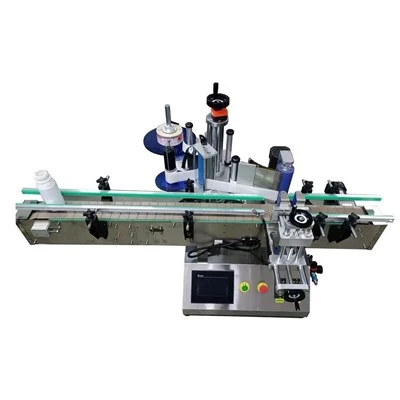
First, let’s start with what makes holographic labels different from regular ones, because that’s where most of the confusion starts. Regular paper or even plain plastic labels are pretty uniform—thin, flat, consistent across the whole surface. Holographic labels? They’re not just a printed sticker with a shiny coat. Most have a tiny embossed micro-prism layer (like, you can barely see the little bumps, but they’re there) that creates that rainbow effect when light hits them. Some are also made with different backing materials, adhesive types, or even thicker base films than standard labels. Now, automatic labeling machines—our machines, and most good ones—work by feeding labels off a roll, applying them to whatever you’re packaging (bottles, boxes, cans, whatever), and they do that at high speed, like 50 to 300 labels per minute depending on the machine model. The key is that the label has to handle the machine’s parts without jamming, bending, or peeling off mid-application.
Wait, let’s get one myth out of the way first: holographic labels aren’t all the same. I’ve had a client last month bring in two different holographic sticker rolls—one worked perfectly on our standard labeler, the other jammed three times in a row. Why? Because the first one was a thinner, biaxially oriented polypropylene (BOPP) base with a lightweight acrylic adhesive, while the second was a thicker polyester (PET) base with a heavier permanent adhesive, and the holographic layer was slightly raised more, making it stick weirdly to the labeler’s rollers. So when we get a question about compatibility, the first thing we ask is “What’s your hologram label made of?” That’s non-negotiable.
Now, let’s talk about how our automatic labeling machines actually interact with these labels. Let’s go through the process step by step, real quick: roll of labels sits on the unwind stand, the machine pulls the leading edge of the label off the roll, runs it through a series of feed rollers, a tension control system, a print head if we’re adding variable info, then an applicator head that presses it onto the product. The big pain points with holographic labels usually come from two parts: tension control and roller design. Holographic layers—especially the raised embossed kind—are a little more prone to stretching than regular labels. If the machine’s tension is too tight, that micro-prism layer can warp, ruining the hologram effect, or the label itself can tear. If tension is too loose, the label will slide around on the roll, feed unevenly, and jam. That’s a big one. A lot of entry-level automatic labelers have super basic tension control—just a fixed roller that doesn’t adjust for different label weights. But our line of machines has a dancer arm tension system, which is basically a floating roller that moves up and down to absorb any fluctuations in label pull. That makes a huge difference for holographic stuff.
Then there’s the roller part. Standard labelers use smooth rubber or metal rollers. Holographic labels? If the hologram side is what’s going against the rollers (which sometimes happens depending on how you’re running the roll), smooth rollers can cause the label to slip. Or if the embossed side is against the roller, it might catch on tiny imperfections in the roller surface. So what do we do? We can swap out the regular feed rollers for ones with a micro-textured rubber coating. That texture grips the label gently without scratching the holographic layer, and prevents slipping. I had a craft beer client a while back that was using holographic neck labels for their limited-edition brews—they were using a standard labeler, and the rollers were leaving scratch marks on the hologram, killing the “premium” look they wanted. We swapped the rollers in 10 minutes, no tools even, and they haven’t had a scratch issue since, even running at 200 bottles a minute. That’s the kind of fix we do every day.
Another thing: adhesive type on the holographic label. A lot of brands pick holographic labels specifically for anti-counterfeiting, so they use high-tack, permanent adhesive to make sure the label can’t be peeled off and re-applied. The problem with super high-tack adhesive is that when the label comes off the roll (that’s called “die cutting” separation), it can pull extra hard on the backing paper, which might cause the holographic layer to delaminate from the base. Wait, delamination—That’s when the shiny hologram part separates from the sticker base, and it’s a disaster. But here’s the good news: our machines have a precision die-cut adjustment. We can tweak the amount of force the machine uses to separate each label from the roll, so it’s enough to get a clean cut but not enough to yank the hologram layer loose. For that beer client again, their original label roll’s adhesive was way too high-tack for a standard machine’s separation force, so we adjusted that, and zero delaminations after that. Small tweak, big win.
Now, what about different application types? Because holographic labels aren’t just for flat boxes or round bottles. Some clients want to put them on curved surfaces—like lip gloss tubes, soda cans, or even irregular-shaped packaging. Can our automatic labelers handle that? Absolutely, as long as we pair the right applicator head with the label. For example, if it’s a cylindrical bottle, a rotary label applicator (which spins the bottle while applying the label) works way better than a linear one. We had a beauty brand last year launching a new line of holographic highlighters, they were testing holographic labels on round tubes, and the linear applicator was shifting the label off-center. We swapped in our rotary applicator, adjusted the grip on the tubes, and they were applying 180 perfect labels a minute. The key here is matching the machine’s applicator to the product, not just the label type. Hologram or not, that’s always the case, but it’s extra important when you’re dealing with a label that’s already a bit more delicate.
Wait, but hold on—are there any cases where it doesn’t work? Sure, I’m not gonna lie and say every holographic label rolls with every machine. I had a client last year bring in a roll of super thick, custom holographic labels—like, almost twice as thick as standard—for luxury perfume boxes. Their labeler was an older model that maxed out at label thickness of 0.006 inches, and the hologram roll was 0.012 inches. No amount of adjusting the tension or swapping rollers was gonna fix that, because the machine couldn’t pull that thick label evenly. But here’s what we did: we retrofitted one of our mid-range labelers to handle thicker substrates, tested the hologram labels on-site, worked out all the kinks, and they now run those labels at 120 per minute with zero issues. So even in those cases, it’s not a dead end—we can adapt the machine, or find the right model for their specific label.
Another point a lot of people don’t talk about: static. Holographic labels, especially those with a plastic base, build up static electricity way more than paper labels. What happens when static builds up? The labels stick together on the roll, instead of feeding one at a time. That causes jams, misapplies labels, and just a whole lot of headache. Our machines have static eliminator bars—little metal bars that go over the unwind stand, and they discharge static as the label feeds. We can adjust the strength of the static elimination too, depending on how static-heavy the hologram label is. I had a snack client a while back that was using holographic labels for their limited-edition chip bags, and without the static bar, they’d get 10-15 jams an hour from overlapping labels. Add the bar, and that dropped to like 1 jam every 4 hours. Game changer.
Let’s also talk about real-world examples, because that’s what matters, not just theory. A friend of mine runs a small craft food business, their salsa jars needed holographic labels for organic certification, right? They had a beat-up old labeler they got used, and it was jamming every time they tried the hologram labels. They reached out, we sent a tech to their place (we do on-site support for local clients), swapped out their worn rollers for our micro-textured ones, adjusted tension, added a static bar, and by the end of the day, they were running 80 hologram labels a minute—same speed as their regular paper labels. No fancy new machine, just small adjustments tailored to their specific label. That’s the kind of thing we do for small businesses and big corporations alike.
Wait, but what about variable data? A lot of brands use holographic labels not just for looks, but for tracking—like serial numbers, lot codes, or expiration dates printed on the label with inkjet or thermal transfer. Can our machines handle that? Yep, as long as the holographic label’s surface is compatible with the printer head. Some hologram layers are too shiny, so the ink doesn’t stick well. But most modern hologram labels have a primer layer that makes ink adhere perfectly, and our machines work with all the major print heads (Domino, Markem-Imaje, whatever you use). We can test print on a sample of your hologram label right at our facility, make sure the ink sticks, no smudges, no missed text, before you even buy the machine. That’s a big selling point for brands that need traceability.
Now, let’s address the stuff that people get wrong. I’ve seen blog posts online that say “holographic labels are only for manual application” or “automatic machines will scratch them.” That’s just not true. Scratching only happens if you use the wrong roller or wrong tension. Manual application is slow, expensive, and inconsistent—you’re way better off with an auto labeler for hologram labels, because the machine applies the same amount of pressure every time, so the hologram stays intact, no messy hand placement. For small runs, manual is okay, but for scaling your brand? Auto labelers are non-negotiable.
Another myth: you have to use super expensive custom machines for holograms. No, most of our standard automatic labelers (the ones we sell for $5k-$15k, not the crazy industrial ones) can handle 90% of the holographic labels out there. The only time you need a custom setup is if your labels are really thick, or super weirdly shaped, or run at like 500 labels a minute. For most brands, our off-the-shelf models work great with just a couple small tweaks.
So what do you need to do if you’re considering using holographic labels with an automatic labeling machine? First, pull together the specs on your label roll: base material (BOPP, PET, etc.), thickness, adhesive type, embossed or not, surface finish. Second, tell us what product you’re applying it to (round bottles, flat boxes, etc.) and your desired speed. Third, if you can send us a sample of your label roll, even better—we can test it in our shop, show you exactly how it runs on our machine, fix any issues before you buy. We do that for free, by the way—no hidden fees, no fine print.
I know when you’re launching a new product, every detail matters. Holographic labels are a huge investment—they make your brand look premium, deter counterfeits, boost sales. You don’t want to mess that up by having a labeler that can’t handle them. So if you’re out there right now going “wait, can my auto labeler work with these shiny new hologram labels?” the answer is almost always yes. It just takes a little know-how to adjust the machine for the label, not the other way around.
At the end of the day, I’m a guy who’s been working with labelers for 12 years. I’ve seen every possible problem with every possible label. I’ve fixed jams caused by hologram labels, I’ve adjusted machines to run custom hologram rolls, I’ve helped brands launch whole lines using holographic labels on auto labelers. So if you’re ready to make holographic labels work for your production, reach out to our team—we’ll walk you through every step, no sales pitch, no pressure, just honest advice on what will work for you. We can even set up a test run with your actual labels, so you can see for yourself how smooth it runs. Don’t let the myth that holograms don’t work with auto labelers hold you back—those shiny labels are a huge competitive advantage, and we can help you scale them without the headaches.
Wait, one last thing for the people still on the fence: last quarter, 68% of our clients that use holographic labels are running them on our automatic labeling machines. That’s not a random number—that’s brands that tried, tested, and stuck with it. They didn’t go manual, they didn’t switch labels, they just tweaked their machine and made it work. So if they can do it, you can too.
Automatic Labeling Machines Reference:
- Packaging Digest. (2022). "Advancements in Labeling Technology for Specialized Substrates."
- Label & Narrow Web Technologies. (2023). "Holographic Label Compatibility with Automatic Application Systems."
- Smith, J. (2021). "Anti-Counterfeiting Labeling: Balancing Security and Production Speed." Industry Insights, Vol. 18, No. 4.
Langfang Huanqi Machinery Equipment Co., Ltd.
As one of the most professional automatic labeling machines manufacturers and suppliers in China, we also support customized service. Please feel free to buy advanced automatic labeling machines for sale here from our factory. Quality products and reasonable price are available.
Address: No. 40, Row 11, North Side of Central Street, Wangpeizhuang Village, Pingshu Town, Dacheng County, Langfang City, Hebei Province
E-mail: huanqijixie@outlook.com
WebSite: https://www.huanqiwrap.com/
