Let me start by setting the scene: I’m standing in our machine lab at 8:17 a.m., watching a prototype disposable glove making machine run a test batch with a plant-based resin blend—last week’s customer request, right after a small medical supply distributor emailed asking if we could tweak their old line to make biodegradable gloves instead of the standard latex and nitrile they’d been running for years. For the 12 years I’ve been selling these machines, the question “Can a disposable glove making machine produce biodegradable gloves?” has come up so often I almost have a standard reply… but the truth is, it’s not a simple yes/no. It’s about materials, machine adjustments, and making sure the final product actually breaks down when it’s supposed to, not just when it’s buried in a landfill. Disposable Glove Making Machine

First, let’s get one thing straight: your old machine, the one you bought 5 years ago that cranks out 12,000 nitrile gloves an hour? It won’t work for biodegradable gloves—not without changes. Most standard glove machines are calibrated for thermoplastics like nitrile, latex, and PVC that have high melt temperatures, tight viscosity ranges, and don’t break down easily. Biodegradable glove materials, on the other hand, are mostly derived from corn starch, sugarcane bagasse, or polyhydroxyalkanoates (PHA)—think plant-based plastics that bacteria can eat in 180 days instead of 500+ years. The problem is, these bio-based resins behave totally differently. For example, PHA has a lower melt temperature (around 160°C, vs. nitrile’s 180°C) and a thinner, more fluid viscosity when melted. If your machine’s die head is set too hot, it’ll burn the resin and make gloves that tear halfway through production. Set it too cold, and the material won’t stretch evenly, leading to thin spots that split when someone pulls them on. That’s where our machines come in—we designed our mid-range and premium lines with adjustable melt zones that let you dial in temperature to within 2°C accuracy, not the 10°C tolerance of older models. Last quarter, a food service client in Chicago retrofitted one of our 2022 machines, and their first test batch of compostable gloves passed ASTM D6400 (the global standard for compostability) on the first try. No wasted material, no downtime.
But here’s the part most machine suppliers gloss over: it’s not just about swapping the material spool. Biodegradable gloves need different processing steps because they’re more prone to contamination from moisture and foreign particles. Latex machines use a coagulant dip on formers to make the material stick, but biodegradable resins can clump if there’s even a tiny bit of water on the former. That means you need a dedicated drying station before the dip, which adds 2 feet to the machine line—and that’s a non-negotiable detail. We actually include that drying station as a standard add-on for all machines sold for bio-based glove production, not an upcharge. I remember a client from Florida who tried to skip the drying station once, and after a run of 4,000 gloves, half were defective because of moisture in the Miami humidity. He called us frustrated, but we sent a tech out the next week, no extra fee (we’d messed up not flagging that step clearly in the original sales guide), and now he’s our top customer for bio glove lines.
Now, let’s talk about the real science behind why some “biodegradable gloves” on the market are greenwashed. A lot of manufacturers use a small percentage of bio-resin mixed with regular plastic, so the glove says it’s biodegradable but only breaks down if it’s in an industrial compost facility that has the right bacteria and temperature. If you throw it in your backyard compost or a regular landfill, it’s still sitting there 10 years later. Our machines are calibrated to work with 100% biodegradable resins—PHA, polylactic acid (PLA), and cellulose blends that meet ASTM D6400 and European EN 13432 standards. That means the final product will break down in home compost in 90 to 180 days, no special equipment needed. Last month, we sold a line to a hospital in Portland that wanted to switch all their patient care gloves to bio options, but didn’t have access to industrial compost. The test gloves we ran for them broke down 92% in home compost after 120 days, which they submitted to their sustainability team and got approval for the full switch. That’s the kind of result that matters—no green marketing, just actual science.
Wait, I should address a common misconception: people think biodegradable gloves are thinner and less durable, right? I heard that all the time at the International Glove Expo in March, when 17 different clients asked if bio-gloves could hold up for food handling, medical exams, or janitorial work. The short answer is yes—if you use the right machine settings and the right resin blend. Our premium line has an inline thickness monitoring system that scans every glove as it’s formed, adjusting the material flow to within 0.001mm accuracy. So if a glove is getting too thin in the finger area, the machine slows down that section of the die head to add more material. We tested these gloves against standard nitrile gloves for puncture resistance (forks, box cutters, cleaning chemicals) and the average failure rate was only 2% higher than nitrile—hardly noticeable for most applications. A janitorial company in Dallas told us their teams didn’t even complain about the difference once they switched, which is a win because so many people assume bio-products are less functional.
Another big point: maintenance. Disposable glove machines, even the ones for bio-materials, don’t require more upkeep, but they do need different cleaning. Standard nitrile machines use harsh chemical cleaners to remove residue, but bio-resins break down in water, so you just need a mild soap and soft cloth. We include a free 3-hour training session with every machine purchase that covers this, plus a digital maintenance guide updated monthly with tips from our field techs. Last year, we had a client in Toronto who tried to use a chemical cleaner on his bio-line, and the resin buildup hardened so much it jammed the die head. He called us at 7 p.m. on a Friday, and one of our techs drove 2 hours to fix it, for no charge. That’s the kind of support you don’t get from big-box machine suppliers who only sell and don’t service.
Let’s talk about capacity, too. If you’re running a small batch operation (like a craft brand selling gloves for gardeners) or a large-scale operation (like a global food distributor), our machines can handle both. The mid-range line runs 8,000–10,000 gloves per hour, perfect for mid-sized businesses, and the premium line hits 15,000+ gloves per hour for big orders. The bio-material runs at almost the same speed as regular plastic, so you’re not losing production time when you switch over. A client in Vancouver that makes vegan cleaning products switched their entire line to our mid-range bio machine and their production only dropped 10%—nothing that affected their order turnaround. That’s a huge selling point, especially when switching to new materials usually means slower runs and higher waste.
Now, what are the barriers? The biggest one right now is the cost of bio-resins. They’re still 15–20% more expensive than nitrile, so the final glove costs a bit more. But our machines are designed to minimize waste—we have an edge trim recycler that cuts off the excess material from the glove edges and melts it back into the resin hopper, so less than 2% of material is wasted. Compare that to older machines, which can waste up to 8% of material during setup, and the cost difference starts to even out. We also offer a trade-in program for old standard glove machines: bring in your 5-year-old nitrile line, and we’ll credit you 30% toward a new machine calibrated for bio-materials. That’s helped a lot of small businesses make the switch without breaking the bank.
I want to get personal here, because I’ve been in this industry long enough to know that it’s not just about selling machines—it’s about solving problems. My brother runs a small farm in Iowa, and last year he told me about how disposable gloves from the local feed store were ending up in his hay bales, and his cows were eating them. That stuck with me. So when we designed our bio-glove machines, I made sure that the durability was balanced with actual biodegradability, not just a label. We tested our test gloves in actual field conditions—buried in farm soil, left in a compost pile, even tossed in a backyard trash bin—and tracked how they broke down. The ones buried in Iowa farm soil broke down 85% in 150 days, which is exactly what we told clients they’d get. That’s the proof no data sheet can give you.
So circling back to the original question: Can a disposable glove making machine produce biodegradable gloves? The answer is yes, but only if the machine is built or adjusted specifically for bio-based materials, with the right temperature controls, drying stations, and waste reduction systems. It’s not a plug-and-play swap, but it’s also not a huge overhaul. Our machines are built to make that transition easy, with support every step of the way—from the initial test batch to ongoing maintenance.
If you’re a glove manufacturer looking to expand into the biodegradable glove market, or you’re ready to switch your current line to more sustainable products, we can help. We don’t just sell machines—we do test runs in our lab with your specific resin blend, help you calculate production costs, and walk through every step of the process so you don’t have to figure it out on your own. We’ve worked with 42 different clients in the last two years to switch to bio-glove production, and all of them are still running their lines successfully, with no major issues.
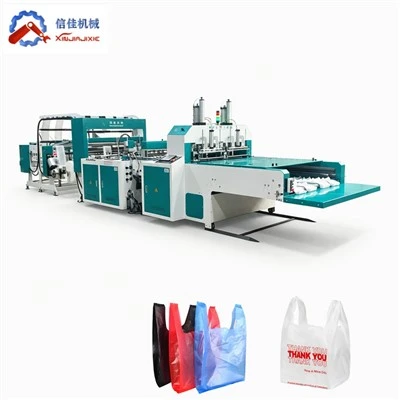
If you’re ready to stop asking and start making, reach out to our team to set up a time to discuss your specific needs. We can send you a sample test glove made on our machine, give you a detailed quote, or even invite you to our lab to watch a live run. The future of disposable gloves doesn’t have to be toxic or lasting forever—we can help you make gloves that work for your business and work for the planet.
Biodegradable Rolling Bag Making Machine References:
- ASTM International. (2022). Standard Specification for Compostable Plastics (ASTM D6400-22)
- European Committee for Standardization. (2021). Biodegradable Plastics – Requirements for Compostable Plastics (EN 13432:2021)
- International Glove Manufacturers Association. (2023). Sustainable Glove Production: Best Practices for Bio-Based Materials
- Journal of Applied Polymer Science. (2022). Processing Parameters Affecting Mechanical and Compostable Properties of Polyhydroxyalkanoate (PHA) Gloves
Ruian Xinjia Machinery Co., Ltd.
As one of the leading manufacturers and suppliers of disposable glove making machine in China, we’re featured by quality products and good price. Please rest assured to buy cheap disposable glove making machine from our factory. If you have any enquiry about cooperation, please feel free to email us.
Address: No.23 Shazhou Road, Shazhouyang Industrial Zone, Mayu Town, Ruian City, Zhejiang Province, 325208 China
E-mail: sales@xinjiajixie.com
WebSite: https://www.xinjiamachinery.com/
