As a peptide blends supplier, I get this question every single week: “Are peptide blends approved by the FDA?” It’s fair—peptides have exploded in popularity in recent years, from anti-aging products to performance supplements, and when you’re investing money (and sometimes trust) in a new wellness product, you want clarity on regulation. I’ve spent 8 years working with peptide blends, testing formulations, navigating industry guidelines, and talking directly with clients who want to know if what they’re buying is legal, safe, and compliant. Let’s break this down without the confusing jargon, because this isn’t just a “yes or no” answer—it’s nuanced, and it matters a lot whether you’re a consumer or a business partner looking to source your own peptide blends. Peptide Blends

First, let’s start with the basics: what are peptide blends, for anyone who’s new here? Peptides are short chains of amino acids—the building blocks of protein, which our bodies use for everything from muscle repair to cellular signaling. A peptide blend, as I define it for my work, is a custom mix of two or more individual peptides combined to create a synergistic effect you can’t get from a single peptide. For example, some blends pair a collagen-boosting peptide with an anti-inflammatory one to support joint health, while others combine a satiety peptide with a metabolism-supporting one for weight management support. The key here is that a blend isn’t just a random mix; it’s formulated to work together, so regulation of these mixes can’t always be boiled down to the rules for individual peptides.
Now, the FDA part. Let’s be clear up front: the FDA does not “approve” peptide blends in the same way it approves a new drug. That’s the first misconception I hear constantly. Drug approval is a rigorous process that takes 10+ years, costs hundreds of millions of dollars, and requires proof of safety and efficacy through clinical trials. Peptide blends, when marketed as dietary supplements (which is how most of the ones I supply are categorized), fall under a totally different set of FDA rules. The FDA does not approve dietary supplements, period. The 1994 Dietary Supplement Health and Education Act (DSHEA) is the law here, and it’s a critical point to understand: supplement manufacturers are responsible for ensuring their products are safe before they hit the market, not the FDA. The FDA only steps in after a product is on shelves if a safety issue arises—like if reports of adverse reactions come in, or if a product is found to contain unlisted drugs, or if it makes false medical claims.
Wait, but let’s make sure I’m not oversimplifying. There’s a caveat here: some peptides are actually FDA-approved as drugs. For example, peptides like liraglutide (sold as Victoza) or semaglutide (Wegovy, Ozempic) are prescription drugs approved by the FDA for specific uses, like type 2 diabetes or weight management. If a peptide blend includes one of these FDA-approved drug peptides, that changes everything. In that case, the blend would be considered an unapproved new drug if it’s marketed without the FDA’s okay—no exceptions. That’s a line I will never cross as a supplier. I only work with peptide blends that use unregulated peptides (meaning they’re not FDA-approved as drugs) for supplement use, because adding a drug-approved peptide to a blend for over-the-counter sale is illegal. That’s a hard rule I enforce for my business, because the risk to clients—and to our reputation—is too high.
Let’s also address a common myth I hear from new clients: that all peptides are unregulated, so anything goes. That’s not true either. Even for supplement-grade peptides, there are FDA rules you have to follow. For example, you can’t market a peptide blend as a treatment, cure, or prevention for a disease. If a label says “this blend cures arthritis” or “reduces blood sugar by 20%,” that’s a medical claim, not a supplement claim, and the FDA will take action. My team works closely with our formulation scientists to make sure every blend we supply has only structure-function claims—like “supports joint comfort” or “helps maintain healthy metabolism”—which are allowed for supplements as long as they’re truthful and not misleading. We also test every batch of our peptide blends for purity, potency, and contaminants, because even though the FDA doesn’t pre-approve supplements, it does require that supplements don’t contain harmful ingredients and that their labels are accurate. Last year, we had a client try to bring in a peptide blend from overseas that tested for heavy metals at three times the allowed limit—we rejected it immediately, because it’s not worth putting our name on a product that could make someone sick.
I want to be transparent here, too, because I know this area can feel murky. The FDA’s stance on peptide blends as supplements is still evolving. A few years ago, the agency sent warning letters to several supplement companies that were marketing peptide blends with claims that crossed into medical territory—like a blend labeled for “treating erectile dysfunction” when it was sold as a supplement. Those companies had their products pulled from shelves, and some faced fines. That’s why education is so important, both for me as a supplier and for my clients. I don’t just send a batch of peptides and walk away; I talk to every partner about labeling requirements, allowed claims, and how to market their blend legally. For example, if a fitness brand is sourcing a peptide blend for pre-workout support, I advise them to stick to claims like “supports muscle recovery” instead of “builds 10 pounds of muscle in 2 weeks”—the latter is a false and misleading claim that would trigger FDA scrutiny.
Another point people often ask me: what about research peptides? I get requests all the time for “research-grade” peptide blends, which are meant for laboratory use only, not for human consumption. Those are a whole separate category, and they’re not regulated for human use at all. I only supply research-grade peptides to licensed labs and academic institutions, never to anyone who would use them on people. That’s another non-negotiable rule for my business, because distributing research peptides for human use is illegal, and it puts both the end user and my company at risk. I’ve seen too many stories of people buying unregulated research blends online, using them, and suffering adverse effects—some from contaminants, some from mislabeled dosages, and some from peptides that interact badly with other medications. I take that responsibility seriously, so I make sure every single client goes through a verification process to confirm they’re a legitimate lab or supplement brand before I work with them.
Let’s also talk about what this means for consumers, since that’s who most of the questions end up coming from. If you’re buying a peptide blend over the counter, here’s what to look for: first, check the label for a “Supplement Facts” panel—all legally sold supplements in the U.S. have this. If a product doesn’t have that, it’s probably not a legitimate supplement, and you should walk away. Second, avoid any product that makes medical claims. If it says it treats disease, that’s a red flag. Third, if a product is priced extremely low (like $20 for a 30-day supply of a blend that uses high-purity peptides), be wary. Good quality peptide blends cost money to formulate and test, and if the price seems too good to be true, it often means the product is cut with fillers, contaminated, or uses low-quality peptides. As a supplier, I can tell you that high-purity peptides that are safe for supplement use aren’t cheap, and trying to save a few dollars usually ends up costing you in the long run.
I often get asked why the FDA doesn’t approve peptide blends as supplements, and the short answer is that DSHEA created a framework for supplements that’s separate from drugs. Congress intended for supplements to be a way for people to support their health with natural products, and the FDA’s role is to act after problems occur, not pre-approve every product. That’s not to say the system is perfect—there have been cases of unsafe supplements on the market—but it’s also why you, as a consumer, have to do your due diligence when buying peptide blends. For businesses, that means partnering with a supplier that prioritizes safety, purity, and compliance, like I do.
Over the years, I’ve built my business on trust, because peptide blends are still a relatively new category, and there’s a lot of misinformation out there. I’ve had clients come to me after having a bad experience with a supplier that sold them a blend that tested for unlisted ingredients, or that had a dosage that was way too high. That’s why I invest in third-party testing for every batch of blends we produce—independent labs that check for potency, purity, contaminants, and any hidden drugs. We make those test results available to all our clients, because transparency is non-negotiable. If I can’t show you a third-party test report for a blend, we don’t work together.
Let me wrap this up by circling back to the original question: “Are peptide blends approved by the FDA?” No, not as supplements. The FDA does not approve dietary supplements, including peptide blends, that are marketed for human consumption. If a peptide blend includes a peptide that is FDA-approved as a drug, selling that blend as a supplement is illegal. If a peptide blend is marketed with medical claims, it will be regulated as an unapproved drug, which can lead to legal action. But if you’re working with a reputable supplier, using a supplement-grade peptide blend, and marketing it legally with truthful structure-function claims, that’s compliant with FDA rules.
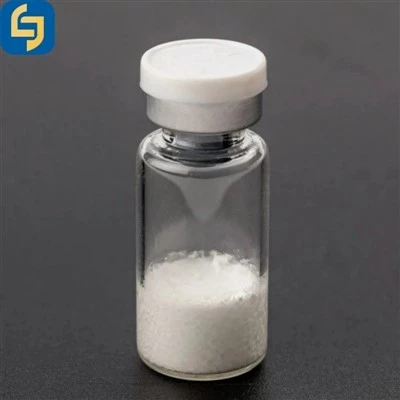
If you’re a brand owner looking to source a custom peptide blend, or a researcher in need of research-grade peptides for lab use, I’m here to help. We work with clients across industries, from wellness brands to academic labs, and we prioritize safety, compliance, and quality in every product we supply. Whether you’re just starting out and need guidance on formulation, or you’re a seasoned brand looking for a reliable supplier, we can partner to make sure your peptide blend is legal, safe, and effective.
Peptide Blends References
- U.S. Food and Drug Administration. (2024). Dietary Supplements: What You Need to Know.
- U.S. Food and Drug Administration. (2023). Approved Drugs & Biological Products.
- Dietary Supplement Health and Education Act of 1994, Pub. L. No. 103-41, 108 Stat. 432.
- Center for Drug Evaluation and Research. (2022). Warning Letters Related to Unapproved Drugs in Dietary Supplements.
- U.S. Food and Drug Administration. (2021). Research Use Only (RUO) Products: Regulatory Considerations.
Zhengzhou Longjia Electronic Technology Co., Ltd.
As one of the leading peptide blends manufacturers and suppliers in China, we have world-leading production equipment and strong manufacturing capabilities. Please feel free to buy bulk peptide blends in stock here from our factory. For free sample, contact us now.
Address: Room 2211, 22nd Floor, Unit 3, No.76 Zheng Bian Road, Guancheng Hui District, Zhengzhou City, Henan Province
E-mail: lucy@zzljtech.com
WebSite: https://www.longjiaxintide.com/
