If you’re in the market for high-performance laser modules—whether for industrial alignment, medical device manufacturing, aerospace calibration, or even outdoor signage projects—you’ve likely come across the acronym “DOE” more than a few times. Diffractive Optical Elements (DOEs) are tiny, precision-engineered components that split a single laser beam into multiple beams, create custom patterns, or shape light into specific geometries (think grids, lines, circles, or even complex logos). But as with any electronic component used in tough environments, one question comes up constantly: Are DOE Laser Modules waterproof? As a supplier who’s spent over a decade designing, testing, and delivering these modules to clients across industries, I get asked this question at least a dozen times a week. The short answer isn’t a simple “yes” or “no”—it’s much more nuanced, and it directly ties to how we build our modules, what they’re rated for, and how they’re intended to be used. Let’s break this down, because getting it wrong can lead to costly failures, downtime, or even safety risks. DOE Laser Modules
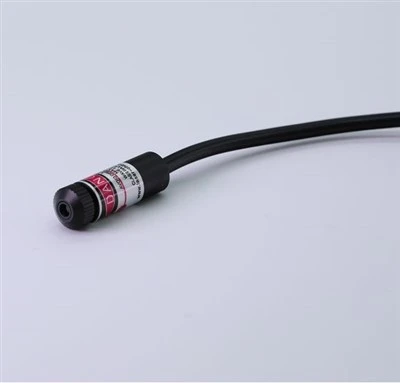
First, let’s set a baseline for what a DOE laser module actually is, beyond the acronym. At their core, these modules have three main parts: a laser diode (the source of light), the DOE itself (a glass or polymer micro-structured optic that manipulates the beam), and a housing that protects all of this. The housing is the first line of defense against water, dust, and debris. But not all housings are created equal—and that’s where most confusion happens. When I see a client assume their DOE laser is “waterproof” because a spec sheet says “IP65,” I have to step back and clarify: IP ratings (Ingress Protection) are not universal. Let’s translate that: an IP65 rating means the device is dust-tight (no dust can get inside) and can withstand low-pressure water jets from any direction (up to 12.5 liters per minute, for three minutes, at a distance of 3 meters). An IP67 rating means it can be submerged in up to 1 meter of water for 30 minutes, and IP68 is for extended submersion deeper than 1 meter. None of these mean the module is “waterproof” forever, and none account for the DOE itself being damaged by water.
Wait—why would water hurt the DOE, anyway? Most DOEs used in industrial and commercial laser modules are made of fused silica, borosilicate glass, or sometimes a polymer like PMMA for low-cost, short-range applications. Glass DOEs are extremely durable, but if water seeps past the housing seal and gets trapped between the DOE and the laser diode, or on the surface of the DOE itself, that’s a problem. For polymer DOEs, prolonged exposure to water or high humidity can cause swelling, warping, or even degradation of the micro-structures that make the DOE work. Those micro-structures are measured in micrometers—smaller than the thickness of a human hair. A tiny bit of water residue can distort the beam pattern the DOE is designed to create, turning a clean grid into a blurry mess, or cutting the power of the module by 10-20% overnight. I’ve seen this happen firsthand: a construction client ordered 20 IP65-rated DOEs for outdoor layout lines, and within two weeks, half of them were failing. When we inspected them, we found that heavy rain had seeped into the housing’s cable gland (a common weak point in cheaply built modules) and pooled on the DOE’s surface, etching permanent marks into the polymer micro-structures. That’s why a high IP rating doesn’t automatically equal a waterproof DOE laser module—especially if the module isn’t designed for the specific environment it’s operating in.
Let’s talk about how we, as a supplier, approach this. For years, we’ve had two lines of DOE laser modules: our standard line for indoor or light-duty outdoor use, and our heavy-duty line for extreme environments. Our standard modules have an IP65 rating, but we explicitly label them for “splash resistance, not submersion.” We test every unit with a spray of water to make sure seals hold, but we never submerge them, because even the best cable glands can develop small gaps over time. Our heavy-duty line, on the other hand, is rated IP67, with a fully sealed housing, silicone gaskets around every seam, and welded cable glands instead of screw-in ones that can loosen. We also use only glass DOEs for these heavy-duty units—no polymer. Fused silica, in particular, is resistant to water, humidity, and even mild chemicals like cleaning solutions, making it perfect for oil and gas sites, marine applications, or agricultural equipment that gets hosed down regularly.
But here’s a key point I always emphasize to clients: even the most “waterproof” DOE laser module isn’t invincible if it’s misused. Last year, a coastal engineering firm reached out to us, panicked because three of our IP67 modules they’d installed on a dock had failed after a storm. When we analyzed the units, we found that saltwater had crept into the housing through a tiny scratch on the housing’s bottom edge—something that happened during installation. Saltwater is especially corrosive; even a small amount can eat away at the sealant over months, or get between the laser diode and the DOE, causing corrosion on the diode’s contacts. That’s why we include a set of installation guidelines with every module, and our technical support team is on call 24/7 to answer questions about sealing, mounting, and maintenance. We also offer custom enclosure modifications for clients who need something beyond our standard ratings—like modules for underwater use, for example, where we build a pressure-rated housing that can withstand being submerged to 10 meters or more, with a glass DOE that’s designed to resist water absorption.
I’ve also seen clients confuse “waterproof” with “weatherproof,” and that’s a dangerous mistake. Weatherproof is a broad term that can mean anything from rain-resistant to UV-stabilized for prolonged sun exposure. It doesn’t mean it can handle being dropped in a lake, or being sprayed with high-pressure hoses at a car wash. A DOE laser module that’s weatherproof might work fine for a sign that’s mounted on a building, exposed to rain and snow, but it will fail quickly if you submerge it in even a foot of water. That’s why we’re careful with our spec sheets: we never use “waterproof” unless we’re talking about fully submerged applications, and even then, we outline exactly what depths and durations the module is rated for.
Another common misconception: if the module’s housing is sealed, the DOE is automatically protected. Not so. When water is trapped inside a sealed housing (even if it’s IP67), if the module is turned on, the heat from the laser diode can cause condensation to form on the DOE’s surface—especially if the module goes from a cold outdoor environment to a warm indoor one. Condensation is just as bad as standing water: it can fog the DOE, distort the beam, and over time, cause mold or mineral buildup that damages the micro-structures. That’s why our heavy-duty modules have a small desiccant packet inside the housing—we add it during assembly to absorb moisture, and we test every unit for condensation before it leaves our warehouse. We also advise clients to mount modules in locations where there’s airflow around the housing, to prevent condensation buildup, and to avoid sudden temperature changes if possible.
Let’s talk about real-world examples to put this in perspective. A couple of years ago, a medical device manufacturer came to us needing DOE lasers for a surgical robot that’s used in operating rooms. The modules are used to project a precise line on a patient’s skin to guide incisions, and occasionally, the OR team might spill saline or cleaning solution on the robot’s arm. We supplied them with our IP65 standard modules, and in three years of use, only one unit failed—and that was after a technician accidentally dropped the robot in a sink full of water. For another client, a marine survey company that uses DOE lasers to map underwater structures, we supplied custom IP68 modules with fused silica DOEs and pressure-rated housings. Those modules have been in use for four years, submerged to an average of 5 meters, and they’ve had zero failures related to water exposure. The difference? The marine team follows our maintenance guidelines, checks the housing seals every three months, and stores the modules in a dry place when not in use.
So, what does this mean if you’re in the market for a DOE laser module, and you’re worried about water exposure? First, don’t rely on marketing jargon like “waterproof” without asking for a full spec breakdown. Ask about the IP rating, what materials the DOE is made of, what the housing is rated for, and what testing the module has undergone. A reputable supplier will be able to give you concrete data—if they can’t, that’s a red flag. Second, match the module to your environment. If you’re using it indoors, splash resistance (IP65) is more than enough. If you’re using it outdoors in rain, snow, or near saltwater, go for a heavy-duty IP67 or IP68 module. If you’re planning to use it underwater, you’ll need a custom unit designed for that application. Third, follow the installation and maintenance guidelines. Even the best module will fail if it’s improperly mounted, or if you skip regular seal checks.
As someone who’s been in this industry for years, I can tell you that the biggest mistakes I’ve seen clients make have nothing to do with the quality of the module—it’s about assuming a one-size-fits-all answer to “are DOE laser modules waterproof?” There’s no shame in not knowing, but it’s better to ask the right questions up front than to deal with the cost of replacing modules, downtime, or even safety issues. For example, if you’re using a DOE laser module in a food processing plant where it might be sprayed with water during cleaning, a standard IP65 module might work, but if you’re hosing it down regularly, you’ll need a IP67 module with stainless steel housing to resist corrosion.
At the end of the day, the answer isn’t black and white. Some DOE laser modules are waterproof for specific use cases, some are splash-resistant, and some are meant for indoor use only. The key is to work with a supplier who understands your application, can guide you to the right module, and stands behind their products. We’ve built our business on that—making sure every module we deliver is tailored to what our clients actually need, not just what a spec sheet says.
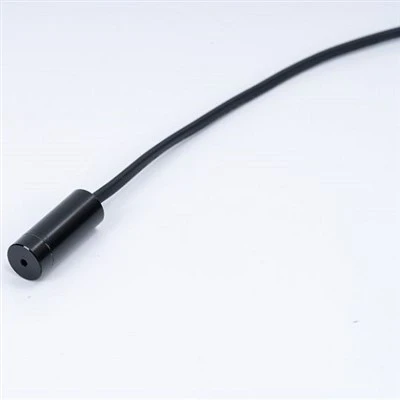
If you’re looking for a DOE laser module for your next project, whether it’s a new outdoor alignment system, a marine survey tool, a medical device, or something in between, we’re here to help. We can walk you through our product lines, answer any questions you have about water resistance, and even custom-build a module if your needs are unique. Reach out to our team to discuss your requirements and find the right solution for your application.
Multi-Beam Laser Modules References
- International Electrotechnical Commission (IEC) 60529: Degrees of Protection Provided by Enclosures (IP Code)
- Diffractive Optics and Micro-Optics: Principles, Fabrication, and Testing, Springer, 2019
- Industrial Laser Equipment Environmental Testing Guidelines, Laser Institute of America, 2021
- Polymer Optics for Harsh Environments: Durability and Performance, Wiley, 2020
Changshu Desheng Optics Electronics Co., Ltd.
As one of the most professional doe laser modules manufacturers and suppliers in China, our products have good reputation in the market. Please feel free to buy advanced doe laser modules for sale here from our factory. Good service and quality products are available.
Address: 8A, Yineng science and technology industrial park, No.183, Yinhe Road, Southeast Development Zone, Changshu, Jiangsu Province, China.
E-mail: desheng1@dershinelaser.com
WebSite: https://www.ds-lasers.com/
