Hey everyone, Us Standard Plug Pin
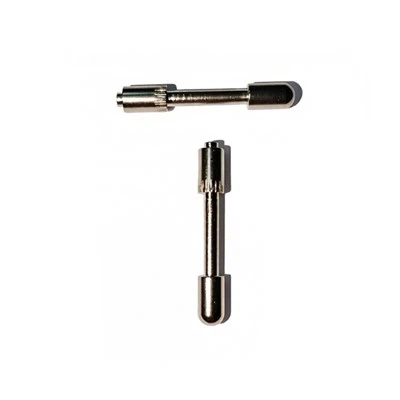
I’ve been working as a US standard plug pin supplier for going on six years now, and let me tell you, one of the most common questions I get from folks reaching out from overseas—especially folks in India—is “wait, why do these pins look so different from what we use back home?” It’s not just a random design thing, either. There’s actual engineering, safety, and even long-standing industry standards that go into why US standard plug pins and Indian plug pins are as different as they are. Today, I want to break that down for you in plain talk, no stuffy jargon, because I’ve walked new clients through this a hundred times and it always boils down to two big things: safety first, and not cross-breeding plugs that’ll fry your devices or worse.
Let’s start with the basics most people don’t realize. First, the US standard plug pins we supply—these are the ones that go into NEMA 5-15 plugs, right? That’s the standard for most everyday 120V, 15A devices here in the States: your phone chargers, laptops, blenders, table lamps. The pins themselves—they’re flat, right? Two parallel blades, a bit less than half an inch wide, and usually around an inch long, plus a round ground pin right below them if it’s a grounded plug (which almost all newer devices use). Wait, and there’s a thing called the “polarized” pin, too—one blade is a tiny bit wider than the other. Why? Because that way you can’t plug the two blades into the outlet backward, so the hot and neutral wires don’t get flipped. That’s a big safety call, honestly.
Now, Indian plug pins—let’s get that straight. Most common in India is the IS 1293 standard, right? Those are round pins, two of them, usually 4mm in diameter and 19mm long, spaced 17mm apart. And wait, a lot of people don’t know India also uses three-pin versions, with a third round pin for grounding. The big thing here is the voltage, too—India runs on 230V, right? That’s double the 120V we use in the US. Oh, and the frequency is different too: US is 60Hz, India is 50Hz. That plays a part in why the pins aren’t the same size, too.
Let’s dive into the actual physical differences, because that’s the part that trips people up when they’re shipping devices between countries, or trying to make adapters. First, shape: US pins are flat, Indian are round. No way you can stick a flat US pin into a round Indian outlet—wait, no, wait, actually, don’t force it, that’s a fire hazard. And vice versa, round Indian pins won’t slot into US flat outlets. But it’s not just shape. Let’s talk size: US 5-15 pins are narrower. The flat blades are like 6.35mm wide, where Indian round pins are 4mm thick. The spacing? US parallel blades are 12.7mm apart, Indian round pins are 17mm apart. So even if you tried to grind down a US pin to fit a round socket, it’d never line up right. That’s intentional, by the way—no cross-compatibility.
Wait, why not make them compatible? I get that question all the time from people who travel or import/export. Let’s get into the why behind each design, because it’s not just arbitrary rules. Safety is the big one here. US 120V is lower voltage, so the insulation and pin design can be a bit different, but the polarized pins are a safety feature. If you flip the hot and neutral in a US plug, the switch on your lamp might turn on the neutral instead of the hot, so the base stays live even when the switch is off—bad news if you change a bulb. Indian 230V is way higher voltage, so even a tiny slip could cause a bigger arc, right? Their round pins are sturdier, can handle that higher voltage and current load better. Also, the ground pin: US grounded plugs have that third round pin, but it’s only for 15A max. Indian ground pins are thicker too, because they have to handle more power for devices like water heaters or washing machines that use that 230V.
Another thing I’ve noticed as a supplier: the tolerance is totally different too. When we make US standard plug pins, we have to keep super tight tolerances—like, within 0.02mm—to make sure they fit into US outlets every single time, no wiggling, no loose connections. Loose connections cause overheating, which is a fire risk. Indian plugs, their round pins have slightly wider tolerances because they’re designed to be more durable for heavy use, but that doesn’t mean you can cut corners making them, obviously. I’ve had clients from India ask if they can use US pins for their devices, and I always say no—even if the voltage adapter fixes the 120/230V issue, the pin fit is going to be loose, or not line up, or even melt because it’s not rated for the current.
Wait, let’s touch on the other plug types, too, because it’s not just the two main ones. The US also has NEMA 5-20 plugs for heavier devices, like space heaters, with a T-shaped third pin. India has the IS 1293 Type C, which is the two-pin round one, used for smaller devices. And there’s even a Type D in India for older appliances, which is round pins spaced a bit further apart. But regardless, none of these line up with US pins at all. I once had a guy in Bangalore email me, saying he bought a portable blender from the US and wanted to adapt it for his home. I told him, dude, even if you get an adapter, the pins won’t grip tight. He ended up ordering a custom adapter from a local electrician, but he still had issues because the current draw was wrong for the US pin’s rating.
Also, let’s talk about current ratings, because that’s a big part of the pin’s design. US standard plug pins (for NEMA 5-15) are rated for 15A at 120V, so total power is 1800 watts. Indian IS 1293 two-pin round pins are usually 6A or 10A, and the three-pin is 16A at 230V, so total power up to 3680 watts. That’s why the Indian pins are thicker—they need to carry more current without overheating. A US pin is thin, right? Because it only needs to carry half the voltage, so less current for the same wattage. So if you tried to use a US pin for a 2000 watt Indian device, that’s 10A vs US’s 15A, wait, no, let’s do the math: 2000W divided by 230V is ~8.7A, divided by 120V is ~16.7A. Oh, right, so a US pin is rated for 15A, which is almost enough, but the problem is the size difference and the voltage. The insulation around the Indian socket is thicker for 230V, so a US pin might not reach the right contact point, causing a short.
I’ve seen too many people get burned (pun intended) from ignoring this. Last year, a small electronics importer in Mumbai reached out because they were having complaints from customers that their US-made phone chargers didn’t work with Indian outlets. Turns out, they were using cheap adapters that forced the flat US pins into round Indian sockets. The pins were bending, the connection was arcing, and some chargers were dying. I told him to stop selling those adapters, because it’s a safety hazard, and instead to buy chargers with Indian pin plugs, or use a proper adapter that fits the round pins. That’s the thing—adapters aren’t just shape-shifters, they have to handle the electrical load too.
Now, as a US standard plug pin supplier, this stuff matters to me because I’m not just selling metal bits. I’m selling safety. A lot of clients from overseas don’t realize that the design of the pins isn’t just a random standard—it’s been tested for decades to prevent fires, shocks, and device damage. The US standard went through big updates in the 1960s when polarized plugs became mandatory, and again in the 90s for grounded pins, to cut down on electrical accidents. India updated their IS 1293 standard around the same time too, switching from older round pin sizes to the 4mm standard, so that’s where most of the current devices come from.
Wait, another fun little detail: the US pin’s ground pin is a round pin, but it’s smaller than the live and neutral pins, right? And it’s positioned a bit lower, so if you plug a grounded plug in, the ground makes contact first, which is a safety feature—you’re never connecting the live wire before the ground. Indian three-pin plugs have all three round pins the same diameter, right? Spaced in a triangular pattern. That’s another difference I’ve noticed when I’m testing samples for orders. I once got a sample of an Indian washing machine plug from a client, and I had to compare it to our US pins to show him why they wouldn’t work. The triangular spacing is totally different from the US parallel pins, so even if you modified the shape, you can’t line up the contacts.
Let me make this clear for anyone who’s confused: if you’re moving a device between the US and India, don’t rely on pin shape alone. Get a voltage converter and a proper adapter rated for the wattage of your device. And if you’re sourcing parts for devices that will go to either market, don’t mix and match pins—stick to the standard for that region. That’s where I come in, by the way. I supply US standard plug pins that meet all NEMA regulations, tested for current tolerance, corrosion resistance (we use brass with nickel plating, so they don’t rust over time), and strict size specs so every plug they go into fits perfectly. A lot of Indian manufacturers who are starting to export to the US reach out to me because they don’t want to cut corners on their device’s safety, and I get it—bad pins lead to bad reviews, bad safety recalls, no one wants that.
Wait, I should also address a common myth I hear: “Oh, all plug pins are just metal, why does shape matter?” Let’s debunk that. Metal conductivity is a given, but the way you design the pin and the socket has to account for thermal expansion. When current flows through a pin, it gets warm, right? In a 120V US outlet, the flat pins expand a tiny bit, but they’re spaced parallel so they don’t jam. In a 230V Indian outlet, the round pins expand a bit differently, and if you tried to put a flat US pin in there, the expansion could cause it to get stuck, or even break. Also, arc resistance—flat pins are shaped to prevent arcs from jumping between the two parallel blades, while round pins have a smoother surface that’s less likely to arc at high voltages. That’s why India switched to round pins back in the 70s, I think? Wait, no, the IS standard was updated in 1993, right? Either way, the design choice wasn’t random.
As someone who’s been in this game for years, I’ll tell you the biggest takeaway: US standard plug pins and Indian plug pins are different because of two key factors—voltage (120V vs 230V) and decades of safety testing specific to each region’s electrical grid. You can’t just swap them out, force them into the wrong socket, or use a cheap adapter to make it work, because that’s when safety issues pop up. Fires, shock risks, damaged devices—none of that’s worth cutting a corner on the part that’s the bridge between your device and the power grid.
If you’re someone who needs US standard plug pins for your devices, or you have questions about switching between standards for exports or imports, hit me up. I’ve worked with small manufacturers and big brands, and I can hook you up with pins that meet all the regulatory requirements, no flimsy stuff that’ll cause headaches down the line. Let’s make sure your devices are safe, compliant, and work right wherever they go.
Us Standard Plug Pin References
- National Electrical Manufacturers Association (NEMA). (2020). NEMA Standards Publication NEMA 5-15-2020: For Plugs and Receptacles, 15 A, 125 V AC, Two-Pole, Three-Wire Grounding, and Non-Grounding.
- Bureau of Indian Standards (BIS). (2019). IS 1293: 2019: Plugs and Socket-Outlets for Household and Similar Purposes, of Rated Voltage up to and Including 250 V and Rated Current up to and Including 16 A.
- International Electrotechnical Commission (IEC). (2021). IEC 60884-1: Plugs and Socket-Outlets for Household and Similar Purposes – Part 1: General Requirements.
- Occupational Safety and Health Administration (OSHA). (2022). Electrical Safety: Grounding and Polarization in Electrical Systems.
- Central Electricity Authority (India). (2021). Indian National Electrical Code, Part 3: Wiring Equipment and Materials.
Dongguan Fangrun Metal Products Co., Ltd.
We’re well-known as one of the leading us standard plug pin manufacturers in China, specialized in providing high quality customized products. Please feel free to buy discount us standard plug pin made in China here from our factory. For quotation and free sample, contact us now.
Address: New Town Industrial Zone,Xiegang Village,Xie Gang Town,Dongguan City
E-mail: 825556703@qq.com
WebSite: https://www.fangrunpin.com/
