As a cooling tower accessories supplier who’s spent over a decade troubleshooting systems for industrial, commercial, and institutional clients, I’ve lost count of how many times I’ve heard this: “My cooling tower ran fine for 10 years—why would its little parts need maintenance?” That question used to irk me, until I realized it’s rooted in a common misconception: cooling towers are seen as big, durable workhorses, not collections of tiny, interconnected parts that fail if ignored. The short answer to “Do cooling tower accessories require regular maintenance?” is a resounding yes—and skipping that care doesn’t just cause a breakdown; it can tank efficiency, raise costs, and even turn a critical system into a safety hazard. Let’s break this down, because the facts don’t lie—and I’ve seen firsthand what happens when maintenance falls by the wayside. Cooling Tower Accessories
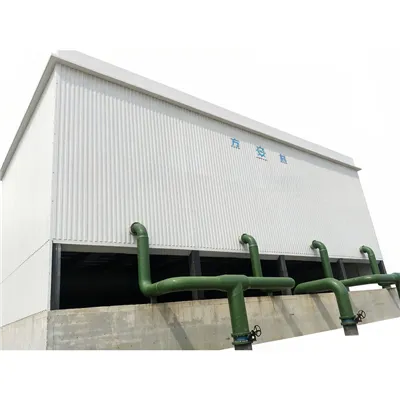
First, let’s set the stage: a cooling tower’s accessories aren’t afterthoughts—they’re the gear that keeps the whole system running. Most people point to the tower itself as the main component, but if the fan drive, fill media, drift eliminators, or water distribution nozzles aren’t working, the tower might as well be a steel frame with no purpose. Take a recent client: a mid-sized food processing plant in the Midwest that stopped calling me until their tower shut down in the middle of a summer production shift. When we got on-site, the culprit wasn’t the concrete basin or the large fan—it was their 6-year-old water distribution nozzles. No one had cleaned or inspected them; mineral buildup from hard water had narrowed the openings, so water sprayed unevenly over the fill media. Half the fill was dry, so the tower couldn’t dissipate heat, leading to a 12-hour shutdown that cost them nearly $50,000 in lost product and overtime. That’s the kind of hit that could’ve been avoided with a $200 annual nozzle cleaning kit and a 30-minute inspection.
But it’s not just about nozzles. Consider drift eliminators—those thin, angled plates that catch water droplets so they don’t blow into the surrounding air. If they’re clogged with algae, scale, or debris, two things happen: first, you’re wasting 10-15% more water than necessary (the EPA estimates industrial facilities lose 2-3% of water to drift annually, but unmaintained eliminators can push that to 20%). Second, those trapped droplets can stagnate in the gaps, creating a perfect breeding ground for Legionella, the bacteria that causes Legionnaires’ disease. A regional hospital I work with learned this the hard way two years ago: a routine inspection by local health officials found Legionella counts 12 times the safe limit in their cooling tower’s drift eliminators. The hospital got a $15,000 fine, plus they had to drain and flush the entire system, delaying elective surgeries for three days. All because they’d skipped semi-annual eliminator cleaning.
Now, let’s talk about why people skip this maintenance. For one, many accessory parts are small—like the fan belts, which most plant managers don’t think to check until they snap. Fan belts transfer power from the motor to the fan, and if they’re loose, cracked, or worn, the fan can’t spin at full speed. That reduces the tower’s heat rejection capacity by up to 25%, according to the Cooling Technology Institute (CTI), a global nonprofit that sets standards for cooling systems. I once worked with a logistics warehouse in Texas that thought their tower was working fine—until their air conditioning system started spiking energy bills. Turns out, their two fan belts were 18 months past replacement; they’d stretched so much that the fan was only turning at 70% speed. Swapping the belts for $120 and adjusting the motor pulley brought their energy use down by 18%—a $4,000 annual savings. They’d saved a few bucks by delaying the replacement, but ended up paying more in long-term energy costs.
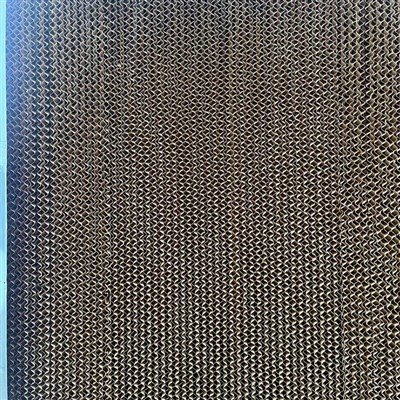
Another common gap is fill media maintenance. Fill media is the plastic (or sometimes wood) packing inside the tower that increases surface area so water and air can exchange heat. Over time, fill gets coated in scale, algae, and debris, which reduces that surface area. A tower with fouled fill can’t cool water as effectively, so you end up running the fan longer or using more chemical treatment to keep water clean. I’ve seen fill that was so clogged with leaves and sediment that the water could barely flow through it—resulting in a 30% reduction in cooling capacity. Replacing or cleaning fill is more involved than changing a belt, but scheduling it every 3-5 years (depending on water quality) is way cheaper than repairing the main tower components that overheat from constant use.
Wait, some might argue: “We use a service contract, so someone else handles maintenance.” But here’s the thing—even if you have a third party service your tower, accessories need more than just a once-a-year check. I’ve had service technicians tell me they only inspect accessories if the main tower is already acting up. That’s reactive, not proactive. The best approach is to split maintenance into two parts: monthly checks for small, easy-to-inspect accessories, and semi-annual or annual deep cleans for the more complex parts. Let’s list a few key accessories and their maintenance needs, based on what I’ve seen work for different clients:
- Fan Drive Components (belts, pulleys, bearings): Monthly visual checks for cracks, fraying, or misalignment. Lubricate bearings every 6 months. Replace belts every 2-3 years (or when they show wear).
- Water Distribution Nozzles: Inspect quarterly for clogs, replace every 4-5 years (or when flow becomes uneven). Clean annually with a descaling solution if using hard water.
- Drift Eliminators: Semi-annual visual inspections for clogs, clean every year. Replace damaged plates (cracks break down efficiency) as needed.
- Fill Media: Inspect annually for fouling, clean every 3-5 years, replace if it’s brittle or broken.
- Water Level Float Valves: Monthly checks to ensure they’re operating correctly—stuck valves cause overflow, wasting water and increasing chemical use.
I can already hear the pushback: “That’s more time and money!” But let’s do the math. A 2022 study by the Air-Conditioning, Heating, and Refrigeration Institute (AHRI) found that facilities that perform regular accessory maintenance see a 15-20% reduction in energy costs, a 10% reduction in water use, and a 30% drop in unplanned tower downtime. For a large industrial tower with a 100 HP fan, that’s $15,000-$20,000 a year in energy savings alone. Compare that to the cost of maintenance: a semi-annual accessory service for a mid-sized tower runs about $800-$1,200 a year. That’s a net gain, not an expense. And unplanned downtime? A single shutdown can cost thousands, as I saw with the food processing plant.
Another angle: compliance. Local health and environmental regulations are getting stricter on cooling towers, especially when it comes to Legionella and water use. Many municipalities now require facilities to keep maintenance records for their cooling system accessories, and fines for non-compliance can run into tens of thousands of dollars. I recently assisted a school district in the Pacific Northwest that was fined $22,000 because their cooling tower’s drift eliminators were fouled, leading to excessive water loss and a failed Legionella test. They’d skipped two years of semi-annual inspections, so they had no paperwork to prove they’d maintained the system. That’s a huge cost that could’ve been avoided with a simple maintenance schedule.
Now, let’s address a common myth: newer cooling towers don’t need as much accessory maintenance. I get calls all the time from clients with brand new towers, saying “We don’t need to check accessories yet.” But even new towers suffer from manufacturing defects or installation issues that surface within the first year. For example, a client with a new 2021 cooling tower found that their nozzles were misaligned right out of the box—so water wasn’t covering the fill evenly, leading to 10% higher energy use. A quick adjustment during a maintenance check fixed that. Even the best-made accessories degrade over time: plastic fill can become brittle in 5-7 years, fan belts can lose tension even in new motors, and drift eliminators can warp from exposure to sun and chemicals. Age is just a number when it comes to accessories—consistent maintenance is what keeps them working.
I also want to emphasize that as an accessories supplier, I’m not pushing unnecessary work. I’ve built my business on being honest with clients—if a part doesn’t need replacement, I’ll say so. But I’ve also seen clients cut corners, and the results almost always end up costing them more. For example, a small commercial office building tried to cut costs by skipping drift eliminator cleaning. Within a year, their system had to be flushed, and they had to replace 10% of their fill media. The cost of that was three times what they’d saved by skipping the annual cleaning. That’s why I always tell clients: think of your cooling tower accessories like the parts of your car. You don’t wait until the engine seizes to change the oil, or until the tire blows to replace it. You do regular small maintenance to prevent big, expensive problems.
So, going back to the original question: Do cooling tower accessories require regular maintenance? The answer is a clear yes—not just to save money, but to keep your system efficient, compliant, and safe. The key isn’t overcomplicating it; it’s setting a simple, consistent schedule for those small, easy-to-miss parts that keep your cooling tower running. If you’re not sure where to start, or if you’ve put off maintenance and are worried about hidden issues, don’t wait until something breaks. Reach out to our team to review your cooling tower’s accessories and build a maintenance plan that works for your facility. We can help you inspect, clean, or replace parts before small problems become big ones—because a little prevention goes a long way.
Open Cooling Tower References
- Cooling Technology Institute. (2020). Standard for the Maintenance and Operation of Cooling Towers.
- Air-Conditioning, Heating, and Refrigeration Institute. (2022). Energy Savings Impacts of Cooling Tower Accessory Maintenance.
- U.S. Environmental Protection Agency. (2021). Water Efficiency Guidelines for Industrial Cooling Systems.
- Centers for Disease Control and Prevention. (2020). Legionella Control in Cooling Towers and Other Building Water Systems.
Hainan Haizhou Fluid Technology Co., Ltd.
As one of the most experienced cooling tower accessories manufacturers and suppliers in China, we also support customized service. Please feel free to wholesale bulk high quality cooling tower accessories in stock here from our factory. Contact us for more details.
Address: Room 3003A-877, 30th Floor, Tower A, Internet Finance Building, No. 3 Guoxing Avenue, Lantian Subdistrict, Meilan District, Haikou City, Hainan Province
E-mail: FD@jxark.com
WebSite: https://www.hnhzark.com/
