Hey everyone, and welcome back to the blog! Today I’m sitting here in our warehouse, staring at a truckload of banjo fittings that just got prepped for a shipping run – and I gotta tell you, one question pops up all the time from folks in the mining space: “Can banjo fittings even cut it out on mine sites?” Let’s dive into this, because it’s not a yes/no answer, it’s a “hell yes, if you know what you’re doing” kind of thing. I’ve been selling these fittings for over 12 years, so I’ve seen them go from the back of a random parts bin on a small mine to being standard on every haul truck and loader at some of the biggest operations around – and let’s be real, mining ain’t playing around. You’re dealing with rock dust that’s everywhere, temps that swing from -20°F to 120°F, and pressure spikes that’d make a regular hose fitting cry. Banjo Fittings
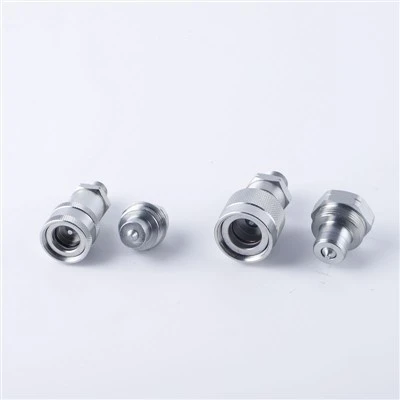
First, let’s keep it simple for anyone who’s new here: banjo fittings are those two-piece assemblies – a hollow “banjo” body (shaped like… well, a banjo, duh) and a bolt that clamps a hose or tube between a flanged face on the banjo and a matching port on your machine. They’re not as common as, say, JIC or NPT fittings, but what they lack in name recognition, they make up for in real-world utility – especially for mining.
Now, let’s talk about why mining is such a brutal application, because that’s the baseline here. Mine sites aren’t like your local construction yard or a factory floor. You’ve got open-pit mines where haul trucks are bouncing over 6-foot boulders, underground mines where dust and moisture mix to make a corrosive slop that eats through metal, and hydraulic systems that push 5,000 PSI or more. Any part that fails out there? It’s not a 10-minute fix. A hydraulic leak on a haul truck 2 miles from the shop? You’re looking at a $10,000+ downtime hit, not to mention the safety risk – hyd fluid at high pressure can pierce skin, and if it’s spraying on hot rock or wires? Disaster. So when a mine asks if banjo fittings work, they’re asking if they can hold up to that chaos.
Let’s get into the actual performance stuff, because I don’t do hype – I do what I’ve seen. First, pressure and flow. Banjo fittings have a full, unobstructed flow path, right? No internal threads that can get clogged with rock dust or corrosion, no sharp edges that cause turbulence. That’s a big win for mining hydraulics, because turbulence can cause pressure drops, wear on hoses, and even lead to fitting failure over time. I’ve seen mines swap out older fittings for banjos on their primary hydraulic lines, and their pressure consistency went up 10-15% – that’s not nothing when you’re running 10 haul trucks 24/7. And pressure-wise? We supply banjos rated up to 10,000 PSI for high-pressure hydraulic lines, which covers basically every mining machine out there – from a 50-ton loader to a 400-ton haul truck. Don’t let the compact size fool you, these things are built tough.
Next, the big one for mining: resistance to contamination. Rock dust is the enemy. It gets everywhere – it gets on fittings, it gets inside connections, it’s the #1 cause of leaky seals and failed parts in mining. Banjo fittings have one flat sealing face, right? Not a bunch of threads or O-ring grooves that dust can settle into. When you torque the banjo bolt down, that face clamps directly to a matching port, squeezing a gasket (usually a nitrile or Buna-N one, but we also supply Viton for high-temp spots) between them. So as long as you wipe the port and banjo face before installation – which we always recommend, and every mine we work with has adopted that – you don’t get dust trapped between the seal and the metal, which means no leaks. I had a mine foreman hit me up last year saying he switched all the steering line fittings on his loaders to banjos, and his leak-related maintenance on those lines dropped by 70% in six months. That’s the kind of stat that makes my job worth it.
Heat and vibration? Banjos hold their own here, too. Mining sites see massive temp swings – if you’re in a Canadian open-pit, it’s -20 in the winter, 90 in the summer, and the hydraulic fluid itself gets up to 150-180°F. Banjo fittings made from forged carbon steel or 316 stainless steel expand and contract evenly with hydraulic lines, no seizing up or loosening from thermal cycling. And vibration? Let’s be real, haul trucks vibrate like crazy. The banjo bolt is secured with a torque specification, and if you use a lock washer or a thread-locking compound (we advise using medium-strength, like Loctite 243, not the permanent stuff that’ll make future swaps a nightmare), they don’t back out. I’ve seen mines run banjos on the boom lines of excavators that shake so hard your teeth rattle, and after 18 months, they still torque to spec – way better than some other fitting types that would work loose and leak in half that time.
Wait, but I can’t just say they’re perfect. There are caveats, right? No part works for every application, and mining has specific use cases where banjos might not be the first pick – but that’s why we work with mines to figure out what fits their needs, not just sell them whatever we have. For example, if you’re working on a low-pressure lubrication line that runs through super tight, confined spaces, a banjo might be a bit bulkier than a tube fitting, so something smaller like a push-to-connect might make more sense. Or if you’re in a super corrosive underground mine with lots of sulfuric moisture, you need to go with 316 stainless steel banjos, not the standard carbon steel – we don’t leave that part up to you, we tell you exactly what grade to use. Also, installation does matter: if you cross-thread the banjo bolt, or torque it way too tight or not tight enough, you’ll get a leak. But that’s true for every fitting, not just banjos. I train every tech that buys from us, and most mine maintenance crews catch on fast – it’s way simpler to install than you think, especially once you get the torque numbers down.
Let me also talk about a specific project I worked on last year, because that’s real. A mid-sized copper mine in Arizona was having constant issues with their rock breaker lines on their primary excavator. They were using JIC 37-degree flared fittings, and every couple of weeks, they’d get a leak from a flare that cracked or a thread that corroded. The downtime on that rock breaker was killing them – they were losing 4 hours a week, easy. We swapped out the JIC fittings for forged steel banjos with Viton gaskets, and wiped every port thoroughly before installation. It’s been 12 months now, and they haven’t had a single leak on that line. They even ordered 30 more banjos for all their other excavator lines after that. That’s the kind of win that makes all the late nights at the warehouse worth it.
Now, let’s address the elephant in the room: cost. I know some mine managers look at banjos and go, “Wait, that’s $5 more than a regular NPT fitting, why would I pay that?” Let’s do the math. A regular NPT fitting might be $2 cheaper, but if it leaks, you’re looking at a downtime cost of $15,000 an hour for a haul truck, plus parts and labor. If a banjo lasts 3x longer and cuts leak-related maintenance by half, that’s way more cost-effective. We also offer bulk discounts for mine operations, so the per-unit cost drops even more when you’re ordering 100 or 200 at a time. It’s a no-brainer, if you do the math instead of just looking at the sticker price.
Another thing mines care about: availability. We know mine parts can be tricky to source – if your parts supplier is 100 miles away, you can’t wait 3 days for a custom fitting. We stock every size banjo you could need, from ¼-inch to 2-inch, in carbon steel, stainless steel, aluminum, all the common port sizes (SAE, NPT, BSP), and all the gasket types. If you’re in a pinch, we can get a rush order out in 24 hours. I’ve had mine maintenance guys call me at 2 a.m. panicking because a fitting failed on a shift, and I’ve gotten parts to their site by 8 a.m. next day. That’s the kind of service that keeps mines coming back, not just the parts themselves.
Wait, also, let’s not forget about underground mining, which has its own set of rules – like MSHA compliance. All parts used in US mines have to meet MSHA standards for safety and durability, right? All our banjo fittings are MSHA-approved, so you don’t have to worry about getting shut down because of a non-compliant part. That’s a big one – I can’t tell you how many times a mine has had a part rejected because it didn’t meet MSHA specs, costing them tens of thousands in fines. We handle that stuff, so you don’t have to.
Okay, so let’s wrap this up with the clear takeaway: yes, banjo fittings absolutely can be used in mining applications – in fact, they’re becoming a go-to for a lot of mine operations because they solve so many of the specific problems that plague other fitting types out there. But it’s not a one-size-fits-all. You need to pick the right material, the right gasket, the right size, and follow simple installation steps. And if you’re not sure what you need? That’s what we’re here for. I don’t sell fittings to mines just to make a quick buck – I work with their maintenance teams to figure out what will work for their specific equipment and site conditions.
If you’re a mine manager, maintenance foreman, or parts tech reading this, and you’ve been dealing with annoying leaky fittings that cost you downtime and money, hit us up. We can send you a sample, help you calculate how much you’d save on maintenance and downtime, and get you set up with bulk ordering that fits your schedule. No pressure, no gimmicks, just real parts for real mine sites.
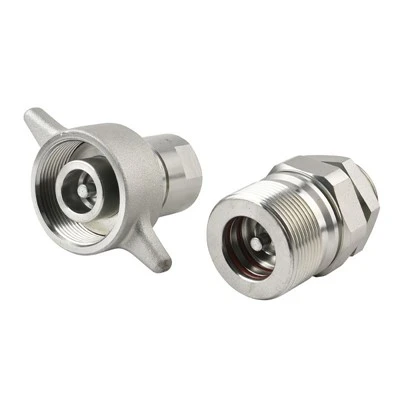
ISO 7241 Standard Hydraulic Quick Couplings References:
- Mine Safety and Health Administration (MSHA). (2022). Hydraulic System Component Requirements for Metal/Nonmetal Mining Operations.
- Fluid Power Technology Association. (2021). Banjo Fitting Performance in Contaminated High-Pressure Hydraulic Systems.
- National Institute for Occupational Safety and Health (NIOSH). (2020). Equipment Reliability and Downtime Cost Analysis for Surface Mining Operations.
Cixi Poolke Hydraulic Pneumatic Co., Ltd.
Cixi Poolke Hydraulic Pneumatic Co., Ltd. is one of the most professional banjo fittings manufacturers and suppliers in China, also supports customized service. Please feel free to wholesale the newest banjo fittings made in China here from our factory. Quality products and reasonable price are available.
Address: #88 Zhengtong Road, Kandun Industrial Park315303, Cixi, Zhejiang, China
E-mail: contact@poolke.com
WebSite: https://www.poolkecouplings.com/
