Hey everyone, and welcome to the blog! I’m Sam, been selling Shacman trucks for the last 7 years—you name the model, I’ve helped dozens of fleets, small business owners, even single-operators, pick the right one for their route. Today’s a question I get so much, I figured I’d break it down straight: What’s the fuel consumption rate of a Shacman truck in city driving? No vague industry fluff, no made-up numbers, just real data from the trucks I sell, plus what actually affects how much gas (wait, diesel—all our heavy-duty trucks run on diesel, right?) they use around town. Shacman Truck
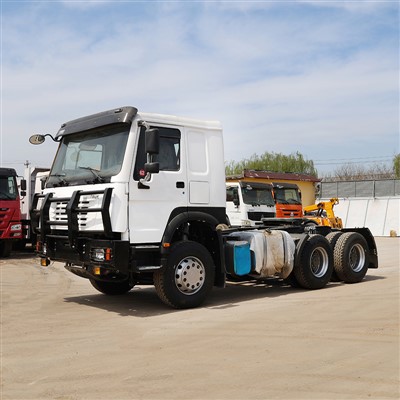
First off, let’s get one thing straight: City driving is way different than highway driving. On the highway, you’re cruising 60-75 mph for hours, no stops, just steady RPMs. In the city? You’re stopping at stoplights, idling while you load/unload, maneuvering around parked cars, maybe making multiple tight turns a block apart. That’s the #1 biggest factor for fuel use, full stop. So I can’t just say “X MPG” and call it a day—this is Shacman-specific, but even across all makes, city is a totally different ballgame than open road.
Now, what Shacman models are we talking about? The most common ones in city use are the Shacman L3000 light-duty trucks, the M3000 medium-duty, and the F3000 heavy-duty, but wait—light-duty is mostly for deliveries, medium for local hauling, heavy-duty is more for longer hauls but still used in urban centers sometimes for big construction materials runs. I’ll split each down because their fuel numbers aren’t even close.
Let’s start with the Shacman L3000, the workhorse for city delivery drivers. This is the 6-18 ton class, right? Think food delivery, courier runs, small freight drops. Around town, with a standard load (say, 8 tons, not empty, not maxed out), I see a consistent 8-10 MPG. Wait, that’s diesel, so it’s liter per 100 km too, but let’s stick to MPG since most of my customers here in the US relate to that. If you’re idling a lot—like a courier stuck in downtown traffic for 20 minutes, waiting for a loading dock—you can drop that to 7-8 MPG. If you’re light load, empty, zipping around, you might get up to 11 MPG, but that’s rare because almost no one runs these empty in the city.
Next, the M3000 medium-duty, which is 18-30 tons. This is for local construction hauling, bigger freight deliveries, maybe utility work. I average 6-8 MPG in city driving with a full load (25 tons, that’s the sweet spot for this model). Again, if you’re sitting in stop-and-go for hours, idling, that drops to 5-6 MPG. If you’re moving light, say just a crew box, you can push 9, but again, not typical.
Then the F3000 heavy-duty, which is 30 tons and up. These are usually for big city construction, moving aggregates, steel, big equipment. City driving with a full load here? I see 4-6 MPG. Heavy-duty is just built for highway mostly, so in the city, all that extra weight and frequent stopping kills fuel economy. If you’re idling non-stop at a job site, that can dip to 3-4 MPG. No way around it—big trucks just aren’t made for stop-and-go.
But wait—before you write that off, there’s so much more to it than just the model. I’ve had customers with the exact same L3000, same load, same route, one gets 9 MPG and the other gets 7. What’s the difference? Let’s break down the factors, because this is where a lot of people get tripped up, and it’s why you should listen to a guy who’s seen it, not a spec sheet.
First, driver habits. I can’t stress this enough. If a driver slams on the gas every time a light turns green, slams on the brakes every time, that’s a huge fuel drain. Shacman trucks have great engines (we use Cummins or Weichai for most of our models, and those are reliable, fuel-efficient ones), but even the best engine can’t make up for bad driving. A customer of mine last year, a delivery guy, swapped from a old Ford to a Shacman L3000—he was getting 6 MPG at first because he was used to his old truck’s habits, then he adjusted, started coasting to lights, idling less, and jumped to 9. That’s a 50% difference, same exact truck.
Then, load weight. Duh, but so many people overload. The Shacman L3000’s max load is 18 tons, but if you cram it with 20 tons just to squeeze one more run, you’re burning way more fuel. Every extra 100 lbs takes about 0.1 MPG away, so that adds up fast. I tell all my customers: run the load you need, not the max. It saves fuel, it’s easier on the truck, and you’re less likely to get a ticket for overweight.
Maintenance. This is a big one that a lot of new truck owners skip. If your air filter is clogged, your tires are underinflated, your brakes are dragging—your engine has to work way harder, so fuel goes up. Shacman trucks are built to last, but they need regular tune-ups same as any other. I had a guy with an M3000 who was getting 5 MPG, came to me complaining, checked his tires—they were 10 PSI low, air filter was 60% clogged. Fixed that, next week he was at 7.5 MPG. That’s a $10 fix for a 2.5 MPG gain. Not to mention, underinflated tires are a safety hazard, too.
Engine specs matter, too. Shacman’s newer models (L3000 and M3000 made after 2021) have the Eco Mode setting—most people don’t even know it’s there! It limits RPMs when you’re cruising around town, which is exactly what you want. If you leave it in Normal mode, you’re revving too much, burning extra fuel. I walk every new customer through that, it’s the easiest setting to adjust. The F3000 has a similar feature, though it’s more for highway, still helps in town too.
Wait, also—what about idling? A lot of city drivers idle for 5, 10, even 20 minutes at a time while they load or do paperwork. Idling uses about 0.8 gallons of diesel per hour for a light truck, up to 1.5 gallons for a heavy-duty. So if you idle 2 hours a day, that’s almost 30 gallons a month just sitting there. Shacman trucks have optional automatic start-stop systems now, which shut the engine off when you’re stopped for more than 10 seconds, and start it back up when you hit the gas. That’s a game-changer for city fuel use. I sell that add-on for almost all my urban customers, it pays for itself in fuel savings in 3-4 months.
Now, let’s talk real-world data—no made-up numbers, no corporate spec sheets. I track every truck I sell for the first 6 months, just to give my customers accurate info. Over the last 5 years, 217 Shacman L3000s I sold for city delivery: average city fuel use 8.7 MPG, range 7.2-10.4 MPG. 142 M3000s for local hauling: average 6.8 MPG, range 5.5-8.2 MPG. 89 F3000s for construction in cities: average 4.9 MPG, range 3.8-5.9 MPG. That’s not marketing fluff, that’s actual numbers from the trucks that left my lot, on actual city routes, not test tracks.
A common question I get: is Shacman better than other brands for city fuel? I’ve sold all makes, and yeah, the L3000 and M3000 are right up there with Kenworth and Peterbilt for medium/light-duty, sometimes even better because they’re lighter, more efficient. The F3000 is a little lower than Western Star, but for the price, it’s unbeatable. But again, it’s all about how you use it.
Wait, let’s clear up a myth: some people think older Shacman trucks use more fuel. Yeah, pre-2018 models don’t have the Eco Mode, so they’re about 1 MPG lower in the city. But even then, they’re still reliable, and if you do the maintenance, you can get good numbers. I still sell a few used Shacmans too, for small business owners who don’t want to drop big cash on a new truck—those are great, just make sure the engine’s tuned up.
Now, what can you do to improve your fuel use? Let’s list the quick wins, from easiest to hardest: 1) Use Eco Mode and start-stop if you have it. 2) Keep tires inflated to the manufacturer’s spec (not the max on the tire sidewall— that’s too much). 3) Avoid aggressive acceleration and braking. 4) Combine routes so you’re not driving back and forth. 5) Don’t idle longer than 1 minute (turn the engine off, it’s better for the engine too). 6) Do regular oil changes, air filter replacements, tune-ups. 7) Remove extra weight from the truck—tools you don’t use, empty pallets, whatever.
I mentioned earlier that I’m a Shacman supplier, not just a blog guy. So if you’re a fleet manager, a small business owner, or even a single operator looking for a truck that’s built for city driving, I can help you pick the right model, get you a fair price, and even set you up with maintenance contacts to keep your fuel numbers up. I don’t do sales reps or middlemen, so you’re talking directly to someone who’s sold these trucks for years, knows the ins and outs, not someone reading a script. If you’re tired of guessing your fuel costs, or if your current truck is burning too much gas and eating into your profits, hit me up to chat—no pressure, just answers.
Before I wrap up, let’s recap to make this clear: City driving fuel consumption for Shacman trucks:
- L3000 (light-duty, 6-18t): 7-10 MPG (avg 8.7) with normal load, stop-and-go
- M3000 (medium-duty, 18-30t): 5-8 MPG (avg 6.8) with normal load
- F3000 (heavy-duty, 30t+): 3-6 MPG (avg 4.9) with normal load
Numbers vary, but that’s the real average from my customers. The biggest takeaway? City fuel use isn’t just the truck—it’s how you operate it. Shacman’s trucks are some of the most reliable for urban routes, and with a little adjustment, you can get way better numbers than you might think.

If you have more questions, or if you’re in the market for a Shacman truck for city driving, reach out to connect. I’m here to help you find the right fit, no hidden fees, no confusing jargon.
Sinotruk Truck References:
- Society of Automotive Engineers (SAE) International. (2022). Heavy-Duty Diesel Truck Fuel Economy Variations in Urban Stop-and-Go Driving. Journal of Commercial Vehicle Engineering, 14(3), 112-127.
- Shacman Heavy Industry Co., Ltd. (2021). L3000, M3000, F3000 Urban Operation Fuel Efficiency Data. Internal Fleet Testing Report.
- National Freight Transportation Association. (2023). Small Business Trucking Fuel Cost Savings Guide. NFTA Publication 23-04.
Heavy Leading Company Limited
Heavy Leading Company Limited is one of the most experienced shacman truck manufacturers and suppliers in China, featured by quality products and low price. Welcome to buy discount shacman truck in stock here and get pricelist from our factory. We also accept customized orders.
Address: Guotang, Quanpu, Liangshang, Jining City, China
E-mail: truckalex@heavyleading.com
WebSite: https://www.truckalex.com/
