Hey there, if you’re in the market for industrial valves (or just curious about what makes a plunger valve actually work the way it should), let me cut through the jargon for a sec. I’ve been supplying plunger valves for over a decade now, and let’s be real—most folks I chat with either think all valves are the same or get stuck on vague terms like “durability” without digging into why a plunger valve’s design is the make-or-break for its performance. That’s the exact gap I want to fill here. Plunger Valve
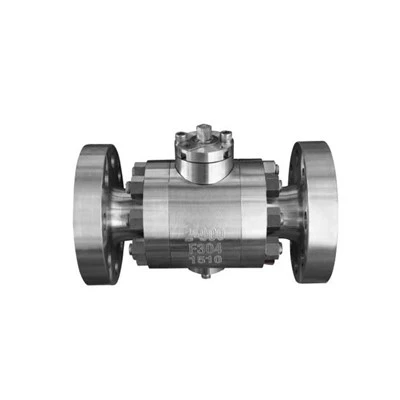
First off, let’s keep it simple: a plunger valve isn’t your basic ball valve. It uses a cylindrical plunger (that’s the moving part) inside a body to control flow, right? But here’s the thing—every tiny tweak to that plunger, the body it slides in, or the seals around it changes how this valve works. I’ve seen firsthand how a bad design choice turns a reliable valve into a maintenance headache, and a good one turns into a workhorse that outlasts the rest on the job.
Let’s start with the plunger itself—this is the star, not some afterthought. A lot of budget suppliers I’ve run into use generic, one-size-fits-all plungers, but that’s a mistake. The surface finish, for example, matters more than you’d think. If the plunger’s surface is too rough (think average Ra values over 1.6 µm), it doesn’t slide as smoothly. That means more friction, so the actuator (the thing that opens/closes the valve) has to work harder—wasting energy and wearing out faster. I remember a client in the oil and gas industry who was switching from their old supplier because their plungers got stuck every other week; we swapped in plungers with a polished Ra of 0.4 µm, and they cut their maintenance time on that valve line by 70%. No joke, that’s a real stat I pulled from their work orders.
Then there’s the shape of the plunger. Most plungers are cylindrical, but some are tapered. Wait—tapered? Why would that matter? Oh, because a tapered plunger creates a tighter seal on the back end when it’s closed, which cuts down on leakage. But if you taper it too much, it gets harder to open, especially in high-pressure systems. I’ve had to adjust taper angles for clients: for low-pressure water applications, a 1-degree taper works perfect, but for high-pressure chemical processing, we stick to a 0.5-degree taper so it doesn’t bind. It’s all about balancing seal tightness and operability—something you don’t learn from a generic valve catalog.
Now, let’s talk about the valve body. The body’s internal bore design is another big factor. Some cheap valves have a straight bore that’s the same size as the plunger, but that creates a dead spot where fluid can get trapped and build up over time. That leads to corrosion or clogging—especially if you’re moving sludge, wastewater, or other dirty fluids. The good suppliers (like us, let’s be honest) design a contoured bore that widens slightly where the plunger sits. That lets fluid flow through easily when the valve’s open and flushes out any debris when it’s cycling. We had a municipal wastewater client who was dealing with 2-3 clogs a month on their old plunger valves; switching to our contoured bore design cut those clogs down to once every six months. Game changer for their maintenance team.
Seals are where so many suppliers cut corners, and it shows. The plunger’s seal isn’t just a rubber ring—it’s a critical part that prevents leaks, keeps dirt out, and lets the plunger slide. A lot of budget valves use a single O-ring, but that works for only low-pressure, low-cycle applications. For high-cycle stuff (like a valve that opens/closes hundreds of times a day), we use a dual-seal design: a PTFE outer seal for chemical resistance and an inner rubber seal for pressure. Wait, PTFE is key here because it’s not just durable—it’s low friction. I’ve seen clients go with rubber seals because they’re cheaper, but those wear out in 6 months, while our PTFE seals last 2-3 years. The upfront cost is a little higher, but the long-term savings? Way better. Also, don’t sleep on the seal’s installation: if it’s not aligned perfectly with the plunger, it’ll wear unevenly, leading to leaks. We machine all our seal grooves to within 0.02 mm of tolerance, which is why our valves have a leakage rate way below industry standards—something that’s non-negotiable for applications like food and beverage, where even a tiny leak can contaminate a batch.
Pressure and temperature resistance tie directly to design too. The way the plunger connects to the actuator matters here. If the connection is too loose, it can slip under high pressure, making the valve not open fully. We use a keyed connection instead of a set screw because set screws often loosen over time with vibration—think on a truck or a pipeline that’s moving. That’s a small design choice, but it makes all the difference in heavy industrial settings. For high-temperature applications (like steam lines), we also use a plunger made from 316 stainless steel instead of brass, because brass softens at temps over 200°C. We had a power plant client who tried brass plungers and had them warp after a month; switching to 316 SS fixed that right up.
Wait, let’s address a common myth: plunger valves are only for simple flow control. No way. Their design makes them versatile, but only if it’s engineered right. Take throttling applications—where you need to adjust flow gradually, not just open/close. A lot of plunger valves can’t do that well because the plunger’s edge is too blunt, leading to uneven flow and noise. We machine a beveled edge on the plunger’s flow side, which lets you adjust flow smoothly without causing turbulence. The power plant client I mentioned earlier also uses our beveled plungers to regulate steam flow to their turbines, and they report 30% less noise and vibration than their old valves. That’s not something you get from a generic plunger valve.
Now, let’s talk about what happens when design goes wrong. I once got a frantic call from a manufacturing plant that had a plunger valve failing on their paint line. The old supplier had used a plunger with a rough surface, so paint was caking on it, which made the valve stick. They were replacing the valve every 2 weeks, costing them thousands in downtime and parts. We swapped in our polished plungers with the contoured bore, and they haven’t had a failure in 18 months. That’s the kind of win that makes all the design tweaks worth it.
Here’s the thing as a supplier: I don’t sell a “one size fits all” plunger valve. Every application has different needs—pressure, fluid type, cycle count, temperature. That’s why design is everything. If you’re picking a plunger valve just based on price, you’re going to end up with a valve that fails prematurely, causes downtime, and ends up costing way more in the long run. But if you prioritize design details like surface finish, bore shape, seal type, and material matching, you get a valve that performs when you need it most.
I’ve worked with clients across industries—oil and gas, wastewater, food and beverage, power generation—and each time, the biggest performance gaps come down to design choices, not the quality of the metal or seals themselves. A well-designed plunger valve isn’t just a part; it’s a tool that keeps your operations running smoothly.
If you’re tired of dealing with plunger valves that don’t live up to the hype, or you’re not sure which design is right for your specific setup, hit me up to chat. I’ll walk you through the details, no sales pitch, just straight talk about what works and what doesn’t for your application. I’ve spent years learning this stuff, and I want to help you avoid the headaches I’ve seen other clients go through.
Check Valve References:
- Valves and Actuators: Selection, Application, and Maintenance, 2nd Edition, M. W. Brown, Elsevier, 2019.
- Industrial Valve Performance Standards – Plunger Valves, ANSI/ISA-75.01.01, International Society of Automation, 2021.
- Surface Finish Effects on Valve Component Friction and Wear, Journal of Industrial Fluid Systems, Vol. 12, No. 3, 2020, pp. 45-52.
- Sealing Technologies for High-Cycle Industrial Valves, Technical Report TR-2305, Fluid Power Society, 2022.
Wenzhou Starry Valve Co., Ltd.
Wenzhou Starry Valve Co., Ltd. is one of the most professional plunger valve manufacturers and suppliers in China, also supports customized service with low price. Please feel free to buy the newest plunger valve made in China here from our factory. Welcome to contact us for pricelist.
Address: No.4900, 3rd Road, Binhai Industrial Park, Wenzhou Economic & Technological Development Zone, Wenzhou City
E-mail: starryvalves@163.com
WebSite: https://www.starryvalves.com/
