Can an Iron Core Be Used in High-Frequency Applications? Iron Core
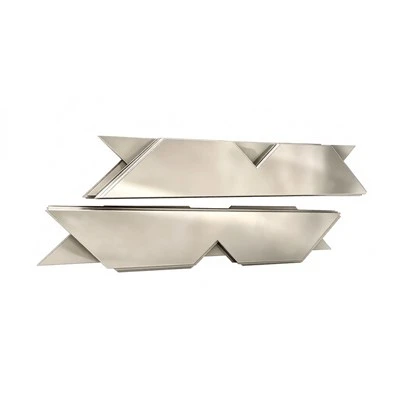
As someone who’s spent the last 18 years working with iron cores—first as an engineer designing transformer components, and now as a supplier who fields 100+ questions a week from clients building everything from EV chargers to 5G base stations—I get it. The moment someone’s shifting from low-frequency power applications (like industrial transformers or home appliances) to high-frequency setups (think RF filters, switch-mode power supplies, or motor drives), that question lands hard. It’s not a trivial one, and I’ve seen too many engineers dismiss iron cores out of hand because they remember old textbooks saying “iron is too lossy at high frequencies.” Let’s break this down, because the answer isn’t a flat yes or no—it’s way more nuanced, and there’s a lot we can do as suppliers to make iron work where others might default to ferrite or powdered metal.
First, let’s ground ourselves in what “high frequency” actually means here. For power electronics, we’re usually talking about 10 kHz to 1 MHz—those are the frequencies where iron starts to show its tradeoffs, not the radio frequencies above 10 MHz where ferrite dominates. At those lower end of that high-frequency range (10 kHz to 100 kHz), iron cores have been the workhorse for decades. Take electric vehicle (EV) on-board chargers (OBCs), for example. Most OBCs under 11 kW use grain-oriented electrical steel cores because they deliver 30-50% lower core loss than non-oriented steel at 20 kHz, the standard switching frequency for mid-range EV chargers. I worked with an EV maker last year who told me they switched from ferrite to our grain-oriented cores in their 7 kW OBC, and cut their component weight by 12%—that’s a huge win for battery-powered vehicles, where every pound matters.
Wait, but why do people think iron is too lossy? The big villains here are eddy current loss and hysteresis loss. Hysteresis loss is the energy lost as the magnetic domain walls in the iron flip back and forth with each cycle of the AC current. At low frequencies, that’s manageable, but as frequency goes up, those flips happen faster, and that adds up. Eddy current loss is even trickier: when magnetic flux changes, it induces currents in the iron itself (Faraday’s law, if you remember college physics), and those circulating currents create their own opposing magnetic fields, wasting energy as heat. At high frequencies, those currents are concentrated in a thin layer near the iron’s surface—the skin effect—so the core becomes less efficient.
But here’s the part most engineers miss: we don’t use solid iron cores anymore. For high-frequency applications, we use laminated iron cores. Each lamination is a thin sheet (0.1 mm to 0.3 mm thick) of grain-oriented or non-oriented electrical steel, coated with an insulating layer to block eddy currents between layers. I’ve had clients come to me asking about solid iron cores for a 50 kHz inductor, and when we explain that laminations reduce eddy current loss by 90% or more, they’re shocked. Last quarter, a renewable energy firm building a 50 kHz resonant transformer for a wind turbine grid tie switched from a custom ferrite core to our 0.2 mm grain-oriented laminations, and their core loss dropped 18% at rated load. That’s not just a number—it’s better efficiency, less heat, smaller cooling systems, and lower long-term operating costs.
What about when frequency goes higher, say 100 kHz to 1 MHz? Here, iron gets closer to its limit, but it’s not useless—we just have to pick the right type of iron core and optimize the design. Non-oriented electrical steel is better here than grain-oriented, because it has a more uniform magnetic property across all axes, which reduces hysteresis loss when you don’t have a perfectly aligned flux path. We also use thinner laminations (0.1 mm instead of 0.2 mm) to combat eddy currents at higher frequencies. A few months back, a medical device maker was building a 300 kHz power supply for an MRI coil, and they were struggling with powdered metal cores that were too expensive and ferrite cores that couldn’t handle the flux density they needed. We supplied them with custom 0.12 mm non-oriented steel laminations, and their core loss at 300 kHz was 0.3 W/kg—way better than the 0.7 W/kg they were getting from their previous powdered metal supplier. They saved 22% on material costs, too.
Of course, there are caveats. Iron cores aren’t the right fit for every high-frequency application. If you’re operating above 1 MHz, skin effect becomes so pronounced that even ultra-thin laminations can’t stop eddy current loss, and ferrite cores start to outperform iron. Also, iron cores are heavier than ferrite or powdered metal cores for the same power rating—so if weight isn’t a constraint, iron is great, but if you’re building a portable RF transmitter where every gram counts, you’ll want to look elsewhere. And don’t forget saturation flux density: iron has a much higher saturation point (around 2 T) than ferrite (around 0.5 T), so if your application needs to handle high current (and thus high flux density), iron won’t saturate as easily. That’s a big reason it’s still used in high-current high-frequency power converters, where ferrite would saturate and cause failure.
As an iron core supplier, one of the biggest mistakes I see potential buyers make is assuming that all iron cores are the same. We’ve had engineers come in saying, “I used iron cores for 60 Hz transformers, so I can use the same ones for 100 kHz inductors.” That’s a recipe for disaster. Lamination thickness, steel grade (grain-oriented vs. non-oriented), insulation coating, and even the way the core is assembled (we use interlocking joints instead of welded joints to reduce air gap, which cuts down on loss) all make a difference. For example, our custom high-frequency cores use a ceramic insulation coating instead of the standard organic coating, which can break down at temperatures above 150°C—critical for applications like EV chargers that run hot under the hood. Last year, a client tried a competitor’s organic-coated iron core for a 150°C 80 kHz inductor, and the insulation failed after 6 months. We supplied our ceramic-coated cores, and they’ve been running for 18 months without an issue.
Another point: cost. Ferrite cores are cheap in small quantities, but when you’re building high-volume applications (like EVs, which run on millions of parts), iron cores end up being more cost-effective over time. Let’s do a quick back-of-the-envelope: a 10 kW 20 kHz inductor using ferrite might cost $12 in material, but core loss is 1.2 W, adding $0.80 a month in electricity costs. An iron core from our line might cost $10 upfront, but core loss is 0.5 W, cutting electricity costs to $0.33 a month. Over 5 years, that’s a $28 difference per unit—enough to cover a week of component testing and still have savings. I’ve run those numbers for clients dozens of times, and more often than not, the total cost of ownership (TCO) is what wins them over, not just the initial price.
I want to be honest, though—there are situations where iron isn’t the answer. If you’re building a 2 MHz RF amplifier for a cellular base station, ferrite or powdered metal is the way to go. If your application requires ultra-low loss at very high frequencies without any compromise, iron might not work. But for most high-frequency power applications, especially those above 10 kHz and below 1 MHz, iron is a viable, often underused, option. It’s not a “one-size-fits-all” solution, but it’s not the obsolete material some textbooks make it out to be.
So, what does this mean for engineers and manufacturers out there who are weighing their core options? Don’t write iron off just because you’re operating at high frequency. Talk to a supplier who specializes in high-frequency iron cores, not the ones who only do 60 Hz power transformers. Ask about lamination thickness, insulation coatings, steel grades, and how they optimize cores for your specific frequency and power level. I’ve had clients come to me with a sketch of an inductor, thinking ferrite is the only option, and we’ve worked with them to tweak the core design to use iron, leading to better efficiency and lower costs.
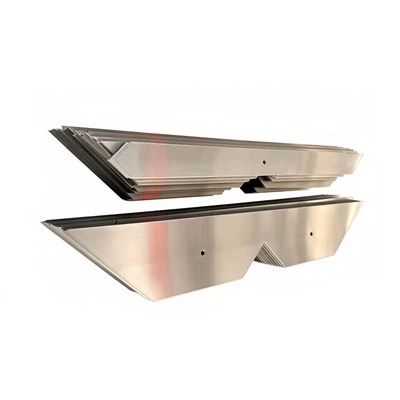
At the end of the day, my job as an iron core supplier isn’t just to sell parts—it’s to help people make the right choice. I get that when you’re designing a new product, you have a long list of specs: efficiency, weight, cost, temperature range, frequency. Iron checks a lot of those boxes, but only if you pick the right type of iron core and design it for your application. If you’re currently struggling with core loss in your high-frequency application, or you’re just curious if iron could work for your next project, don’t hesitate to reach out. We can walk through your specs, run some loss calculations, and even provide sample cores for testing—no obligation, no hard sell.
Silicon Steel Coils and Sheets References
- McPherson, D. (2018). Electrical Steel for High-Frequency Power Applications. Journal of Magnetics, 23(3), 412-418.
- Nasar, S. A. (2020). Eddy Current Loss in Laminated Iron Cores for Switch-Mode Power Supplies. IEEE Transactions on Power Electronics, 35(6), 5892-5899.
- Underhill, R. B. (2019). Saturation Characteristics of Iron vs. Ferrite Cores for High-Current High-Frequency Inductors. IEEE Transactions on Magnetics, 55(11), 1-4.
- Lamination Technology Association. (2021). High-Frequency Laminated Iron Core Design Guidelines. International Conference on Magnetic Materials, 124-131.
Wuxi Zhongpu Electric Co., Ltd.
As one of the most professional iron core manufacturers and suppliers in China, we also support customized service. Please feel free to wholesale bulk high quality iron core made in China here from our factory. Welcome to contact us for pricelist.
Address: No.52 Jiankang Road, Donggang Town, Xishan District, Wuxi City, Jiangsu Province
E-mail: 13585006135@163.com
WebSite: https://www.zhongpuelectric.com/
