As a stainless steel cable tray supplier who’s been in this industry for over a decade, one of the most frequent questions I get from electricians, project managers, and construction teams is: “Can stainless steel cable tray be cut to size on site?” It’s a valid question—every job has unique layouts, and standard pre-cut lengths don’t always align with the exact dimensions needed for a run around a corner, between structural beams, or through a tight mechanical room. Let me break this down honestly, based on years of working with installers and knowing what works for different types of stainless steel cable tray. Stainless Steel Cable Tray
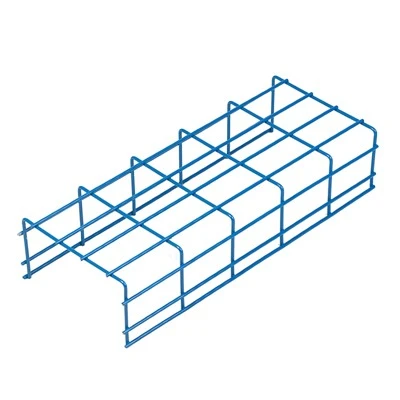
First, I should clarify that not all stainless steel cable tray is the same, and the answer to cutting it depends on the type you’re working with. The most common forms we supply are solid stainless steel perforated cable tray, channel-type cable tray, and ladder-style cable tray. Each has its own structure, which affects how easy (or possible) it is to cut. For perforated and channel tray, which are thinner-gauge and flat, cutting to size is not only possible but often recommended, as it lets installers customize fits right on site. Ladder tray, with its deeper rails and cross-members, is a bit more involved, but still doable with the right tools.
A lot of people worry about cutting stainless steel because it’s a durable, corrosion-resistant material—they think cutting it might compromise those properties. I can tell you from experience that if you use the right tools and follow a few simple steps, you won’t damage the tray’s performance. The key is to avoid rough cuts that leave burrs or expose raw edges without proper finishing. Stainless steel’s corrosion resistance comes from a thin chromium oxide layer on its surface, and when you cut through it, you can temporarily disrupt that layer—but fixing it is easy, so that’s not a reason to skip cutting when you need it.
Let’s talk about the tools you’ll actually need for cutting on site, because a circular saw with a standard wood blade won’t work here. For thinner-gauge perforated or channel stainless steel cable tray (usually 12 gauge or lighter), a hacksaw with a bi-metal blade made specifically for metal is a budget-friendly option that many electricians swear by. It’s slow, but it gives you control, and the blade is designed to slice through stainless without binding too much. For faster cuts, a reciprocating saw with a metal-cutting blade (14 to 18 teeth per inch) works well—just make sure you clamp the tray securely down so it doesn’t vibrate during the cut, which can cause uneven edges.
For thicker-gauge tray (10 gauge or heavier, or ladder tray), a circular saw with a carbide-tipped metal blade is the way to go. These blades have hard tungsten carbide teeth that can handle the hardness of stainless steel without wearing out quickly. We’ve seen installers use angle grinders with a cut-off wheel too, but that’s a bit messier—it creates sparks and a lot of metal dust, so you have to be careful not to get dust on nearby wiring or equipment. Also, after cutting with a grinder, you’ll need to smooth the edges right away to remove any burrs that could catch on cables or cause injury. Those sharp burrs are one of the biggest risks of cutting stainless steel cable tray, so don’t skip that step.
Once you’ve made your cut, the finishing step is what preserves the stainless steel’s quality. Burrs can be removed with a metal file, a wire brush attachment on a drill, or even a sanding block. For a quick touch-up, a fine steel wool works too. After smoothing, you might be tempted to leave the cut edge as-is, but if you’re working in a corrosive environment—like a food processing plant, outdoor installation near saltwater, or a chemical facility—you can apply a small amount of stainless steel passivation solution to the cut edge. This restores that chromium oxide layer that was disturbed during cutting, ensuring the tray still resists rust and corrosion over time. We supply passivation wipes with every order for this exact reason, and they’re small enough to keep in a toolbox for on-site use.
Now, let’s address a common mistake I see installers make: cutting stainless steel cable tray without planning for the connectors. When you cut a section of tray to size, you need to make sure the ends are flat and square, so the connectors (like splice plates or bolts) fit properly. If the cut is angled or uneven, you’ll have gaps between the tray sections, which can cause cables to snag, or the connectors to loosen over time. That’s why clamping the tray firmly when cutting is so important—any movement during the cut will throw the edge off. For ladder tray, in particular, you have to make sure the cross-members are aligned with the cut, so you don’t end up with a rail that’s too short and no cross-member to support the cables. We always include a set of installation guidelines with every order, and we recommend test-fitting the cut section before tightening any connectors permanently.
Another thing to consider: when is it better to have us cut the tray for you, instead of doing it on site? If you have a large, repetitive cut—like 20 sections of tray all the same length—our factory can do it with precision saws that make perfectly square cuts every time, which saves you time on site. Also, if you’re working in a high-corrosion environment, we can cut the tray in the factory and apply passivation to the edges before shipping, which gives you a better finished product than you can get on site. But for one-off cuts, odd sizes, or last-minute adjustments that come up during installation, cutting stainless steel cable tray on site is absolutely feasible.
I’ve seen this play out on jobs of all sizes. Last year, we worked on a retail construction project where the electric team found a 6-inch gap between two structural beams that no standard tray length could fit. They grabbed a hacksaw, cut a section of our 12-gauge perforated tray to size, filed the edges, and had it installed in 15 minutes—no issues, and it held up perfectly through the store’s final inspection. On the other hand, for a 50,000-square-foot industrial warehouse project, we pre-cut 120 sections of ladder tray to exact measurements to eliminate on-site cutting, which sped up the installation and reduced the risk of error.
Some people also ask if cutting affects the load capacity of the stainless steel cable tray. That’s a valid concern, especially if you’re running heavy power cables. In our testing, cutting a section of tray (with a clean, square cut) doesn’t reduce its load capacity significantly—unless you’re cutting away a large portion of the tray’s surface, like cutting a big notch out of the side for a conduit. If you’re just cutting a straight end to fit a shorter run, the load capacity remains almost the same as the original tray. That said, we always recommend checking the load rating chart for your specific tray model, and if you’re making a cut that removes more than 10% of the tray’s cross-section, it’s a good idea to add a support bracket every 3 feet to keep the tray stable under heavy cables.
I should also mention safety, because cutting metal can be dangerous if you don’t take precautions. Always wear eye protection—metal shavings can fly into your eyes, and sparks from a grinder or circular saw can cause burns. Gloves are a must to protect your hands from sharp burrs after cutting. If you’re using power tools, make sure they’re in good condition, and keep the work area clean to avoid tripping over tray sections or tools. Also, never leave a saw blade in a tray after cutting—they can be sharp enough to cut through fabric or skin if you’re not looking.
As a supplier, I want to be clear about what we can and can’t do. We don’t recommend cutting heavy-gauge (8 gauge or thicker) stainless steel cable tray with hand tools, because it will take too much time and the cut edges won’t be as clean. But if you have a power saw with a carbide blade, it’s doable. For ladder tray over 6 inches wide, cutting the rails in half is possible, but you’ll need to remove the cross-members first to make the cut, then reattach them with rivets after—something that’s easier in the factory, but doable on site with a rivet gun.
At the end of the day, stainless steel cable tray is designed to be flexible enough to adapt to on-site needs, and cutting it to size is a standard part of installation. The biggest mistakes come from using the wrong tools, skipping edge finishing, or not planning for connectors. If you have the right tools, take a few minutes to clamp the tray, make a clean cut, smooth the edges, and touch up with passivation if needed, you’ll have a perfectly functional custom-sized tray that works just as well as a factory-cut one.

Whether you need a single custom-length section for a small residential project or 500 feet of tray cut to exact measurements for a large industrial job, we can help. We supply a full range of stainless steel cable tray, from thin perforated tray for low-voltage wiring to heavy-duty ladder tray for power cables, and we offer pre-cut lengths for repeat orders, plus support for on-site installation tips. If you’re working on a project and have questions about cutting tray, need advice on the right tools, or want to order stainless steel cable tray for your next job, feel free to reach out to our team to discuss your needs. We’re here to make sure your cable installation goes as smoothly as possible, no matter the size or scope.
Stainless Steel Cable Tray References
Cable Tray Installation Guidelines, National Electrical Manufacturers Association (NEMA), 2022.
Stainless Steel Corrosion Resistance Handbook, American Iron and Steel Institute (AISI), 2021.
Metal Cutting Tooling Best Practices, Occupational Safety and Health Administration (OSHA), 2020.
Hebei Jinglang Industrial Co., Ltd.
As one of the most professional stainless steel cable tray manufacturers and suppliers in China, we also support customized service. We warmly welcome you to wholesale high quality stainless steel cable tray in stock here from our factory. If you have any enquiry about quotation, please feel free to email us.
Address: Nanxinzhuang Village, Daweihe Hui and Manchu Township, Wen’an County, Langfang City, Hebei Province
E-mail: wei32830@gmail.com
WebSite: https://www.jinglangcabletray.com/
