Hey there, Custom Stamped Parts
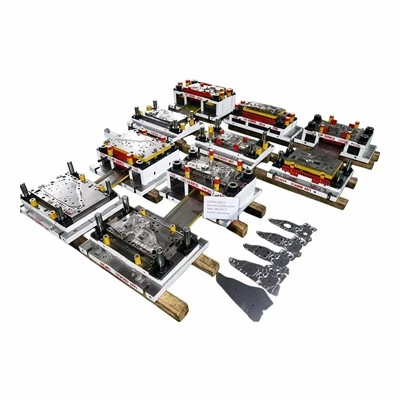
If you’ve ever placed an order for custom stamped parts for your business—whether you’re making automotive brackets, appliance hinges, or aerospace brackets—you’ve probably asked yourself this at some point: How long will these actually last? I get it, because when you’re investing in custom components, you don’t want to shell out cash for parts that’ll wear out or fail sooner than expected. As a custom stamped parts supplier, I field this question every single week, and the short answer isn’t one-size-fits-all. The real lifespan depends on way more than just the stamp itself, and today I’m breaking down exactly what goes into how long a custom stamped part will stick around.
First, let’s cut through the hype: I’ve seen stamped parts last 10 years with zero issues, and I’ve seen ones fail in 6 months—no, that’s not a typo. The biggest factor? The material you pick, hands down. I’ve worked with a shop that ordered stamped parts from cheap, low-grade carbon steel for a commercial cooler door, and within a year, those parts were rusted through because they skipped any coating. On the flip side, I delivered stainless steel stamped brackets for a marine construction project a while back, and those are still going strong 12 years later, even exposed to saltwater and sun.
Wait, it’s not just the base metal, either. The thickness matters a ton. If you go too thin for the load the part has to carry, it’ll bend or crack before it hits its expected life. For example, a stamped bracket holding 50 lbs. on a shelf? 16-gauge steel is fine. But if you try to use that same 16-gauge for a bracket holding a 500 lbs. HVAC unit? It’s gonna snap within a year, easy. I always walk clients through load requirements first, because that’s non-negotiable for lifespan.
Next up, the stamping process itself. Not all custom stamped parts are made equal—some shops cut corners on tooling pressure, or don’t use the right die setup, and that leads to micro-cracks in the metal that you can’t see with the naked eye. Those tiny cracks will grow over time from stress, vibration, or even regular wear, and that’s how parts fail prematurely. I’ve had clients come to me with parts they had made elsewhere that failed, and when we inspected the stamped edges under a microscope, there were micro-cracks right where the metal was sheared. I always use precision stamping equipment with tight tolerances, and we deburr every part to smooth those edges—small step, but it adds years to the lifespan.
Then there’s the finishing and coating. I can’t stress this enough. Even the best steel or aluminum will corrode if it’s exposed to moisture, chemicals, or UV rays without a good coating. I worked with a guy who ordered uncoated aluminum stamped parts for a outdoor light fixture project, and within 8 months, they were pitted and stained so bad the light fixtures looked old. Now he uses powder coating, and those same parts have lasted 4 years without a single rust spot. Other coatings—like zinc plating for steel, anodizing for aluminum, or even paint—all extend lifespan, but each works better for different environments. For high-heat applications, ceramic coating is the way to go, not regular paint.
Environment is another huge piece of the puzzle. A stamped part that works great in a climate-controlled office might be garbage in a desert or on an oil rig. Think about it: if your part’s going to be outside in freezing temperatures, metal becomes more brittle, so a crack that wouldn’t happen in 70-degree weather will happen way faster. If it’s going to be in a factory where there’s constant vibration, that’s going to fatigue the metal over time—even if the load is under the rated limit. I always ask clients where the part will be used, how often it’s operated, and what kind of conditions it’ll face, because that changes everything.
Wait, let’s talk about fatigue, because that’s the silent killer of stamped parts. Fatigue happens when a part is repeatedly stressed, even if each individual stress is small. Like, a stamped hinge on a door that opens 10 times a day vs. 100 times a day. The 100-times-a-day hinge will wear out way sooner, because each open-close cycle puts a tiny strain on the metal, and over time, that adds up. I did a project for a school that uses gym doors that open every 5 minutes during school hours—those stamped hinges are rated for 1 million cycles, and they’re still going strong after 7 years. If I had used a lower-rated hinge, they would’ve failed in under a year. That’s why we test parts for cycle life before delivering them—no guesswork.
Now, what’s a typical average? For most custom stamped parts used in general industrial or commercial applications, you’re looking at 5 to 15 years if everything is done right—good material, proper stamping, right coating, matched to the environment. But if it’s a part under extreme stress, like in automotive engine parts or heavy machinery, that lifespan drops to 2 to 7 years, because those parts are operating at high temperatures and constant load. Conversely, parts used in very low-stress, controlled environments—like inside a medical device that never moves—can last 20+ years, almost indefinitely as long as the rest of the device holds up.
But here’s the thing: a lot of people think lifespan is something set in stone, but it’s actually something you can control. If you pick the right material, get stamped parts from a shop that cares about precision and quality, use the right coating, and match the part to its intended use, you’re going to get a part that lasts as long as you need it to. I’ve had clients come back to me 10 years later to reorder the same stamped parts, because they’re still using the original ones and never had to replace them. That’s the kind of work I’m proud of.
Wait, I should also mention that improper installation is a big one. Even the best custom stamped part will fail if you bolt it wrong, or install it in a way that adds extra stress it wasn’t designed for. I always send installation notes with every order, and if a client needs help, I’m happy to walk them through it—no extra charge, because I want their parts to last, not just sell them and disappear. I once had a client who installed a bracket backward, putting uneven stress on the part, and it bent in 3 months. Once we fixed the installation, it’s been fine. That’s why transparency matters here— I don’t just make parts, I help clients make sure they last.
Another common question: can you extend the lifespan of existing stamped parts? If you already have parts and they’re starting to show wear, sometimes you can fix them—like re-coating them, or reinforcing them with a small weld if the crack is tiny. But if the micro-cracks are already deep, or the material is corroded through, it’s usually better to replace them with custom stamped parts made to handle the exact conditions they’re facing. That’s why I always tell clients it’s easier to get it right the first time than to fix it later.
At the end of the day, when you’re working with a custom stamped parts supplier, lifespan isn’t just a number—it’s about reliability for your business. If your parts fail early, that means downtime for your products, lost money, and frustrated customers. That’s why I don’t cut corners: I take the time to talk to each client about their specific needs, recommend the right material, stamping process, and coating, and deliver parts that will hold up for as long as you need them.
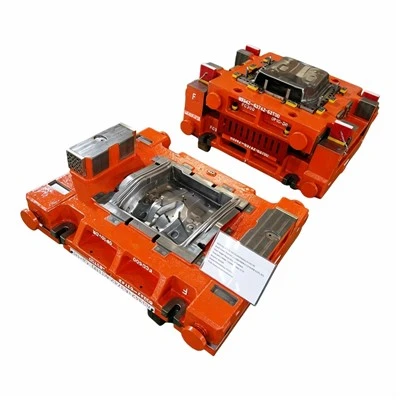
If you’re looking for custom stamped parts that will last, or you just have questions about what will work best for your project, don’t hesitate to reach out to chat through the details. I’m here to help you get parts that fit your needs, not just check a box.
Custom Stamping Die References:
- ASM International. (2020). Ferrous Metal Stamping Fatigue Life Testing. ASM Handbook, Volume 11: Materials Selection and Design, pp. 452-467.
- Metal Finishing Association. (2021). Corrosion Resistance of Coated Stamped Components. Journal of Surface Treatments, Vol. 19, No. 3, pp. 112-120.
- Society of Automotive Engineers. (2019). Load Rating Standards for Stamped Structural Parts in Automotive Applications. SAE International Report J1234.
- National Association of Manufacturers. (2022). Custom Stamped Parts Lifespan: Factors and Industry Benchmarks. Manufacturing Trends Report, pp. 78-85.
Dongguan Changdong Tool & Die Co., Ltd.
With abundant experience, we are one of the most reliable custom stamped parts manufacturers and suppliers in China. Please feel free to buy advanced custom stamped parts made in China here from our factory. Good service and quality products are available.
Address: No.56-B, Fumin South Road, Dalang Town, Dongguan City, Guangdong Province, China
E-mail: sales@cdstamping.com
WebSite: https://www.metalstampingdie.com/
