If you’ve ever worked in agriculture, construction, mining, or any industry that relies on moving large volumes of liquid efficiently, you’ve probably encountered layflat hoses. They’re the unsung workhorses of many operations—lightweight when deflated, flexible enough to lay flat on the ground, and capable of withstanding high pressure when filled. But one question I get asked again and again by new buyers, project managers, and even seasoned field crews is: “What is the weight of a layflat hose?” The answer isn’t a single number, and as a supplier who’s been in this business for over a decade, I’ve learned that understanding those variables is what helps clients make the right choice for their needs. Layflat Hose
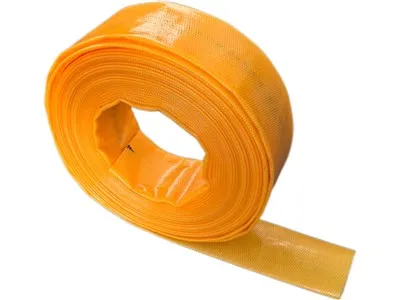
Let’s start with the basics. A layflat hose’s weight isn’t random—it’s determined by three core factors: its inner diameter (ID), the material it’s made from, and its wall thickness. If you’re browsing options for the first time, it’s easy to fixate on price per foot, but skimping on material quality or wall thickness to cut costs will come back to bite you in the long run. A hose that’s too light for your pressure requirements might burst mid-job, leading to downtime, cleanup costs, and even safety hazards. That’s why we break down these variables clearly for every customer, no hidden fine print.
First, inner diameter (ID) is the biggest driver of weight. Layflat hoses are manufactured in standard sizes, ranging from as small as 1 inch for light-duty irrigation or small residential tasks, up to 16 inches or more for large-scale mining, industrial water transfer, or wildfire suppression operations. A 1-inch hose, made from standard PVC, weighs roughly 0.25 to 0.3 pounds per foot when deflated. Scale that up to a 6-inch ID, and that weight jumps to 1.5 to 2 pounds per foot. A 12-inch hose? We’re talking 4 to 5 pounds per foot. If you’re looking at a 16-inch heavy-duty model, that can hit 7 to 8 pounds per foot. That might not sound like much on a small scale, but roll out a 500-foot length of 12-inch hose, and you’re looking at 2,000 to 2,500 pounds of material—more than a ton, and heavy enough that you’ll need multiple people or a small lift to move it, especially when it’s coiled for transport.
Next, material composition plays a huge role in weight, and it also dictates durability and pressure rating. The two most common materials we work with are PVC and polyurethane (PU), each with their own tradeoffs. PVC is the workhorse of layflat hoses—it’s affordable, resistant to abrasion, and holds up well to exposure to sunlight (UV radiation, in case you didn’t know, is one of the biggest enemies of any hose). Standard PVC layflat hose is slightly heavier than a PU hose of the same ID and wall thickness, because PVC’s molecular structure is denser. A PU hose, by contrast, is lighter, more flexible in cold temperatures, and more resistant to chemicals and punctures. For example, a 4-inch PVC hose with a 12-bar pressure rating weighs about 1.2 pounds per foot, while the same size and pressure rating in PU is closer to 1 pound per foot. That lighter weight makes PU a popular choice for operations that need to move hoses frequently—like wildland fire crews that have to set up and break down lines quickly, or construction teams that reposition lines across job sites all day. The only catch? PU is more expensive upfront, so it’s important to weigh the cost savings of PVC against the reduced labor or downtime from PU’s lighter weight and longer lifespan.
Wall thickness is the third key variable, and it directly correlates to both weight and pressure capacity. Think of wall thickness like the walls of a balloon: the thicker the walls, the more pressure the balloon can hold without bursting. Layflat hoses are rated by working pressure (the maximum pressure they can safely handle during normal use) and burst pressure (the pressure at which they will fail). A light-duty hose for residential gardening or temporary water transfer might have a wall thickness of 0.5 mm, a working pressure of 8 to 10 bar, and weigh less than the numbers I mentioned earlier. A heavy-duty industrial hose for mining, which might need to handle 15 to 20 bar of pressure, will have a wall thickness of 1.5 mm or more, adding significantly to its weight. For example, a 6-inch hose with a 1.5 mm wall thickness is 2 pounds per foot, while the same 6-inch hose with a 0.75 mm wall thickness (rated for lower pressure) is only 1.2 pounds per foot. It’s a common mistake for first-time buyers to overlook wall thickness and buy based on ID alone—we’ve had customers show up with a cheap, thin-walled hose that couldn’t handle the pressure of their water pump, and it stretched, kinked, or burst within a week. That’s why we always ask clients for details about their pump pressure, flow rate, and the conditions the hose will be exposed to before we recommend a model.
Now, you might be wondering: does the weight change when the hose is filled with water? The short answer is yes, but not by as much as you might think. A layflat hose is flat when deflated, so its total weight when empty is just the weight of the hose material and any couplings or end fittings. When you fill it with water, the weight of the water adds to the total, but because the hose is flexible, the volume of water inside depends on its ID. For example, a 1-inch hose holds about 0.34 gallons of water per foot, which equals roughly 2.8 pounds of water per foot. That means a 1-inch PVC hose weighs about 0.25 pounds per foot empty, and 3.05 pounds per foot when full. A 6-inch hose holds about 11.8 gallons of water per foot, or nearly 98 pounds of water per foot. Add that to the 1.5 pounds of empty hose, and you’re looking at 99.5 pounds per foot when filled. That’s a massive difference, which is why when you’re planning to install long lengths of hose, you have to account for that full weight. If you’re laying a 1,000-foot line of 6-inch hose on uneven terrain, the total weight when full is 99,500 pounds—nearly 50 tons. You need to make sure the ground can support that weight, and that your pump and couplings can handle both the pressure and the physical load of a full hose line. We always advise clients to do a quick calculation of full weight when designing their system, to avoid sinking hoses into soft ground or having couplings pull free from the strain.
I want to be clear: weight isn’t the only metric that matters when choosing a layflat hose. A light hose that’s too thin will fail quickly, costing you more in replacements over time. A heavy hose that’s overbuilt for your needs will add unnecessary cost and make it harder to move and install. That’s why we work with each customer to assess their specific use case: are they using it for temporary irrigation for a seasonal farm, where weight and cost are top priorities? Or for a permanent industrial setup, where durability and pressure capacity are non-negotiable? Do they need it to hold up to UV exposure, frequent movement, or harsh chemicals? All of these factors feed into the right hose for them, and the right weight for their application.
Over the years, I’ve seen too many buyers get tripped up by trying to find a universal “best” layflat hose, but there’s no one-size-fits-all. A small 2-inch hose for a residential garden is going to weigh a fraction of a 10-inch hose for a large construction site, and both are the right choice for their respective jobs. The key is understanding what you need the hose to do, and how its weight, size, and material align with that.
If you’re in the market for a layflat hose and you’re not sure where to start, don’t hesitate to reach out to our team. We’ve helped hundreds of clients—from small-scale farmers to large mining operations—find the right hose for their needs, and we’re happy to walk you through the variables, answer your questions, and help you calculate exactly what weight and size will work best for your project. Whether you need a sample to test, a bulk order for a big job, or advice on installation and maintenance, we’re here to help you every step of the way.
Flexible PVC Hose Reference:
- Industrial Hose and Fittings Association. (2021). Layflat Hose Specification and Performance Standards.
- PVC and PU Hose Material Data Sheet. (2022). Global Industrial Products Consortium.
- Agricultural Irrigation Equipment Guide. (2020). National Agricultural Farmers Association.
Weifang Xinzhiyuan Plastic Co., Ltd.
As one of the most experienced layflat hose manufacturers and suppliers in China, we offer a wide range of products with superior quality. Please feel free to wholesale premium layflat hose made in China here from our factory. We also accept customized orders.
Address: No. 700, Tongle Street, Economic Development Zone, Changle County, Weifang City, Shandong Province
E-mail: hua@xzypvchose.com
WebSite: https://www.pvchose-xzy.com/
