If you’ve ever dived into a plate of velvety, savory pork balls swimming in glossy, deeply flavored gravy, you know there’s far more to the dish than meets the eye. As a supplier of Braised Pork Balls in Gravy (a dish we’ve refined over 12 years to balance tradition and consistency), I get asked constantly why so many diners swear by northern-style versions, while others swear southern is the only real deal. The truth isn’t just about taste—it’s rooted in history, climate, and the practical needs of home cooks and restaurateurs across China. Let’s break down the key differences, how those differences shape our product lines, and why choosing the right style matters for your menu. Braised Pork Balls in Gravy
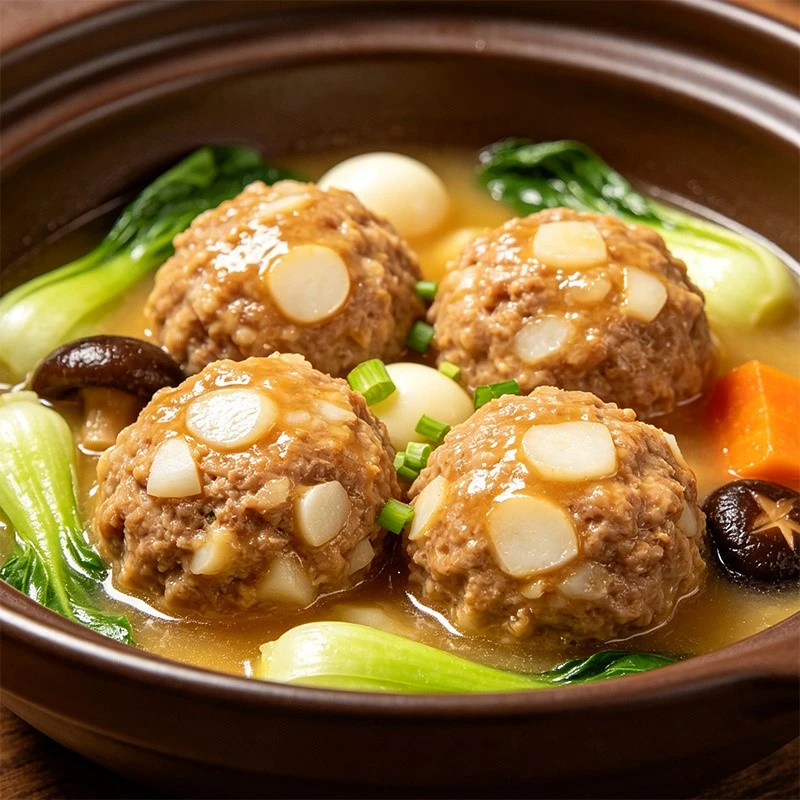
First, let’s start with context. Braised Pork Balls in Gravy, or shizi tou, has been a staple of Chinese home cooking for centuries, but it split into two distinct styles around the Ming Dynasty, when trade routes and regional climate differences created separate supply chains for key ingredients. Northern China’s colder winters and shorter growing seasons meant pork was often fattier and harder to come by year-round, while southern regions, with milder weather and access to fresh herbs and rice, had more lean pork and fresh produce available. That divide didn’t just stop at ingredients—it reshaped every part of the dish, from ball texture to gravy thickness.
Let’s talk about the pork balls themselves, because that’s where the biggest divergence starts. Northern-style shizi tou is all about richness and bold, satisfying texture. For our northern-style balls, we use a 70/30 pork fat-to-lean ratio, sourced from heritage Yorkshire pigs raised in northern farms, where the slower growth rate creates marbling that melts into the ball during braising. The meat is hand-chopped (not machine-minced, which creates a tough, uniform texture) and mixed with small amounts of ginger, a pinch of white pepper, and a splash of Shaoxing wine to cut gaminess. Here’s the trick for northern-style: we don’t add excess moisture. We form the balls tightly, then sear them in lard until the outside is golden and crisp, locking in the fat and flavor before braising. The result is a dense, juicy ball that holds its shape even after 45 minutes in gravy—perfect for cooler nights, when diners want something hearty and filling.
Southern-style balls, by contrast, are lighter, more tender, and subtly herbed. Our southern formula uses a 50/50 fat-to-lean ratio, sourced from Duroc pigs raised in southern river valleys, where the mild climate and access to fresh forage creates leaner, more delicate meat. The chopping method is different too: instead of a fine chop, we mince the meat with a cleaver until it’s slightly chunky, then mix in a bit of water chestnut or bamboo shoot dices for crunch, plus a dash of soy sauce, a touch of sesame oil, and sometimes minced scallions or even a small amount of shrimp paste for depth. We form the balls looser, then steam them first instead of searing, which keeps the texture light and prevents them from becoming too dense during braising. Southern balls are softer, almost melt-in-your-mouth, and they absorb the flavor of the gravy more easily than their northern counterparts. That’s why southern-style is so popular in southern provinces, where diners prefer less heavy dishes even in colder seasons.
Next, the gravy—this is where the regional identities really shine. Northern-style gravy is rich, thick, and deeply umami, designed to cling to the hearty balls. Northern cooks rely on dark soy sauce, rock sugar, and a long braise to build layers of flavor: we add star anise, cinnamon, and clove to the braising liquid, and we thicken the gravy with a small amount of cornstarch slurry at the end to create a glossy, coating consistency. For our northern shizi tou, we let the balls braise in the gravy for an hour, so the flavors seep into the meat and the gravy reduces to a thick, savory pool that pairs perfectly with steamed rice. It’s not uncommon for northern versions to have a slightly sweet-savory balance, thanks to the rock sugar, which cuts the salt of the soy sauce and complements the fatty pork.
Southern-style gravy is lighter, brighter, and more fragrant, with a focus on fresh ingredients rather than long-braised spices. Southern cooks often use light soy sauce instead of dark, so the gravy is a warm amber color rather than a deep brown, and they add things like osmanthus flowers, dried tangerine peel, or even goji berries for a subtle, floral sweetness. Instead of thickening with cornstarch, southern-style gravy is often thickened with a small amount of roux made from rice flour, which gives it a silkier, less clumpy texture. We also braise southern balls for a shorter time—20 to 30 minutes—so the gravy stays bright and the texture of the balls doesn’t break down. Some southern versions even add a splash of rice wine vinegar at the end to give a tangy kick, which balances the richness of the pork.
Of course, these differences aren’t just about tradition—they’re practical for food service, too. As a supplier, we’ve heard from hundreds of restaurants that the style they choose depends on their location, their customer base, and their menu. Northern-style shizi tou is a workhorse for northern chain restaurants, because it’s durable: it holds up well in bulk packaging, reheats without becoming mushy, and has a long shelf life when stored properly. It’s also a hit at family-style restaurants, where diners want a substantial, shareable dish that sticks to their ribs. Southern-style, on the other hand, is perfect for fine dining spots in southern cities, or for fusion menus that want a lighter, more elegant take on the classic dish. It’s also popular at dim sum restaurants, where diners pair small portions of shizi tou with tea, rather than as a main dish with rice.
I’ve seen firsthand how these differences play out in restaurants. A few years ago, we worked with a small bistro in Beijing that tried to serve southern-style shizi tou, and their customers hated it—they said it was too light, too “fragile” compared to the hearty northern version they were used to. When we switched them to our northern-style balls, sales jumped 30% in just a month. On the flip side, a restaurant in Guangzhou that used to serve northern-style switched to our southern formula, and their brunch sales doubled, because it paired perfectly with their dim sum menu. That’s the thing about shizi tou: it’s not a one-size-fits-all dish. Understanding the difference between the two styles helps you pick the right product for your audience.
Another point that’s often overlooked is the accompaniments. Northern-style shizi tou is usually served with the gravy poured over the top, and sometimes garnished with fried peanuts or scallions for crunch. Southern-style is often served with a small side of pickled mustard greens or a light soy dipping sauce, to cut through the richness. As a supplier, we make sure our products come with simple, easy-to-follow preparation instructions tailored to each style, so restaurants don’t have to guess how to plate or serve them. For northern style, we recommend searing the balls quickly after heating to refresh the crisp exterior, then pouring the pre-made gravy over the top and garnishing with sesame seeds. For southern style, we suggest steaming the balls gently, then tossing them in the warmed gravy and adding a sprinkle of dried tangerine peel for extra aroma.
If you’re a restaurant owner, chef, or catering manager looking to add Braised Pork Balls in Gravy to your menu, it’s important to think about your target customers and the vibe of your establishment. If you’re in a northern region, or your menu focuses on hearty comfort food, northern-style is the way to go. If you’re in the south, or your menu is more focused on light, fresh flavors, southern-style will resonate more with your diners. Many of our clients even offer both styles—for example, a Chinese restaurant in a mid-sized city might serve northern-style for dinner and southern-style for brunch, to appeal to a wider range of customers.
At the end of the day, the difference between northern and southern shizi tou is about more than just taste—it’s a reflection of the people who created them, the ingredients they had access to, and the way they like to eat. As a supplier who’s been making this dish for years, I’ve learned that the best way to serve shizi tou is to honor those regional differences, while making sure the quality is consistent every time. We test every batch of our northern and southern balls to make sure the fat ratio is right, the texture is consistent, and the gravy has the perfect balance of flavors, so our clients don’t have to worry about sacrificing quality for convenience.
If you’re ready to add Braised Pork Balls in Gravy to your menu, or you want to try both styles to see which works best for your restaurant, we’re here to help. Whether you need bulk quantities for a chain location, small batches for a fine dining spot, or custom packaging for catering, we can tailor our products to fit your needs. Don’t hesitate to reach out to our team to discuss your requirements, sample our products, and learn more about how we can support your menu.
Giant Pork Meatballs References:
- Chang, K. C. (1977). Food in Chinese Culture: Anthropological and Historical Perspectives. Yale University Press.
- Anderson, E. N. (1988). The Food of China. Yale University Press.
- Zhou, R. (2019). Regional Cuisine in China: Tradition and Evolution. China Food Press.
- Li, M. (2021). “Spatial Divides in Chinese Culinary Culture.” Journal of Chinese Food Studies, vol. 8, no. 2, pp. 45-62.
Yangzhou Jingsheng Food Co., Ltd.
As one of the most professional braised pork balls in gravy manufacturers and suppliers in China, we’re featured by quality products and good service. Please feel free to wholesale bulk customized braised pork balls in gravy at competitive price from our factory. Welcome to contact us for quotation and free sample.
Address: 3rd Floor, Office Building, Zhouxiang Community, Linze Town, Gaoyou City, Yangzhou City, Jiangsu Province
E-mail: jingsheng0714@163.com
WebSite: https://www.jingshengfood.com/
