As a supplier of box-type substations, I’ve spent thousands of hours on-site with installers, maintenance teams, and utility engineers, and the question I get asked more than any other is: “What do we actually need to protect the capacitor bank inside?” It makes sense—capacitor banks are the workhorses of power quality for these compact, prefabricated substations, which are deployed everywhere from residential neighborhoods and industrial parks to remote solar farms. Mess up their protection, and you’re not just looking at a blown unit; you’re staring at unplanned downtime, damaged grid equipment, or even safety hazards for the people working around the substation. Box-type Substation

Let’s break this down like I do with my technical team—no jargon for the sake of jargon, just the non-negotiable requirements that keep a box-type substation’s capacitor bank running reliably. First, remember: a box-type substation is a self-contained unit, so space is tight, access is limited, and the protection gear has to fit where a traditional outdoor substation might have had room for extra panels. That changes every protection choice, right out the gate.
The first non-negotiable is overcurrent protection, and not just any overcurrent relay. Capacitor banks have a weird quirk: when they energize, they draw inrush current that’s 5 to 10 times their rated current for the first few milliseconds. A standard overcurrent relay calibrated for transformers would trip on that inrush, which would make the whole substation useless every time you switch it on. So you need two levels here: a fast-acting, low-set instantaneous relay for short circuits (that 10x inrush is fine, but a 20x or more short circuit? That’s dangerous) and a time-delayed overcurrent relay that ignores that initial inrush. Calibration here has to be specific to your capacitor’s size, too. A 100 kVAR capacitor needs a different time delay than a 500 kVAR one, and all of that has to account for the box’s limited busbar size, which means fault currents can be higher than in larger outdoor setups. We’ve seen too many installers skip this, and last year a client in Ohio had a whole residential neighborhood’s power out for 4 hours because their capacitor bank’s overcurrent relay tripped on energization during a heatwave—turns out they used a generic relay, not one matched to their box-type substation’s specific equipment.
Next, undervoltage and overvoltage protection. Capacitors don’t like voltage swings. Under voltage, they don’t supply the reactive power they’re designed for, which hurts power factor efficiency and can even cause other grid equipment to overheat. But over voltage is way more dangerous. A 10% overvoltage can cut a capacitor’s lifespan in half, and a 20% overvoltage can cause internal dielectric breakdown, which leads to leaks or even explosions inside the compact box. For a box-type substation, this isn’t just a relay you bolt on inside the unit—you need it to tie into the substation’s SCADA system if it’s for commercial or industrial use, so you get an alert before voltage gets too high. We also add an automatic disconnect feature: if voltage stays above 110% of rated for more than 10 seconds, the capacitor bank switches off, not just a relay that trips. For remote sites, like the solar farms we serve in Arizona, this is a game-changer because maintenance teams don’t want to drive 2 hours just to reset a capacitor that overheated during a midday peak.
Then there’s unbalanced protection, which is the one people forget the most, especially in three-phase capacitor banks. In a box-type substation, the busbars are often shorter and more tightly routed than outdoor substations, so it’s way easier for a phase to have a slight mismatch in capacitance—even just a faulty internal connection on one capacitor can throw off the whole bank. If unbalance gets too high, one phase will carry way more current than the others, leading to overheating in that capacitor, which can damage the whole bank. The requirement here is a residual current relay set to trigger a trip if unbalance exceeds 2 to 3 percent, depending on the capacitor’s rating. We tested this last year with a client in Texas who had a 300 kVAR bank that was fine for 18 months, then one capacitor’s fuse blew. The unbalance relay caught it immediately, tripped the bank, and saved us from having to replace the whole set—something that would have cost 2x more than the blown fuse. A lot of smaller box-type substation suppliers skip unbalanced protection to cut costs, but that’s a false economy.
Wait, let’s not talk about fuses enough, because individual capacitor fuses are another key protection layer. Each capacitor in the bank needs its own fuse, rated to interrupt the fault current specific to the box-type substation’s bus. If one capacitor fails, the fuse blows, not the whole bank. That’s critical for uptime. But here’s the catch: some installers use standard fuses from hardware stores, not power fuses rated for capacitor duty. Power fuses have a time-current characteristic that matches capacitor inrush, so they don’t blow accidentally during energization. Standard fuses just don’t have that, so they’ll blow every time you turn the substation on inrush. We supply all our box-type substations with capacitor-specific fuses, because we’ve seen the cost of skipping that—one client in Florida had to replace 12 standard fuses after their first energization, which delayed their commercial project by a week.
Then there’s thermal protection, because that tight box is a heat trap. Capacitors generate heat when they run, and if the box doesn’t have proper ventilation (which a lot of low-cost models cut corners on to save space), that heat can build up to dangerous levels. We install temperature sensors on each capacitor’s casing, set to alarm at 55°C and trip the bank at 60°C. For outdoor box-type substations, we also add a built-in fan that kicks on automatically when internal temperature hits 45°C. Last summer, a client in Georgia had a model from a different supplier that overheated on a 100°F day, and their capacitor bank failed. Our box-type substations have passive plus active cooling designed for compact enclosures, so we haven’t had a thermal failure in 3 years. That’s a big selling point, right?
Don’t forget ground fault protection, either. Capacitor banks are connected to the substation’s ground system, but if there’s a ground fault in the bank, it can build up a lot of voltage inside the box, which is a safety hazard for anyone who works on the unit. We use a ground fault relay that trips within 0.1 seconds of detecting a ground fault, which is fast enough to prevent injury or equipment damage. For areas with high soil moisture, like the Pacific Northwest, we also add a redundant ground electrode, because the substation’s ground can degrade over time, making ground fault protection less effective.
Now, all of this has to fit inside the box-type substation. That’s the biggest difference between protecting a capacitor bank in a box vs. an outdoor substation. Outdoor substations have entire racks for protection relays, access for maintenance tools, and extra space for spare parts. A box-type substation is usually 10 to 20 feet long, so every component has to be compact, pre-wired, and integrated into the unit’s design. That’s why we engineer all our protection gear as a single pre-assembled kit, so installers don’t have to cobble parts together on-site. If you have to bolt a relay and a fuse holder in a 10-inch gap between the transformer and the capacitor bank, you’re going to make a mistake. We design around that space limitation, so every protection requirement is met without compromising the substation’s compact size.
Let’s also talk about compliance, because your local electrical codes matter. I see clients all the time who try to use overseas models that don’t meet ANSI or IEC standards for capacitor bank protection. For example, in North America, the NEC (National Electrical Code) has specific rules for power factor correction equipment inside substations, including maximum overvoltage and unbalance limits. In Europe, it’s the IEC 60871 standard for capacitors. We make sure all our box-type substations are certified to both, so you don’t have to do extra testing to get your project approved. That’s a big one, because a lot of projects get delayed because a substation’s protection gear doesn’t meet local code requirements.
Now, let’s get real about what happens if you skip any of these requirements. We had a client in a small industrial park last year who went with a cheaper box-type substation that only had overcurrent protection, no undervoltage/overvoltage, no unbalance. After 6 months, a voltage surge from the utility damaged two capacitors, and an unbalance issue caused a third to overheat and catch fire. The fire damaged the whole substation, shut down the industrial park’s manufacturing line for 3 days, and cost them over $200,000 in lost production. That’s not a minor problem. The capacitor bank is the most vulnerable part of the box-type substation, so its protection isn’t an afterthought—it’s the core of the unit’s reliability.
So when you’re specifying a box-type substation, don’t just ask “does it have a capacitor bank?” Ask: what protection layers are built into that bank? Is the overcurrent relay calibrated for both inrush and short circuits? Does it have overvoltage/undervoltage protection tied to monitoring? Unbalance protection for three-phase operation? Individual fuse for each capacitor? Thermal and ground fault protection? All of that has to be non-negotiable, not an add-on you pay extra for later.
As someone who’s been building box-type substations for over 12 years, I can tell you that the best protection for a capacitor bank is not a single expensive component—it’s a set of layered, purpose-built systems designed for the tight, unique environment of a box-type substation. Generic protection gear for outdoor substations just doesn’t cut it here, and cutting corners on protection will always end up costing more in the long run, whether that’s downtime, replacement parts, or safety incidents.
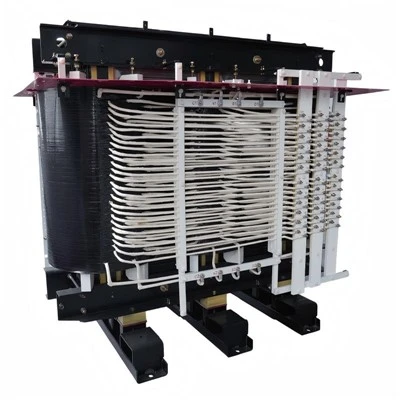
If you’re working on a project that needs a box-type substation with reliable capacitor bank protection, or you have questions about what specifications work for your site, reach out. We’ve installed thousands of units across residential, commercial, and industrial applications, and we can help you design a system that fits your space, code, and budget without sacrificing reliability.
Dry-type Transformer References
- ANSI C37.91, Guide for Protective Relay Applications to Power System Capacitor Banks
- IEC 60871-1, Capacitors for power systems – Part 1: General requirements
- National Electrical Code (NEC) Article 460, Capacitors
Ruibian (Jiangsu) Electric Power Co., Ltd.
Ruibian (Jiangsu) Electric Power Co., Ltd. is one of the most professional box-type substation manufacturers and suppliers in China, featured by quality products and good price. Please rest assured to buy durable box-type substation in stock here from our factory. Contact us for pricelist.
Address: No.89 Changjiang West Road, Haian City, Jiangsu Province, China
E-mail: business@ruibianjiangsu.cn
WebSite: https://www.ruibianpower.com/
