If you’ve ever dabbled in power distribution gear—especially vacuum circuit breakers (VCBs)—you’ve probably heard throwaway comments about “the cabinet” being a “make-or-break part” of the whole unit. Let’s cut the jargon: as a VCB supplier, I see this all the time. New customers often fixate on the vacuum interrupter, the copper contacts inside that snuff out arc sparks in a vacuum, and sleep on the cabinet like it’s just a metal box to stick the breaker in. Spoiler: that’s a costly mistake. The cabinet isn’t just a shell. It’s the unsung backbone that keeps your VCB working when the grid’s pushing 10kV, 33kV, even higher, and a fault hits. Let me break down exactly what it does, why it matters, and why picking the right cabinet is half the battle when you’re looking for a reliable VCB. Vacuum Circuit Breaker
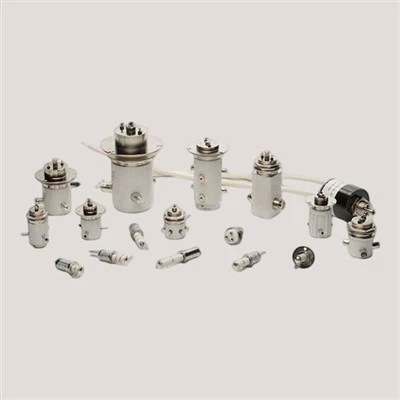
First, let’s ground this in what a VCB does, quick. Its job is straightforward: when a short circuit, overload, or other power blip happens, it flips open (or closes) to stop or redirect current, so your substations, factories, or utility lines don’t get fried. The vacuum interrupter is where the magic happens—arc in a vacuum means less heat, no oil to replace, no gas to leak. But take that interrupter, set it loose in the open, and it’s useless. That’s where the cabinet steps in.
The first big role: physical protection, obviously, but for way more than “keeping rain off.” A VCB lives in a rough environment. If it’s outdoor equipment, it’s dealing with dust, UV rays, temperature swings from -40°F to 120°F (depending on where you’re located), maybe even salt spray if you’re on a coastal grid. Indoor ones? They’ve got humidity, accidental tool drops, or curious critters chewing wires. The cabinet isn’t just a steel box—we use either galvanized steel (for outdoor, extra rust-resistant) or powder-coated aluminum (lighter for indoor switchgear rooms) tailored to the site. But here’s the part most people miss: it also protects the internal wiring and control components from the huge mechanical force when the breaker snaps open during a fault. When that arc cuts, the contacts move at like 10 meters per second—tons of momentum. A cheap, flimsy cabinet can warp, misalign the interrupter, and turn a minor fault into a full outage. Last year, a customer in Texas hit this: they bought a discount VCB from a random supplier, skipped a solid cabinet, and during a summer peak demand spike, the breaker tripped, the cabinet twisted, and the interrupter shifted so bad it couldn’t reset. Cost them $20k in lost production for a week. That’s the difference between a “box” and a functional cabinet.
Second role: electrical isolation and safety for everyone involved. This is non-negotiable, especially for maintenance techs who have to work on the breaker mid-shift. The cabinet acts as a barrier between the high-voltage live parts (those 33kV contacts) and the outside, low-voltage control circuits, plus the space where a human might stand. We design our cabinets with IP ratings—IP4X for indoor, which keeps fingers and tools out; IP5X for outdoor, which blocks dust and light rain. But it’s not just a physical barrier. The cabinet also houses the busbars that connect the VCB to the grid, and we line the inside with insulating materials (like high-grade epoxy) that prevent arcing to the cabinet itself—because even a tiny arc jumping to the metal shell would blow up the whole unit. I’ve seen so many smaller suppliers cut corners here: they use thin steel with no coating, so over time, condensation builds up on the interior, creates a leakage path, and causes a ground fault. A good cabinet eliminates that risk. Also, modern cabinets have interlocks—you can’t open the door when the breaker’s live, and you can’t test the control circuit when the main breaker’s closed. That’s not a extra feature; that’s the cabinet doing its job to keep people from getting shocked.
Third, operational reliability and compatibility with the rest of your setup. VCBs don’t work alone. They’re part of switchgear assemblies, which tie into transformers, relays, monitoring systems, and sometimes remote controls. The cabinet is the adapter that makes all this fit. For example, if you need a VCB that communicates with a SCADA system for remote tripping, the cabinet has a dedicated compartment for the control module, so you don’t have to rig wires haphazardly. If you’re retrofitting an old substation, the cabinet’s dimensions have to match the existing switchgear footprint—too big, and it won’t bolt in; too small, and you can’t fit the busbars. A lot of our repeat customers tell us they switched to us because other suppliers tried to sell them a “one-size-fits-all” cabinet that didn’t work with their existing gear, forcing them to spend more on adapters. We engineer our cabinets to be modular, so they fit standard switchgear frames, but we also custom-modify for weird setups—like when a mining client needed a cabinet with a lockable cover for their remote, harsh site. Also, the cabinet houses the operating mechanism: the springs, motors, and linkages that flip the breaker. If that mechanism is exposed to dust or temperature swings, it can jam. A sealed cabinet keeps that mechanism clean, so the breaker trips when you need it to, no fail.
Wait, let’s address a myth I hear all the time: “I can use a generic metal box for my VCB, right?” No. Because VCBs are precision devices. The vacuum interrupter’s alignment is critical—if it’s off by even a millimeter, the arc doesn’t extinguish properly, and you get a reignition, which burns out the interrupter fast. The cabinet has mounting rails and brackets that hold the interrupter perfectly aligned, even when the breaker is cycling hundreds of times a year. A generic box won’t have that precision mounting; after a few operations, the interrupter shifts, and you’re back to that Texas problem. Another point: heat management. When a VCB is carrying current, the contacts and busbars get warm. The cabinet has ventilation slots (designated, not just holes) that let hot air escape, but not so many that dust or moisture gets in. Too little ventilation, and overheating shortens the breaker’s lifespan; too much, and you lose that IP protection. We test all our cabinets for thermal performance—run the VCB at 120% load for 8 hours, check the internal temp, adjust the vents until it’s stable. That’s not something a generic box can do.
Now, let’s tie this to who we are as a VCB supplier. We don’t just sell breakers; we sell integrated switchgear, and the cabinet is the core of that. A lot of our competitors treat the cabinet as an afterthought—something to slap together fast to hit a low price point. But we engineer every cabinet to match the VCB’s specifications, so there’s no guesswork. For example, if you’re buying a 12kV VCB for a commercial building, our cabinet is powder-coated for indoor humidity, has IP4X interlocks, and fits standard switchgear racking. If you’re buying a 72kV outdoor VCB for a wind farm, our cabinet is galvanized steel, has a heating element to prevent condensation in cold climates, and is rated for wind speeds up to 100 mph. We even offer cabinets with built-in current transformers (CTs) and voltage transformers (VTs) right in the frame, so you don’t have to add those separately—saves you time and money on installation.
I want to be transparent here. We’ve had a few customers come to us after bad experiences with other suppliers. One was a municipal utility in Ohio that bought a $15k VCB with a cheap cabinet; after a year, the cabinet started rusting from road salt spray, and the operating mechanism jammed. They ended up replacing both the cabinet and the VCB, costing them twice as much as if they’d bought a quality unit from the start. Another was a manufacturing plant that tried to use a surplus cabinet for their new VCB; the alignment was off, so every trip damaged the interrupter, and they had to replace it three times in six months. That adds up fast.
So, what should you look for when picking a VCB cabinet? Let’s list the key points we drill into our sales team when we talk to customers: first, environmental rating—match it to your site (indoor vs. outdoor, coastal vs. desert). Second, mechanical and electrical isolation—make sure it has proper IP ratings, insulation coatings, and interlocks. Third, precision mounting—ask for specs on how the interrupter is secured, so you know it won’t shift during operation. Fourth, compatibility with your existing gear—tell us what switchframe you’re using, any communication needs, and we’ll size the cabinet to fit. Fifth, thermal performance—ask if the supplier tests for overheating, so you don’t have premature wear.
At the end of the day, the cabinet isn’t just a part. It’s the reason your VCB doesn’t become another statistic in power outages. It’s the thing that protects your equipment, keeps your tech safe, and makes sure the breaker works when you need it most. If you’re shopping for a VCB, don’t sleep on the cabinet. It’s not a “cost center”—it’s an investment in reliability.
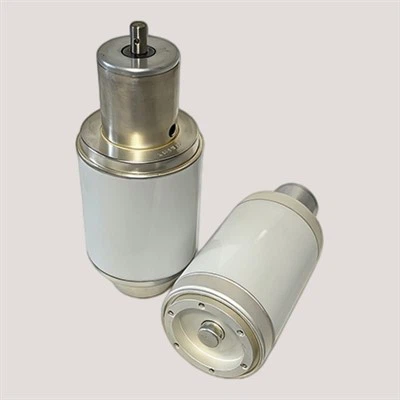
If you’re in the market for a vacuum circuit breaker, whether for a new build, retrofit, or replacement, we can help. We customize cabinets to fit your exact needs, test every unit before it leaves our shop, and offer support from design to installation. Reach out to our team to discuss your project, and we’ll break down how our VCB and cabinet combo fits your requirements.
Capacitor References
- “Vacuum Circuit Breaker Technology and Applications,” IEEE Press, 2018.
- “Switchgear Cabinet Design for Environmental and Electrical Safety,” International Electrotechnical Commission (IEC) Standard 62271-200, 2020.
- “Reliability of Medium-Voltage Vacuum Circuit Breakers,” CIGRE Technical Report 573, 2014.
Jingdezhen Wanping Electric Co., Ltd.
As one of the most professional vacuum circuit breaker manufacturers and suppliers in China, we also support customized service. We warmly welcome you to buy high quality vacuum circuit breaker made in China here and get pricelist from our factory. For price consultation, contact us.
Address: Zhangshukeng, Jingdezhen City, Jiangxi Province.
E-mail: jdzwpdq0815@163.com
WebSite: https://www.cewpdq.com/
