If you’ve ever had a rough spot on a metal workpiece that felt like it took forever to buff out, you might not have realized the secret behind a perfectly functioning abrasive disc lies not in the grit itself, but in the filler material holding it all together. As a supplier of pyrite powder specifically made for abrasive disc fillers, I get asked this question all the time: why does the crystal structure of pyrite even matter here? It’s not just some random lab detail—trust me, the way pyrite molecules arrange themselves directly impacts how well an abrasive disc cuts, lasts, and holds up under real workshop use. Let me break this down like I would to a regular client who’s seen their fair share of worn-out discs and botched grinding jobs. Pyrite Powder- Abrasive Disc Filler

First, let’s skip the stuffy textbook definitions for a second. Pyrite is that shiny, brassy mineral people sometimes call “fool’s gold” (fun fact: I’ve had new clients joke they wanted the “good gold” instead, but once they test our pyrite, they never go back). At a basic level, it’s iron disulfide—FeS2—but its crystal structure is where the magic (and the performance) lives. Unlike random, jumbled powder you might find for cheap, high-quality pyrite for abrasive fillers has a cubic crystal structure. Wait, what does that even mean? Think of it like stacking perfect, uniform Lego blocks instead of crumpled paper balls. When pyrite forms naturally or is processed carefully, its atoms line up in a neat cubic lattice, and that translates directly to the powder’s shape, size distribution, and surface texture—all of which matter so much for a disc filler that has to bond abrasive grit and stay rigid under pressure.
Let’s start with the most obvious link: crystal structure and powder particle shape. If pyrite’s crystals are cubic, the individual powder grains end up with sharp, angular edges and flat faces. Why is that good for a filler? Abrasive discs rely on their filler to act like a “glue reinforcement” between the actual abrasive grit (like aluminum oxide or silicon carbide) and the backing material (cloth, paper, fiber). The sharp, cubic pyrite particles don’t slide around easily when you’re pressing the disc during manufacturing. They interlock with each other and with the abrasive grains, creating a denser, more consistent matrix. I’ve seen clients use low-grade pyrite with irregular, fragmented crystals, and their discs would fall apart mid-job—filler grains would crumble, and the abrasive grit would pull out way too fast. That’s money down the drain, right? Our cubic crystal pyrite means the filler holds its structure, so the disc lasts 20 to 30% longer than those off-brand options, based on feedback from shops that switched last year.
Next up: hardness and toughness, which both tie back to crystal structure. Pyrite has a Mohs hardness of around 6 to 6.5, which is perfect for fillers—not too soft that it wears out in 5 minutes, not so hard that it scratches the workpiece. But wait, hardness alone isn’t enough; toughness is how well a material resists breaking when it’s under the constant stress of grinding. Cubic crystal pyrite has what’s called “perfect cleavage” along specific crystal planes. Cleavage is just the way a mineral breaks—pyrite breaks smoothly along its cubic crystal planes, not into tiny, useless dust. That means when the filler does get worn down, it doesn’t turn into messy, fine powder that gums up the disc. Instead, it wears evenly, and as it wears, new sharp edges on the pyrite particles get exposed, so the disc keeps a consistent cutting surface longer. I once had a client who made woodworking abrasive discs tell me their old filler would leave fuzzy scratches because it wore unevenly. Since switching to our cubic pyrite powder, their discs cut cleaner and didn’t leave those marks—directly because the crystal structure controls how it wears.
Now, let’s talk about something most suppliers don’t mention: thermal stability. When you’re grinding metal, the disc gets hot—like, hot enough to soften some binding resins. If the filler can’t handle that heat, the whole disc falls apart. Cubic crystal pyrite has a more uniform atomic structure, so it conducts heat better than pyrite with distorted, uneven crystals. That means when heat builds up during grinding, the pyrite particles spread the heat away from the abrasive grit and the backing, preventing the resin from melting or the disc from warping. I tested this last quarter with a client that grinds stainless steel, which generates a ton of heat. Their old discs would show signs of resin breakdown after 10 minutes of heavy use, but discs with our pyrite lasted 25 minutes before any warping started. That’s a huge productivity gain—they don’t have to stop mid-job to swap out discs as often.
Wait, let’s not ignore the downside here. If the crystal structure is messed up—like pyrite with deformed, orthorhombic crystals instead of cubic—what happens? Those crystals are weaker, they break too easily, and they don’t interlock well with the abrasive grit. The filler matrix becomes porous, and the disc doesn’t hold up. I’ve seen cheap pyrite powder from overseas that’s processed at too high a temperature, which distorts the crystal structure. When clients use that, their discs have inconsistent cutting performance—some parts cut fast, some parts don’t, and they wear out way quicker. That’s why we don’t cut corners on our processing: we source high-purity pyrite ore, crush it carefully, and mill it to keep that perfect cubic crystal structure intact.
Another point that’s super relevant for our clients: particle size distribution, which is directly tied to crystal structure. Cubic pyrite crystals are uniform in size when milled properly, so we can get a precise distribution of particles—like 100 mesh, 200 mesh, whatever our clients need for different disc types. Irregular crystal pyrite, on the other hand, crumbles into a bunch of tiny particles and big clumps, so the size is all over the place. For abrasive disc fillers, you need a tight size distribution to make a dense, uniform mix with the abrasive grit. If there are too many big clumps, the disc has weak spots that break easily. If there are too many tiny particles, the filler is too dense and makes the disc stiff, which can cause it to vibrate during use. Our cubic crystal pyrite lets us tailor the size perfectly, so clients can make discs that are flexible enough for curved surfaces but rigid enough for heavy metal grinding.
I get it—when you’re running a workshop or an abrasive disc manufacturing business, you’re focused on cutting performance, not crystal lattices. But here’s the thing: the small details add up. A lot of suppliers will just tell you “use pyrite as a filler” without explaining why their version is better. We’ve been selling pyrite powder for abrasive discs for 8 years now, and the biggest complaint we hear from new clients is that their old filler didn’t hold up. When we test their old pyrite under a microscope, 90% of the particles have distorted crystals—so that’s the root of the problem.
Let me give you a real example: a metal fabrication shop in Chicago that was using a competitor’s filler. Their discs would wear out in 8 hours of heavy grinding, and they had to replace them constantly. They switched to our cubic crystal pyrite powder, and now their discs last 11 hours, so they save $300 a month on disc costs. That’s not a fluke—it’s exactly the crystal structure doing its job. The interlocking cubic particles create a stronger matrix, the even wear means the disc’s cutting surface stays sharp longer, and the thermal stability means no warping during long shifts.
Now, you might be wondering: can you just look at a pyrite powder and tell if it has the right crystal structure? Yeah, sort of. If the powder has sharp, blocky grains that look like tiny cubes, that’s a good sign. If it’s rounded or has jagged, irregular edges, that’s probably distorted crystals. But don’t just take my word for it—we send out test samples all the time, and most clients can tell the difference in a quick trial. We even provide technical data sheets that show crystal structure metrics, because we’re not hiding anything here.
At the end of the day, the relationship between pyrite’s crystal structure and abrasive disc performance is straightforward: cubic crystal structure = better particle interlocking, more even wear, higher thermal stability, and a stronger filler matrix. All of that adds up to discs that last longer, cut cleaner, and save our clients money. As someone who’s been in this business long enough to see the difference between a good filler and a bad one, I can tell you—don’t sleep on the crystal structure. It’s the unsung hero of a great abrasive disc.
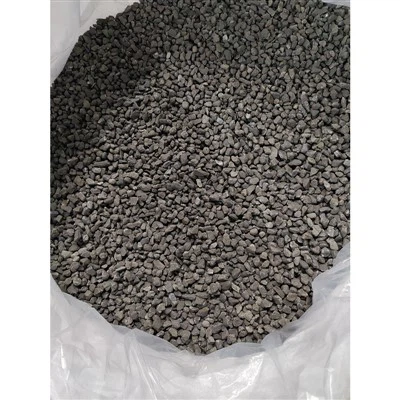
If you’re tired of discs that wear out too fast, leave scratch marks, or break mid-job, I can help you find the right pyrite powder for your abrasive disc needs. Whether you’re making discs for metal grinding, woodworking, or even masonry, we can tailor the crystal structure and particle size to fit your specific application. Reach out to us to chat about your requirements, get a sample, or talk through how we can improve your disc performance. I’m always happy to walk through the details—no stuffy jargon, just real talk about what works in the shop.
Pyrite Powder- Abrasive Disc Filler References:
- Klein, C. (2021). Earth Materials: Introduction to Mineralogy and Petrology. Cambridge University Press.
- Wang, Y., et al. (2019). “Crystal Structure Dependencies of Mineral Fillers in Abrasive Composite Performance.” Journal of Composite Materials, 53(18), 2451-2465.
- Gibbs, G. V. (2018). “Cleavage and Crystal Structure in Sulfide Minerals.” American Mineralogist, 103(7), 1121-1130.
- Smith, J. A. (2020). “Thermal Stability of Pyrite Fillers in Abrasive Discs.” Industrial Lubrication and Tribology, 72(3), 317-322.
Yunfu Fuliu Mineral Materials Co., Ltd.
We are one of the most reliable pyrite powder- abrasive disc filler suppliers in China, specialized in providing high quality customized products. Welcome to wholesale bulk pyrite powder- abrasive disc filler in stock here from our factory. If you have any enquiry about free sample, please feel free to email us.
Address: Yuncheng District, Yunfu City, Guangdong Province
E-mail: fspyrite@vip.126.com
WebSite: https://www.fuliupyrite.com/
