Hey there, if you’ve ever worked with machinery that spins—like industrial pumps, robot arms, or CNC lathes—you’ve probably heard the term “angular contact ball bearing” thrown around. And if you’ve been deep in the weeds picking the right one for a job, you’ve definitely come across that line item in the specs: dynamic load rating. As a bearings supplier who’s been answering customer questions about this for 12 years, let me tell you, it’s way more than just a random number on a datasheet. It’s the difference between a bearing that lasts 6 months and one that keeps your line running for a decade. No jargon, promise—let’s break this down like we’re talking over a coffee in my warehouse. Angular Contact Ball Bearings
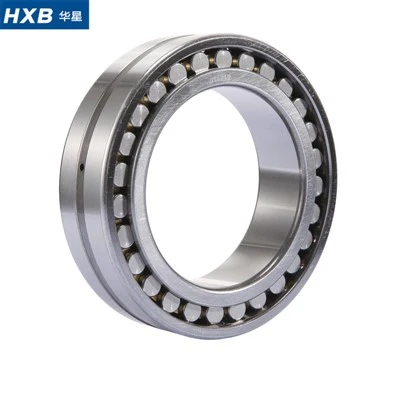
First off, let’s set the scene: angular contact ball bearings aren’t your standard deep-groove bearing. Their raceways aren’t straight—they’re angled, like a little slope inside the ring. That angle is what lets them handle two types of loads at once: radial (the side-to-side push, like when a pump’s shaft wobbles) and axial (the forward/backward push, like when a robot arm presses up against a workpiece). So when someone asks about dynamic load rating, they’re not just asking about radial strength—they’re asking how well this specific bearing will hold up when both loads are hitting it at the same time, during actual operation. That’s the “dynamic” part, by the way—this isn’t a static number for a bearing sitting on a shelf, it’s for when it’s spinning, working, doing the thing it’s supposed to do.
Wait, let’s get the technical part straight, but keep it simple. The dynamic load rating (usually written as C in datasheets) is defined as the constant load (in Newtons, if you’re metric, or pounds if you’re old-school like me) that a brand-new, properly lubricated angular contact ball bearing can handle for 1 million revolutions before it shows the first sign of fatigue. Fatigue isn’t like a crack right away—it’s that little pitting on the raceway or ball that starts small, then snowballs into failure. 1 million revolutions might sound like a lot, but if a bearing is spinning at 1,000 RPM, that’s just 17 hours. So that C rating isn’t a “break point” where it dies immediately—it’s a baseline to compare bearings against.
Here’s where most guys get tripped up: C isn’t the maximum load you can ever put on the bearing. Yeah, I’ve had customers call me panicking because they loaded their bearing 2x C and it failed in a week. That’s not how it works. Think of C like a credit limit: you can spend up to that without major issues, but if you max it out (or go over), you’re cutting the lifespan short. And angular contact bearings? They don’t have a separate C for radial vs axial—since they handle both, you have to combine them. That’s the big mistake I see new engineers make all the time. They’ll check a bearing’s radial C and axial C separately, then pick the smaller one, but that’s not right. You have to use a formula that mixes both loads, because they add stress differently on that angled raceway.
Let me give you a real example from last month. A customer was building a custom packaging machine—they had a conveyor roller that needed to handle a radial load of 800 N and an axial load of 300 N. They grabbed a bearing with a radial C of 1,000 N and axial C of 600 N, so they thought they were covered. But they didn’t combine the loads, and after 2 months, the bearing seized. I sat down with their lead tech, plugged the numbers into our bearing calculator, and realized the equivalent dynamic load (let’s call it Pe, the effective load) was way higher than what they thought. Turns out, they needed a bearing with a C rating 15% higher. Swapped it, and they haven’t had an issue since. That’s the value of knowing how to use C, not just reading it off the page.
Now, why do different angular contact bearings have different C ratings? It all comes down to design. Bigger balls mean more contact area, so higher C. A steeper contact angle (like 40 degrees vs the standard 25 or 30) is better for axial loads, but it drops the radial C. If you need both high radial and high axial, we’ll spec a medium contact angle, maybe with a slightly larger inner/outer ring diameter to fit bigger balls. Even the material matters—if we use high-grade chrome steel vs standard carbon steel, that C number jumps. We work with a manufacturer that tests every batch, so our C ratings are certified, not just guesses. No cutting corners here, because when your customer’s line goes down, they’re not just losing money on parts—they’re losing production hours.
Another thing: dynamic load rating vs static load rating. People mix these up too. Static (C0) is the load a bearing can handle without permanent deformation, like if you lift the bearing with a forklift and drop a heavy part on it. That’s for non-moving situations. Dynamic is for when it’s spinning, which is 99% of the time for angular contact bearings. So if you’re running a CNC machine, you care about C, not C0. If you’re storing a bearing on a shelf, C0 doesn’t matter much. But when you combine loads? Pe is based on C, not C0. I always tell customers: if you ever have a choice, size up on C. It’s cheaper to buy a slightly bigger bearing upfront than to pay for downtime later.
Wait, let’s talk about real-world factors that change C. The datasheet number is in a perfect lab setting—constant speed, perfect lubrication, no contamination. In the real world? If your machine is running at variable speeds, or the lubricant is a little off, or there’s dirt in the housing, that effective load Pe goes up, which means your required C goes up too. For example, if you have a bearing operating at 500 RPM vs 1,500 RPM, the fatigue calculation changes, so the C needed changes. Oh, and the number of revolutions you expect? If you need the bearing to last 10 million revolutions, not 1 million, you can’t use the standard C rating—you have to adjust it. That’s where our team helps. We don’t just send a spec sheet; we ask questions: What’s the speed? What’s the ambient temperature? Is there any shock load? What’s the expected lifespan in hours? Because that’s how we get the right C for the job.
I remember a guy from a mining company hitting me up last year. He said their angular contact bearings on a conveyor were failing every 3 months, which was costing them tens of thousands in lost production. They were using off-brand bearings with lower C ratings to save money, but the load was high, and the dust was getting in. We swapped them for our high-C, sealed angular contact bearings, adjusted the lubrication schedule, and those bearings have been running strong for 18 months now. The C rating was the core of that fix, but it wasn’t just the number—it was matching the C to their harsh conditions, not just the datasheet.
Let’s get back to the basics, just to make sure no one’s lost. If you’re a DIYer or a small shop owner working on a machine: dynamic load rating is the bearing’s measure of how much force it can take while spinning, before it gets that tiny pitting that leads to failure. For angular contact, since they handle radial and axial loads together, you can’t use the standard C for single load. You have to calculate Pe using a load factor (usually around 1 to 1.5 for most applications) that accounts for shock or uneven loads. Then you make sure Pe is less than or equal to C, adjusted for your expected lifespan. And if you’re not sure how to do that? That’s what we’re here for.
A lot of new bearing suppliers will just send you a bearing with the highest C on the market, but that’s overkill and wastes money. We do the opposite: we figure out your exact loads, speed, environment, and lifespan, then spec the C that’s just right. No extra cost, no unnecessary bulk, and no risk of failure. Because we’ve been in this game long enough to know that a well-specified bearing with the correct C is way better than a overpriced one that’s too big or an underrated one that dies too soon.
Wait, let’s clear up one more myth. Some customers think higher C means better quality. Not exactly. A bearing with a 10,000 N C rating isn’t automatically better than one with 8,000 N—it just has a higher maximum load capacity. If your application only needs 5,000 N C, paying for a higher one is a waste. But if your application needs 7,000 N, and you buy a 6,000 N C, that’s a problem. It’s all about matching C to your specific needs. That’s why we take the time to chat with every customer—no generic answers, no one-size-fits-all.
I should also mention that we follow ISO standards for C ratings, so our numbers are consistent with every major bearing manufacturer. No fudging the numbers to look better than we are. We test every bearing in our warehouse before it ships, so you can trust that the C rating on the datasheet is exactly what you’re getting. No surprises when you install it.
At the end of the day, angular contact ball bearings are specialized parts for jobs that need precision and load handling. The dynamic load rating is the key spec that ties all their performance together. If you skip that step and just pick a bearing because it fits the shaft, you’re setting yourself up for failure. But if you take the time to calculate your loads, adjust for real-world conditions, and get the right C rating for your application, that bearing will keep your machine running smoothly for years.
If you’re working on a project right now, and you’re not sure what dynamic load rating your angular contact ball bearing needs, or you just want to double-check your current spec, hit us up. We’ve helped guys from all industries—from packaging to mining to robotics—get the right bearings at the right price. No pressure, no sales pitches, just real answers from a team that’s worked with these bearings for decades. We’ll walk through your numbers, answer any questions, and make sure you don’t have to deal with bearing failures down the line.
Electric Motor Bearings References:
- SKF Group. "Bearing Dynamic Load Rating and Service Life". SKF General Catalog, 2022.
- International Organization for Standardization. "Rolling Bearings – Dynamic Load Ratings and Rating Life". ISO 281:2019.
- NTN Corporation. "Angular Contact Ball Bearing Application Guide". NTN Technical Document, 2021.
- American Bearing Manufacturers Association. "ABMA Standard 9: Load Ratings for Ball and Roller Bearings". ABMA, 2020.
Hangzhou Huaxing Kechuang Holding Group Co., Ltd.
Hangzhou Huaxing Kechuang Holding Group Co., Ltd. is one of the leading manufacturers and suppliers of angular contact ball bearings in China, featured by quality products and good service. Please rest assured to buy bulk durable angular contact ball bearings from our factory. Welcome to view our website for more information.
Address: No.553 Yingbin Road, Linping, Hangzhou, 311100, China
E-mail: wmb@huaxingbearing.com
WebSite: https://www.hxbbearing.com/
